A Day by the Sea
海辺で過ごした一日
Mia tells Emma about the things she did on vacation, from walking along the beach to trying local food.
ミアがエマに、ビーチを散歩したことから地元の料理を試したことまで、休暇中にしたことを話す。
会話8
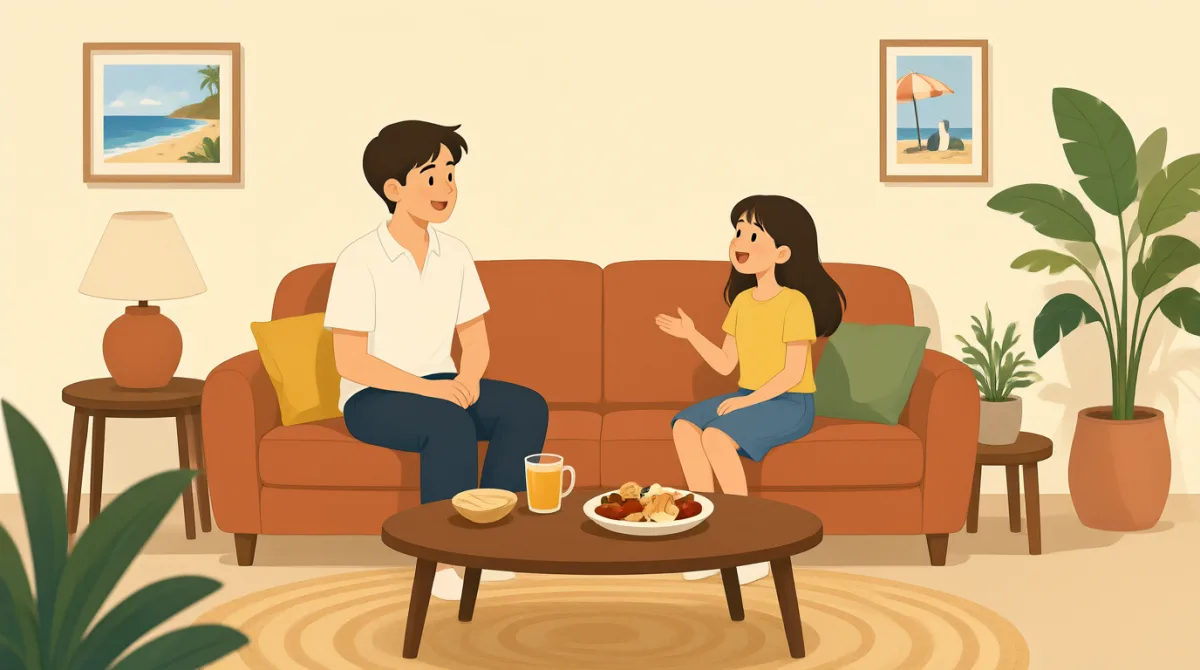

What did you do on your first day at the coast?
海辺に着いた初日は何をしたの?

I walked along the beach and watched the waves.
ビーチを歩いて、波を眺めたよ。
That sounds lovely. Did you go swimming, too?
いいね。泳いだりもしたの?
No, the water was too cold, so I just put my feet in.
ううん、水が冷たすぎたから、足をつけただけだよ。
What else did you do during your trip?
旅行中、ほかには何をしたの?
I visited a small market and bought a few snacks.
小さな市場に行って、おやつをいくつか買ったよ。
Did you try any local food while you were there?
そこにいる間に、地元の料理も食べてみた?
Yes, I had fresh fish and a bowl of seafood soup.
うん、新鮮な魚とシーフードスープを一杯食べたよ。
語彙8
- walked along the beachビーチを歩いた
This means you walked beside the sea on the sand. Use “walked along” to say you moved beside something.
砂浜を海沿いに歩いたという意味です。「walked along」は、何かに沿って歩いたことを表すときに使います。
- watched the waves波を眺めた
This means you looked at the water as it moved toward the shore. You can use “watched” for something you looked at for a while.
水が岸に向かって動く様子を見たという意味です。「watched」は、しばらく何かを見ていたことを表すときに使えます。
- put my feet in足をつけた
This means Mia put her feet into the water but did not go swimming. Use this phrase when you dip just part of your body into water.
ミアが泳がずに、足だけ水につけたという意味です。体の一部だけを水につけるときに使う表現です。
- a small market小さな市場
This is a little place where people buy and sell food or other things. You can use “a small” before a singular noun to describe its size.
食べ物やほかの品物を売り買いする小さな場所のことです。名詞の前に「a small」を置くと、そのものの大きさを表せます。
- bought a few snacksおやつをいくつか買った
This means Mia purchased some small foods to eat between meals. Use “a few” with plural things when you mean a small number.
食事と食事の間に食べる軽食をいくつか買ったという意味です。少ない数の複数のものを表すときは「a few」を使います。
- local food地元の料理
This means food that is common in the place you are visiting. You can ask about it when you travel.
訪れている場所でよく食べられている料理のことです。旅行先でどんな料理があるか尋ねるときにも使えます。
- fresh fish新鮮な魚
This means fish that is recently caught or prepared. You can use “fresh” to describe food that is not old.
最近捕れた魚、または新しく調理された魚のことです。「fresh」は、古くない食べ物を表すときに使えます。
- seafood soupシーフードスープ
This is soup made with seafood, such as fish or shellfish. You can use this phrase to name a kind of soup.
魚介類を使ったスープのことです。この表現でスープの種類を伝えられます。
重要な文8
- 1
What did you do on your first day at the coast?
海辺に着いた初日は何をしたの?
This is a useful question for asking about someone's activities during a trip. Change “your first day” to another time, such as “your last day.”
旅行中に何をしたか尋ねるときに便利な質問です。「your first day」を「your last day」のような別の時期に変えて使えます。
- 2
I walked along the beach and watched the waves.
ビーチを歩いて、波を眺めたよ。
This describes two past activities in one sentence. Use “I [past activity] and [past activity]” to talk about things you did.
過去にした二つのことを一文で表しています。「I [過去の行動] and [過去の行動]」の形で、自分がしたことを話せます。
- 3
Did you go swimming, too?
泳いだりもしたの?
This is a simple way to ask if someone did an activity as well. Replace “go swimming” with another activity, such as “go shopping.”
相手も同じように何かをしたか、簡単に尋ねる表現です。「go swimming」を「go shopping」のような別の活動に置き換えられます。
- 4
No, the water was too cold, so I just put my feet in.
ううん、水が冷たすぎたから、足をつけただけだよ。
This explains why Mia did not swim and what she did instead. Use “too [adjective], so…” to give a reason and result.
ミアが泳がなかった理由と、その代わりにしたことを説明しています。「too [形容詞], so…」は、理由とその結果を伝える形です。
- 5
What else did you do during your trip?
旅行中、ほかには何をしたの?
Use this question to ask about more activities someone did. “What else” is a helpful way to continue a conversation.
相手がしたほかのことを尋ねる質問です。「What else」は会話を続けるのに便利な表現です。
- 6
I visited a small market and bought a few snacks.
小さな市場に行って、おやつをいくつか買ったよ。
This sentence gives two examples of things Mia did on her trip. Use the simple past to describe completed activities.
ミアが旅行中にしたことを二つ挙げています。終わった活動について話すときは、過去形を使います。
- 7
Did you try any local food while you were there?
そこにいる間に、地元の料理も食べてみた?
This is a useful question about food someone tried during a visit. Replace “local food” with a dish or drink to ask about something specific.
訪問中に相手が食べたものについて尋ねるときに便利な質問です。具体的な料理や飲み物について聞くなら、「local food」を料理名や飲み物に置き換えられます。
- 8
Yes, I had fresh fish and a bowl of seafood soup.
うん、新鮮な魚とシーフードスープを一杯食べたよ。
This is a natural way to say what you ate. Use “I had” followed by foods or drinks when talking about a meal.
食べたものを自然に伝える言い方です。食事について話すときは、「I had」の後に食べ物や飲み物を続けます。