A Day by the Sea
바닷가에서 보낸 하루
Mia tells Emma about the things she did on vacation, from walking along the beach to trying local food.
미아가 해변을 따라 걷고 현지 음식을 맛본 일까지, 휴가 때 했던 일들을 에마에게 이야기해요.
대화8
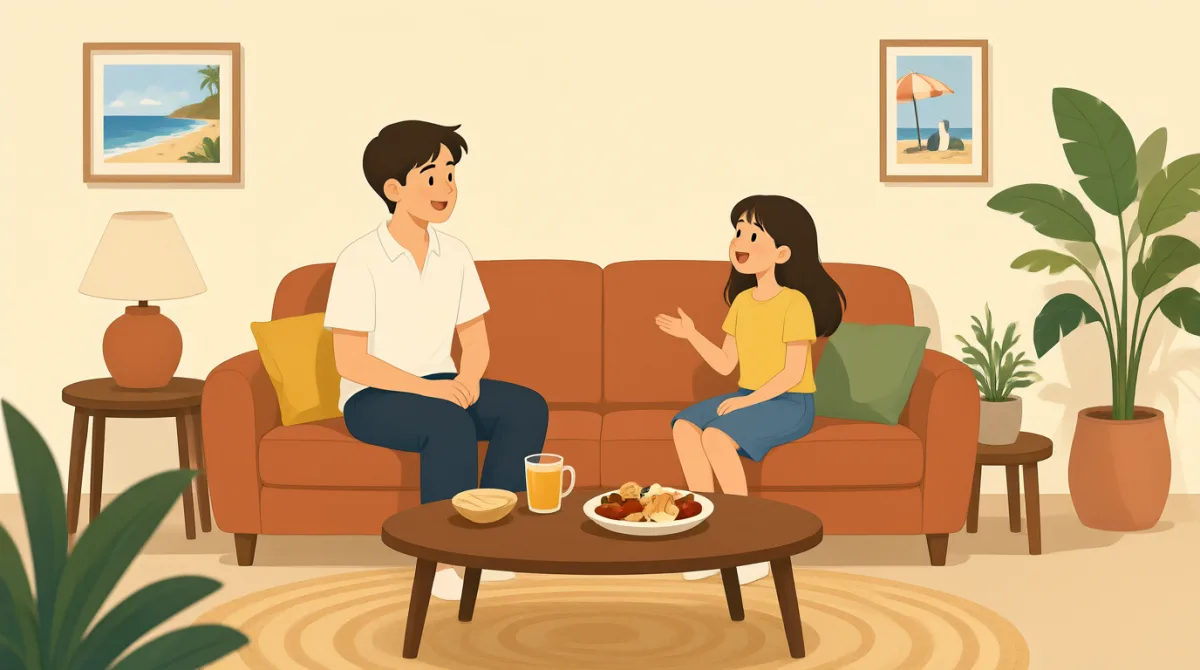

What did you do on your first day at the coast?
해안에 도착한 첫날엔 뭐 했어?

I walked along the beach and watched the waves.
해변을 따라 걷고 파도도 구경했어.
That sounds lovely. Did you go swimming, too?
정말 좋았겠다. 수영도 했어?
No, the water was too cold, so I just put my feet in.
아니, 물이 너무 차가워서 발만 담갔어.
What else did you do during your trip?
여행 중에 또 뭐 했어?
I visited a small market and bought a few snacks.
작은 시장에 가서 간식도 몇 가지 샀어.
Did you try any local food while you were there?
거기 있는 동안 현지 음식도 먹어 봤어?
Yes, I had fresh fish and a bowl of seafood soup.
응, 신선한 생선이랑 해산물 수프 한 그릇 먹었어.
어휘8
- walked along the beach해변을 따라 걸었다
This means you walked beside the sea on the sand. Use “walked along” to say you moved beside something.
모래사장에서 바다를 따라 걸었다는 뜻이에요. 무언가의 옆을 따라 걸었다고 말할 때 “walked along”을 써요.
- watched the waves파도를 구경했다
This means you looked at the water as it moved toward the shore. You can use “watched” for something you looked at for a while.
물이 해안 쪽으로 밀려오는 모습을 바라봤다는 뜻이에요. 한동안 무언가를 바라봤다고 말할 때 “watched”를 쓸 수 있어요.
- put my feet in발을 담갔다
This means Mia put her feet into the water but did not go swimming. Use this phrase when you dip just part of your body into water.
미아가 수영은 하지 않고 물에 발만 담갔다는 뜻이에요. 몸의 일부만 물에 담글 때 이 표현을 써요.
- a small market작은 시장
This is a little place where people buy and sell food or other things. You can use “a small” before a singular noun to describe its size.
사람들이 음식이나 다른 물건을 사고파는 작은 곳이에요. 명사의 크기를 설명할 때 단수 명사 앞에 “a small”을 쓸 수 있어요.
- bought a few snacks간식을 몇 가지 샀다
This means Mia purchased some small foods to eat between meals. Use “a few” with plural things when you mean a small number.
끼니 사이에 먹을 간단한 음식을 조금 샀다는 뜻이에요. 복수 명사와 함께 “a few”를 쓰면 수가 많지 않다는 의미를 나타낼 수 있어요.
- local food현지 음식
This means food that is common in the place you are visiting. You can ask about it when you travel.
방문 중인 지역에서 흔히 먹는 음식이라는 뜻이에요. 여행할 때 현지 음식에 관해 물어볼 수 있어요.
- fresh fish신선한 생선
This means fish that is recently caught or prepared. You can use “fresh” to describe food that is not old.
최근에 잡았거나 손질한 생선이라는 뜻이에요. 오래되지 않은 음식을 설명할 때 “fresh”를 쓸 수 있어요.
- seafood soup해산물 수프
This is soup made with seafood, such as fish or shellfish. You can use this phrase to name a kind of soup.
생선이나 조개류 같은 해산물로 만든 수프예요. 이 표현으로 수프의 종류를 말할 수 있어요.
핵심 문장8
- 1
What did you do on your first day at the coast?
해안에 도착한 첫날엔 뭐 했어?
This is a useful question for asking about someone's activities during a trip. Change “your first day” to another time, such as “your last day.”
여행 중에 누군가가 무엇을 했는지 물을 때 유용한 질문이에요. “your first day”를 “your last day”처럼 다른 시점으로 바꿔 말해 보세요.
- 2
I walked along the beach and watched the waves.
해변을 따라 걷고 파도도 구경했어.
This describes two past activities in one sentence. Use “I [past activity] and [past activity]” to talk about things you did.
과거에 한 두 가지 활동을 한 문장으로 말하는 표현이에요. 한 일을 이야기할 때 “I [과거 활동] and [과거 활동]” 패턴을 써요.
- 3
Did you go swimming, too?
수영도 했어?
This is a simple way to ask if someone did an activity as well. Replace “go swimming” with another activity, such as “go shopping.”
상대방도 어떤 활동을 했는지 간단히 물어볼 때 쓰는 표현이에요. “go swimming”을 “go shopping”처럼 다른 활동으로 바꿔 보세요.
- 4
No, the water was too cold, so I just put my feet in.
아니, 물이 너무 차가워서 발만 담갔어.
This explains why Mia did not swim and what she did instead. Use “too [adjective], so…” to give a reason and result.
미아가 수영하지 않은 이유와 대신 한 일을 설명해요. 이유와 결과를 말할 때 “too [형용사], so…” 패턴을 써요.
- 5
What else did you do during your trip?
여행 중에 또 뭐 했어?
Use this question to ask about more activities someone did. “What else” is a helpful way to continue a conversation.
상대방이 한 다른 활동들을 물어볼 때 쓰는 질문이에요. “What else”는 대화를 이어 갈 때 유용한 표현이에요.
- 6
I visited a small market and bought a few snacks.
작은 시장에 가서 간식도 몇 가지 샀어.
This sentence gives two examples of things Mia did on her trip. Use the simple past to describe completed activities.
미아가 여행 중에 한 일 두 가지를 예로 든 문장이에요. 끝난 활동을 설명할 때 단순 과거형을 써요.
- 7
Did you try any local food while you were there?
거기 있는 동안 현지 음식도 먹어 봤어?
This is a useful question about food someone tried during a visit. Replace “local food” with a dish or drink to ask about something specific.
방문 중에 어떤 음식을 먹어 봤는지 물을 때 유용한 질문이에요. 구체적인 음식을 물어보려면 “local food”를 음식이나 음료 이름으로 바꿔 보세요.
- 8
Yes, I had fresh fish and a bowl of seafood soup.
응, 신선한 생선이랑 해산물 수프 한 그릇 먹었어.
This is a natural way to say what you ate. Use “I had” followed by foods or drinks when talking about a meal.
무엇을 먹었는지 자연스럽게 말하는 표현이에요. 식사 이야기를 할 때 “I had” 뒤에 음식이나 음료를 붙여 말해요.