A Day by the Sea
সমুদ্রতীরে একটি দিন
Mia tells Emma about the things she did on vacation, from walking along the beach to trying local food.
মিয়া এমাকে ছুটিতে করা নানা কাজের কথা বলছে—সমুদ্রসৈকতে হাঁটা থেকে শুরু করে স্থানীয় খাবার চেখে দেখা পর্যন্ত।
সংলাপ8
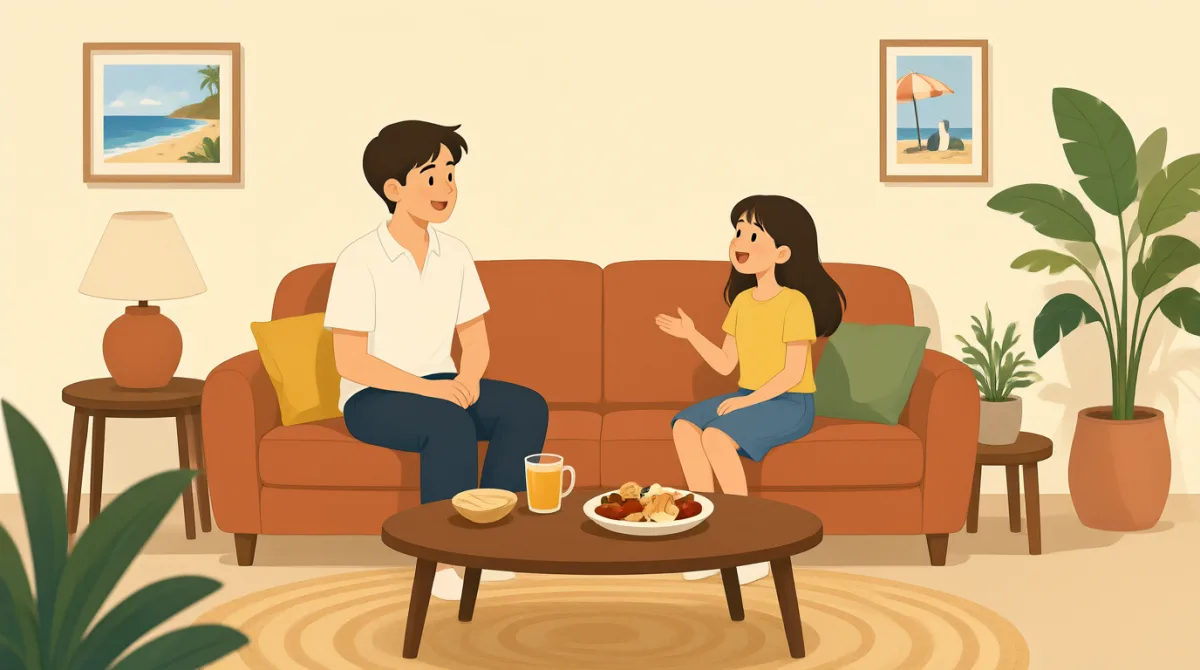

What did you do on your first day at the coast?
সমুদ্রতীরে প্রথম দিনে তুমি কী করেছিলে?

I walked along the beach and watched the waves.
আমি সমুদ্রসৈকত ধরে হেঁটেছি আর ঢেউ দেখেছি।
That sounds lovely. Did you go swimming, too?
শুনে তো বেশ ভালো লাগছে। তুমিও কি সাঁতার কেটেছিলে?
No, the water was too cold, so I just put my feet in.
না, পানি খুব ঠান্ডা ছিল, তাই শুধু পা দুটো পানিতে ডুবিয়েছিলাম।
What else did you do during your trip?
ভ্রমণের সময় আর কী কী করেছিলে?
I visited a small market and bought a few snacks.
আমি একটা ছোট বাজারে গিয়েছিলাম আর কয়েকটা হালকা খাবার কিনেছিলাম।
Did you try any local food while you were there?
ওখানে থাকতে স্থানীয় কোনো খাবার চেখে দেখেছিলে?
Yes, I had fresh fish and a bowl of seafood soup.
হ্যাঁ, তাজা মাছ খেয়েছিলাম আর এক বাটি সামুদ্রিক খাবারের স্যুপ।
শব্দভান্ডার8
- walked along the beachসমুদ্রসৈকত ধরে হেঁটেছিলাম
This means you walked beside the sea on the sand. Use “walked along” to say you moved beside something.
এর মানে, তুমি বালুর ওপর দিয়ে সমুদ্রের পাশ ধরে হেঁটেছিলে। কোনো কিছুর পাশ দিয়ে হাঁটা বোঝাতে “walked along” ব্যবহার করো।
- watched the wavesঢেউ দেখেছিলাম
This means you looked at the water as it moved toward the shore. You can use “watched” for something you looked at for a while.
এর মানে, পানি তীরের দিকে এগিয়ে আসার সময় তুমি তার দিকে তাকিয়ে ছিলে। কিছুক্ষণ ধরে কোনো কিছু দেখার কথা বলতে “watched” ব্যবহার করতে পারো।
- put my feet inপা দুটো পানিতে ডুবিয়েছিলাম
This means Mia put her feet into the water but did not go swimming. Use this phrase when you dip just part of your body into water.
এর মানে, মিয়া সাঁতার না কেটে শুধু পা দুটো পানিতে দিয়েছিল। শরীরের সামান্য অংশ পানিতে ডোবানোর কথা বলতে এই বাক্যাংশটি ব্যবহার করো।
- a small marketএকটি ছোট বাজার
This is a little place where people buy and sell food or other things. You can use “a small” before a singular noun to describe its size.
এটি এমন একটি ছোট জায়গা, যেখানে মানুষ খাবার বা অন্য জিনিস কেনাবেচা করে। কোনো একবচন বিশেষ্যের আগে “a small” বসিয়ে তার আকার বোঝানো যায়।
- bought a few snacksকয়েকটা হালকা খাবার কিনেছিলাম
This means Mia purchased some small foods to eat between meals. Use “a few” with plural things when you mean a small number.
এর মানে, মিয়া দুই বেলার খাবারের মাঝখানে খাওয়ার জন্য কিছু হালকা খাবার কিনেছিল। অল্পসংখ্যক একাধিক জিনিস বোঝাতে “a few” ব্যবহার করো।
- local foodস্থানীয় খাবার
This means food that is common in the place you are visiting. You can ask about it when you travel.
এর মানে, তুমি যে জায়গায় বেড়াতে গেছ, সেখানকার পরিচিত বা প্রচলিত খাবার। ভ্রমণের সময় এ সম্পর্কে জিজ্ঞেস করতে পারো।
- fresh fishতাজা মাছ
This means fish that is recently caught or prepared. You can use “fresh” to describe food that is not old.
এর মানে, সম্প্রতি ধরা বা প্রস্তুত করা মাছ। খাবার বাসি নয় বোঝাতে “fresh” ব্যবহার করতে পারো।
- seafood soupসামুদ্রিক খাবারের স্যুপ
This is soup made with seafood, such as fish or shellfish. You can use this phrase to name a kind of soup.
এটি মাছ বা খোলসওয়ালা সামুদ্রিক প্রাণীর মতো সামুদ্রিক খাবার দিয়ে তৈরি স্যুপ। একধরনের স্যুপের নাম বলতে এই বাক্যাংশটি ব্যবহার করতে পারো।
গুরুত্বপূর্ণ বাক্য8
- 1
What did you do on your first day at the coast?
সমুদ্রতীরে প্রথম দিনে তুমি কী করেছিলে?
This is a useful question for asking about someone's activities during a trip. Change “your first day” to another time, such as “your last day.”
ভ্রমণের সময় কেউ কী কী করেছে, তা জানতে এই প্রশ্নটি কাজে লাগে। “your first day”–এর জায়গায় অন্য কোনো সময়, যেমন “your last day,” বসাতে পারো।
- 2
I walked along the beach and watched the waves.
আমি সমুদ্রসৈকত ধরে হেঁটেছি আর ঢেউ দেখেছি।
This describes two past activities in one sentence. Use “I [past activity] and [past activity]” to talk about things you did.
এই বাক্যে অতীতে করা দুটি কাজের কথা বলা হয়েছে। তুমি কী কী করেছিলে তা বলতে “I [past activity] and [past activity]” ব্যবহার করো।
- 3
Did you go swimming, too?
তুমিও কি সাঁতার কেটেছিলে?
This is a simple way to ask if someone did an activity as well. Replace “go swimming” with another activity, such as “go shopping.”
কেউ কোনো কাজও করেছিল কি না, তা জানার এটি একটি সহজ উপায়। “go swimming”–এর জায়গায় “go shopping”-এর মতো অন্য কোনো কাজ বসাতে পারো।
- 4
No, the water was too cold, so I just put my feet in.
না, পানি খুব ঠান্ডা ছিল, তাই শুধু পা দুটো পানিতে ডুবিয়েছিলাম।
This explains why Mia did not swim and what she did instead. Use “too [adjective], so…” to give a reason and result.
মিয়া কেন সাঁতার কাটেনি এবং তার বদলে কী করেছিল, তা এখানে বলা হয়েছে। কোনো কারণ ও তার ফল বোঝাতে “too [adjective], so…” ব্যবহার করো।
- 5
What else did you do during your trip?
ভ্রমণের সময় আর কী কী করেছিলে?
Use this question to ask about more activities someone did. “What else” is a helpful way to continue a conversation.
কেউ আর কী কী কাজ করেছিল, তা জানতে এই প্রশ্নটি করো। কথোপকথন চালিয়ে যেতে “What else” বেশ কাজে লাগে।
- 6
I visited a small market and bought a few snacks.
আমি একটা ছোট বাজারে গিয়েছিলাম আর কয়েকটা হালকা খাবার কিনেছিলাম।
This sentence gives two examples of things Mia did on her trip. Use the simple past to describe completed activities.
এই বাক্যে মিয়ার ভ্রমণে করা দুটি কাজের উদাহরণ দেওয়া হয়েছে। শেষ হয়ে যাওয়া কাজের কথা বলতে simple past ব্যবহার করো।
- 7
Did you try any local food while you were there?
ওখানে থাকতে স্থানীয় কোনো খাবার চেখে দেখেছিলে?
This is a useful question about food someone tried during a visit. Replace “local food” with a dish or drink to ask about something specific.
কেউ বেড়াতে গিয়ে কী খাবার চেখে দেখেছে, তা জানতে এই প্রশ্নটি কাজে লাগে। নির্দিষ্ট কোনো খাবার বা পানীয় সম্পর্কে জানতে “local food”–এর জায়গায় সেটির নাম বসাও।
- 8
Yes, I had fresh fish and a bowl of seafood soup.
হ্যাঁ, তাজা মাছ খেয়েছিলাম আর এক বাটি সামুদ্রিক খাবারের স্যুপ।
This is a natural way to say what you ate. Use “I had” followed by foods or drinks when talking about a meal.
তুমি কী খেয়েছিলে, তা বলার এটি একটি স্বাভাবিক উপায়। খাবার বা পানীয়ের কথা বলতে “I had”–এর পরে সেগুলোর নাম বলো।