Getting There
การเดินทางไปถึงที่หมาย
Emma asks how Mia got to the coast. Mia explains that she took a train and then a bus.
เอ็มมาถามมีอาว่าเดินทางไปชายฝั่งอย่างไร มีอาเล่าว่านั่งรถไฟแล้วต่อรถบัส
บทสนทนา8
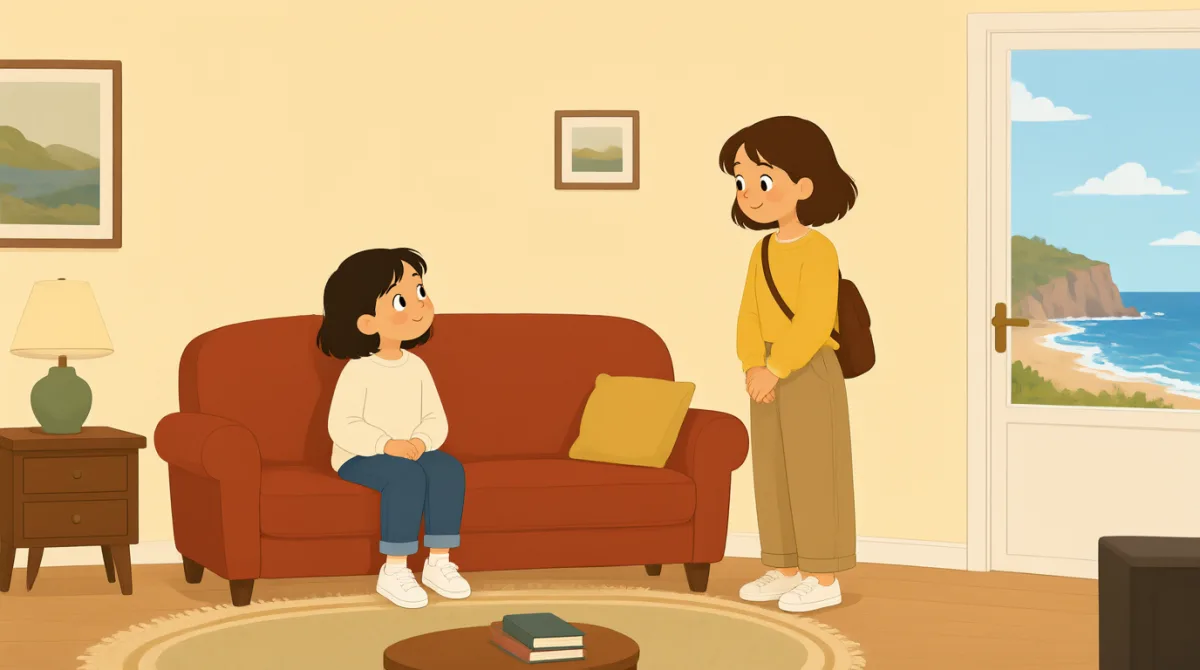

How did you get to the coast? Was the trip easy?
เธอไปชายฝั่งยังไงเหรอ? เดินทางสะดวกไหม?

I took a train to a small city near the coast.
ฉันนั่งรถไฟไปเมืองเล็ก ๆ ใกล้ชายฝั่งน่ะ
How long was the train ride?
นั่งรถไฟนานแค่ไหนเหรอ?
It took about three hours. The train was comfortable, so I read a book.
ประมาณสามชั่วโมง รถไฟนั่งสบาย ฉันก็เลยอ่านหนังสือไปด้วย
And how did you get from the city to the coast?
แล้วจากเมืองไปชายฝั่งเธอไปยังไง?
I took a bus from the train station. It took about forty minutes.
ฉันขึ้นรถบัสจากสถานีรถไฟ ใช้เวลาประมาณสี่สิบนาที
Was it easy to find the right bus?
หารรถบัสสายที่ถูกต้องง่ายไหม?
Yes, I asked at the station, and a worker showed me where to go.
ง่ายนะ ฉันถามเจ้าหน้าที่ที่สถานี แล้วเขาก็บอกทางให้ฉัน
คำศัพท์6
- get to the coastไปถึงชายฝั่ง
To travel to and arrive at the coast. You can use “get to” when asking how someone reached a place.
หมายถึงเดินทางไปถึงบริเวณชายฝั่ง ใช้ “get to” เวลาถามว่าใครเดินทางไปถึงสถานที่หนึ่งได้อย่างไร
- train rideการเดินทางด้วยรถไฟ
A journey by train. Use it to talk about how long a train trip took.
การเดินทางโดยรถไฟ ใช้พูดถึงว่าการเดินทางด้วยรถไฟใช้เวลานานแค่ไหน
- comfortableนั่งสบาย
Pleasant and relaxing to sit or travel in. You can use it to describe a train, bus, or seat.
ให้ความรู้สึกสบายและผ่อนคลายเวลานั่งหรือเดินทาง ใช้บรรยายรถไฟ รถบัส หรือที่นั่งได้
- train stationสถานีรถไฟ
A place where trains arrive and leave. You can also use it as a landmark when giving travel directions.
สถานที่ที่รถไฟจอดรับและส่งผู้โดยสาร นอกจากนี้ยังใช้เป็นจุดสังเกตเวลาบอกทางได้ด้วย
- right busรถบัสสายที่ถูกต้อง
The correct bus for your journey. Use “the right” to ask about finding the correct thing.
รถบัสที่ต้องขึ้นเพื่อไปยังจุดหมาย ใช้ “the right” เมื่อต้องการถามว่าหาสิ่งที่ถูกต้องเจอหรือไม่
- showed me where to goบอกทางให้ฉัน
Gave me directions by pointing out where I needed to go. This is a useful phrase for describing how someone helped you.
บอกหรือชี้ให้รู้ว่าต้องไปทางไหน เป็นวลีที่ใช้เล่าว่ามีคนช่วยบอกทางให้เราได้ดี
ประโยคสำคัญ7
- 1
How did you get to the coast?
เธอไปชายฝั่งยังไงเหรอ?
Use this question to ask how someone traveled to a place. You can replace “the coast” with another destination.
ใช้คำถามนี้ถามว่าใครเดินทางไปสถานที่หนึ่งอย่างไร เปลี่ยน “the coast” เป็นจุดหมายอื่นได้
- 2
Was the trip easy?
เดินทางสะดวกไหม?
This is a simple way to ask if someone’s journey was difficult or comfortable. You can use it after hearing about any trip.
เป็นวิธีถามง่าย ๆ ว่าการเดินทางลำบากหรือนั่งสบายไหม ใช้ถามหลังจากได้ฟังเรื่องการเดินทางได้ทุกแบบ
- 3
How long was the train ride?
นั่งรถไฟนานแค่ไหนเหรอ?
Use this question to ask about the length of a train journey. Replace “train ride” with “bus ride” or another journey.
ใช้คำถามนี้ถามว่าการเดินทางด้วยรถไฟใช้เวลานานแค่ไหน เปลี่ยน “train ride” เป็น “bus ride” หรือการเดินทางแบบอื่นได้
- 4
It took about three hours.
ใช้เวลาประมาณสามชั่วโมง
Use this sentence to say how long something took. Replace “three hours” with a different amount of time.
ใช้ประโยคนี้บอกว่าสิ่งหนึ่งใช้เวลานานแค่ไหน เปลี่ยน “three hours” เป็นระยะเวลาอื่นได้
- 5
The train was comfortable, so I read a book.
รถไฟนั่งสบาย ฉันก็เลยอ่านหนังสือ
This sentence connects a comfortable journey with an activity. Use “so” to explain what happened as a result.
ประโยคนี้เชื่อมการเดินทางที่นั่งสบายเข้ากับกิจกรรมที่ทำ ใช้ “so” เพื่อบอกผลที่เกิดขึ้น
- 6
Was it easy to find the right bus?
หารถบัสสายที่ถูกต้องง่ายไหม?
Use this question to ask if someone had trouble finding the correct bus. You can replace “bus” with another thing you need to find.
ใช้คำถามนี้ถามว่าอีกฝ่ายลำบากไหมตอนหารถบัสที่ถูกต้อง เปลี่ยน “bus” เป็นสิ่งอื่นที่ต้องหาได้
- 7
I asked at the station, and a worker showed me where to go.
ฉันถามที่สถานี แล้วเจ้าหน้าที่ก็บอกทางให้ฉัน
This sentence explains how someone got help with directions. You can change “at the station” to another place where you asked for help.
ประโยคนี้อธิบายว่าเราได้รับความช่วยเหลือเรื่องทางได้อย่างไร เปลี่ยน “at the station” เป็นสถานที่อื่นที่เราไปขอความช่วยเหลือได้