A Day by the Sea
یک روز کنار دریا
Mia tells Emma about the things she did on vacation, from walking along the beach to trying local food.
میا برای اِما از کارهایی میگوید که در تعطیلات انجام داده؛ از قدمزدن در ساحل تا امتحانکردن غذاهای محلی.
گفتوگو8
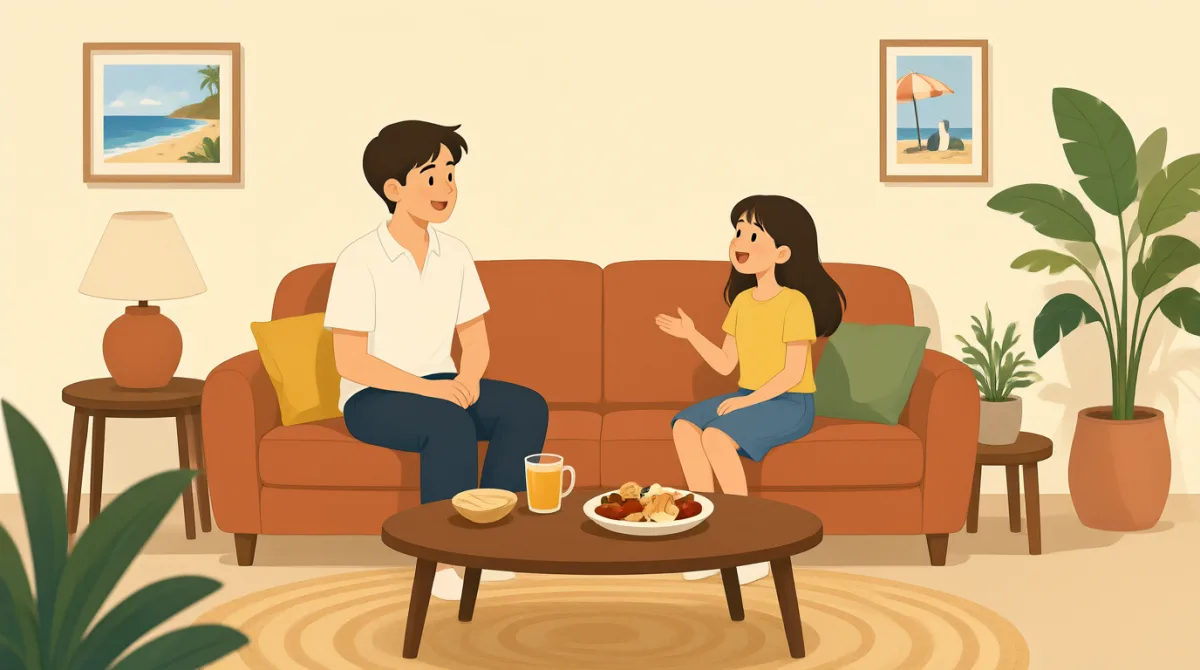

What did you do on your first day at the coast?
اولین روزت کنار دریا چه کار کردی؟

I walked along the beach and watched the waves.
در ساحل قدم زدم و موجها را تماشا کردم.
That sounds lovely. Did you go swimming, too?
چه خوب! شنا هم کردی؟
No, the water was too cold, so I just put my feet in.
نه، آب خیلی سرد بود، برای همین فقط پاهایم را توی آب گذاشتم.
What else did you do during your trip?
دیگر توی سفرت چه کار کردی؟
I visited a small market and bought a few snacks.
به یک بازار کوچک سر زدم و چند خوراکی خریدم.
Did you try any local food while you were there?
وقتی آنجا بودی، غذای محلی هم امتحان کردی؟
Yes, I had fresh fish and a bowl of seafood soup.
آره، ماهی تازه و یک کاسه سوپ دریایی خوردم.
واژگان8
- walked along the beachدر ساحل قدم زدم
This means you walked beside the sea on the sand. Use “walked along” to say you moved beside something.
یعنی کنار دریا، روی شنها قدم زدی. از “walked along” برای گفتنِ حرکتکردن در کنار چیزی استفاده میکنیم.
- watched the wavesموجها را تماشا کردم
This means you looked at the water as it moved toward the shore. You can use “watched” for something you looked at for a while.
یعنی به آب نگاه کردی که بهسمت ساحل میآمد. میتوانی از “watched” برای چیزی استفاده کنی که مدتی به آن نگاه کردهای.
- put my feet inپاهایم را توی آب گذاشتم
This means Mia put her feet into the water but did not go swimming. Use this phrase when you dip just part of your body into water.
یعنی میا پاهایش را توی آب گذاشت، اما شنا نکرد. وقتی فقط بخشی از بدنت را وارد آب میکنی، از این عبارت استفاده کن.
- a small marketیک بازار کوچک
This is a little place where people buy and sell food or other things. You can use “a small” before a singular noun to describe its size.
یعنی جای کوچکی که مردم در آن غذا یا چیزهای دیگری میخرند و میفروشند. میتوانی پیش از یک اسم مفرد از “a small” برای توصیف اندازهاش استفاده کنی.
- bought a few snacksچند خوراکی خریدم
This means Mia purchased some small foods to eat between meals. Use “a few” with plural things when you mean a small number.
یعنی میا چند خوراکی کوچک خرید تا بین وعدههای غذایی بخورد. وقتی منظورت تعداد کمی از چیزهای قابلشمارش است، از “a few” استفاده کن.
- local foodغذای محلی
This means food that is common in the place you are visiting. You can ask about it when you travel.
یعنی غذایی که در جایی که به آن سفر کردهای رایج است. وقتی سفر میکنی، میتوانی دربارهٔ آن بپرسی.
- fresh fishماهی تازه
This means fish that is recently caught or prepared. You can use “fresh” to describe food that is not old.
یعنی ماهیای که بهتازگی صید یا آماده شده است. میتوانی از “fresh” برای توصیف غذایی استفاده کنی که کهنه نیست.
- seafood soupسوپ دریایی
This is soup made with seafood, such as fish or shellfish. You can use this phrase to name a kind of soup.
یعنی سوپی که با غذاهای دریایی، مثل ماهی یا صدف، درست شده است. میتوانی با این عبارت نوعی سوپ را نام ببری.
جملات کلیدی8
- 1
What did you do on your first day at the coast?
اولین روزت کنار دریا چه کار کردی؟
This is a useful question for asking about someone's activities during a trip. Change “your first day” to another time, such as “your last day.”
این پرسش برای پرسیدن دربارهٔ کارهایی که کسی در سفر انجام داده مفید است. میتوانی “your first day” را با زمان دیگری، مثل “your last day”، عوض کنی.
- 2
I walked along the beach and watched the waves.
در ساحل قدم زدم و موجها را تماشا کردم.
This describes two past activities in one sentence. Use “I [past activity] and [past activity]” to talk about things you did.
این جمله دو کار گذشته را با هم توصیف میکند. برای صحبت دربارهٔ کارهایی که انجام دادهای، از الگوی “I [past activity] and [past activity]” استفاده کن.
- 3
Did you go swimming, too?
شنا هم کردی؟
This is a simple way to ask if someone did an activity as well. Replace “go swimming” with another activity, such as “go shopping.”
این روش سادهای برای پرسیدن دربارهٔ انجامدادن یک کار است. میتوانی “go swimming” را با کار دیگری، مثل “go shopping”، جایگزین کنی.
- 4
No, the water was too cold, so I just put my feet in.
نه، آب خیلی سرد بود، برای همین فقط پاهایم را توی آب گذاشتم.
This explains why Mia did not swim and what she did instead. Use “too [adjective], so…” to give a reason and result.
این جمله توضیح میدهد که چرا میا شنا نکرد و بهجای آن چه کار کرد. برای بیان دلیل و نتیجه، از الگوی “too [adjective], so…” استفاده کن.
- 5
What else did you do during your trip?
دیگر توی سفرت چه کار کردی؟
Use this question to ask about more activities someone did. “What else” is a helpful way to continue a conversation.
از این پرسش برای سؤالکردن دربارهٔ کارهای بیشتری که کسی انجام داده استفاده کن. “What else” راه خوبی برای ادامهدادن گفتوگو است.
- 6
I visited a small market and bought a few snacks.
به یک بازار کوچک سر زدم و چند خوراکی خریدم.
This sentence gives two examples of things Mia did on her trip. Use the simple past to describe completed activities.
این جمله دو نمونه از کارهایی را میگوید که میا در سفرش انجام داد. برای توصیف کارهای تمامشده از گذشتهٔ ساده استفاده کن.
- 7
Did you try any local food while you were there?
وقتی آنجا بودی، غذای محلی هم امتحان کردی؟
This is a useful question about food someone tried during a visit. Replace “local food” with a dish or drink to ask about something specific.
این پرسش برای پرسیدن دربارهٔ غذایی که کسی در طول سفر امتحان کرده مفید است. برای پرسیدن دربارهٔ چیزی مشخص، “local food” را با نام یک غذا یا نوشیدنی جایگزین کن.
- 8
Yes, I had fresh fish and a bowl of seafood soup.
آره، ماهی تازه و یک کاسه سوپ دریایی خوردم.
This is a natural way to say what you ate. Use “I had” followed by foods or drinks when talking about a meal.
این روش طبیعیای برای گفتنِ چیزی است که خوردهای. وقتی دربارهٔ یک وعدهٔ غذایی صحبت میکنی، بعد از “I had” نام غذاها یا نوشیدنیها را بیاور.