A Day by the Sea
海邊的一天
Mia tells Emma about the things she did on vacation, from walking along the beach to trying local food.
Mia告訴Emma她假期裡做了什麼,包括沿著海灘散步和品嚐當地美食。
對話8
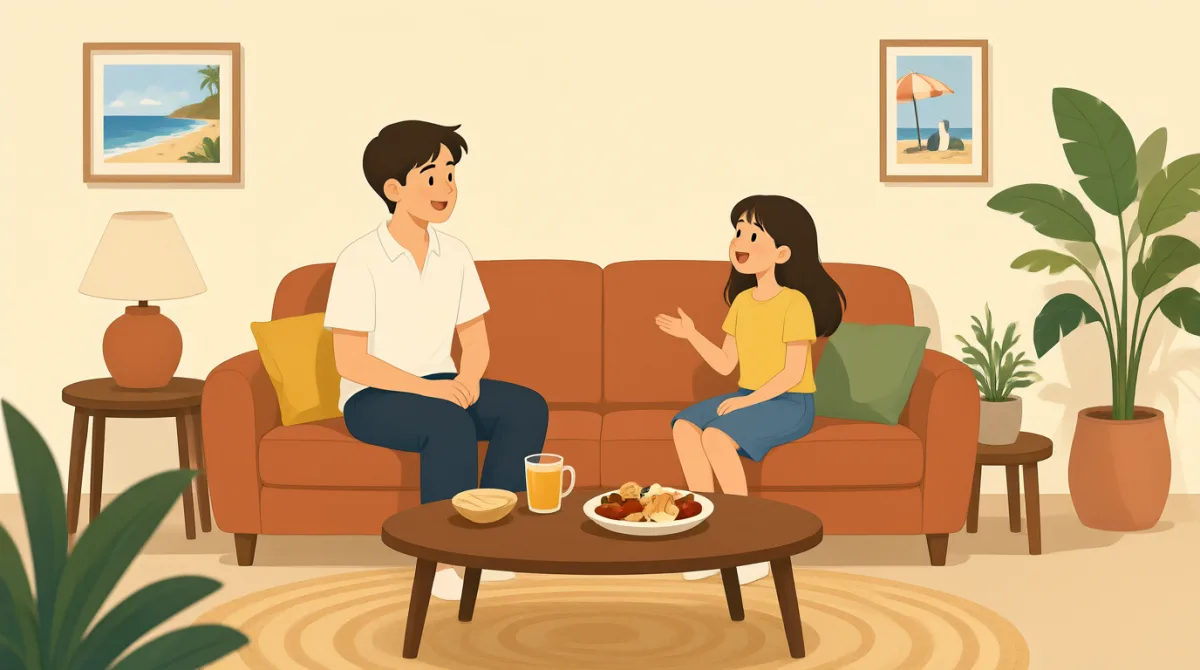

What did you do on your first day at the coast?
你在海邊的第一天做了什麼?

I walked along the beach and watched the waves.
我沿著海灘散步,還看了海浪。
That sounds lovely. Did you go swimming, too?
聽起來真不錯。你也去游泳了嗎?
No, the water was too cold, so I just put my feet in.
沒有,海水太冷了,所以我只把腳伸了進去。
What else did you do during your trip?
這趟旅行你還做了什麼?
I visited a small market and bought a few snacks.
我逛了一個小市場,還買了幾樣零食。
Did you try any local food while you were there?
你在那兒的時候嘗過當地美食嗎?
Yes, I had fresh fish and a bowl of seafood soup.
嚐了,我吃了新鮮的魚,還喝了一碗海鮮湯。
詞彙8
- walked along the beach沿著海灘散步了
This means you walked beside the sea on the sand. Use “walked along” to say you moved beside something.
意思是你在沙灘上沿著海邊走。用“walked along”表示沿著某個地方走。
- watched the waves看了海浪
This means you looked at the water as it moved toward the shore. You can use “watched” for something you looked at for a while.
意思是你看著海水湧向岸邊。可以用“watched”表示看某樣東西看了一會兒。
- put my feet in把腳伸進水裡
This means Mia put her feet into the water but did not go swimming. Use this phrase when you dip just part of your body into water.
意思是米婭把腳伸進水裡,但沒有去游泳。只把身體的一部分浸入水中時,可以用這個短語。
- a small market一個小市場
This is a little place where people buy and sell food or other things. You can use “a small” before a singular noun to describe its size.
這是一個人們買賣食物或其他東西的小地方。可以在單數名詞前用“a small”來描述它的大小。
- bought a few snacks買了幾樣零食
This means Mia purchased some small foods to eat between meals. Use “a few” with plural things when you mean a small number.
意思是米婭買了一些可以在兩餐之間吃的小食物。表示數量不多時,可以在可數名詞複數前用“a few”。
- local food當地美食
This means food that is common in the place you are visiting. You can ask about it when you travel.
意思是你去的地方常見的食物。旅行時可以問別人當地有什麼美食。
- fresh fish新鮮的魚
This means fish that is recently caught or prepared. You can use “fresh” to describe food that is not old.
意思是剛捕撈上來或剛處理好的魚。可以用“fresh”來形容不陳舊的食物。
- seafood soup海鮮湯
This is soup made with seafood, such as fish or shellfish. You can use this phrase to name a kind of soup.
這是用魚或貝類等海鮮做的湯。可以用這個短語來稱呼一種湯。
關鍵句8
- 1
What did you do on your first day at the coast?
你在海邊的第一天做了什麼?
This is a useful question for asking about someone's activities during a trip. Change “your first day” to another time, such as “your last day.”
這是詢問別人旅行期間做了什麼的實用問法。可以把“your first day”換成其他時間,比如“your last day”。
- 2
I walked along the beach and watched the waves.
我沿著海灘散步,還看了海浪。
This describes two past activities in one sentence. Use “I [past activity] and [past activity]” to talk about things you did.
這句話用一句話描述了過去做的兩件事。談論自己做過的事時,可以用“I [過去的活動] and [過去的活動]”這個句型。
- 3
Did you go swimming, too?
你也去游泳了嗎?
This is a simple way to ask if someone did an activity as well. Replace “go swimming” with another activity, such as “go shopping.”
這是詢問別人是否也做了某項活動的簡單說法。可以把“go swimming”換成其他活動,比如“go shopping”。
- 4
No, the water was too cold, so I just put my feet in.
沒有,海水太冷了,所以我只把腳伸了進去。
This explains why Mia did not swim and what she did instead. Use “too [adjective], so…” to give a reason and result.
這句話解釋了米婭為什麼沒游泳,以及她改做了什麼。可以用“too [形容詞], so…”來說明原因和結果。
- 5
What else did you do during your trip?
這趟旅行你還做了什麼?
Use this question to ask about more activities someone did. “What else” is a helpful way to continue a conversation.
用這個問題詢問別人還做過哪些活動。“What else”是繼續聊天時很實用的說法。
- 6
I visited a small market and bought a few snacks.
我逛了一個小市場,還買了幾樣零食。
This sentence gives two examples of things Mia did on her trip. Use the simple past to describe completed activities.
這句話舉了米婭旅行時做的兩件事。描述已經完成的活動時,可以用一般過去時。
- 7
Did you try any local food while you were there?
你在那兒的時候嘗過當地美食嗎?
This is a useful question about food someone tried during a visit. Replace “local food” with a dish or drink to ask about something specific.
這是詢問別人到訪時嘗過什麼食物的實用問法。可以把“local food”換成某種菜或飲料,問得更具體。
- 8
Yes, I had fresh fish and a bowl of seafood soup.
嚐了,我吃了新鮮的魚,還喝了一碗海鮮湯。
This is a natural way to say what you ate. Use “I had” followed by foods or drinks when talking about a meal.
這是自然地說出自己吃了什麼的說法。談論一頓飯時,可以用“I had”後接食物或飲料。