A Day by the Sea
يوم على شاطئ البحر
Mia tells Emma about the things she did on vacation, from walking along the beach to trying local food.
تخبر ميا إيما عمّا فعلته في إجازتها، من التجول على الشاطئ إلى تذوق الطعام المحلي.
حوار8
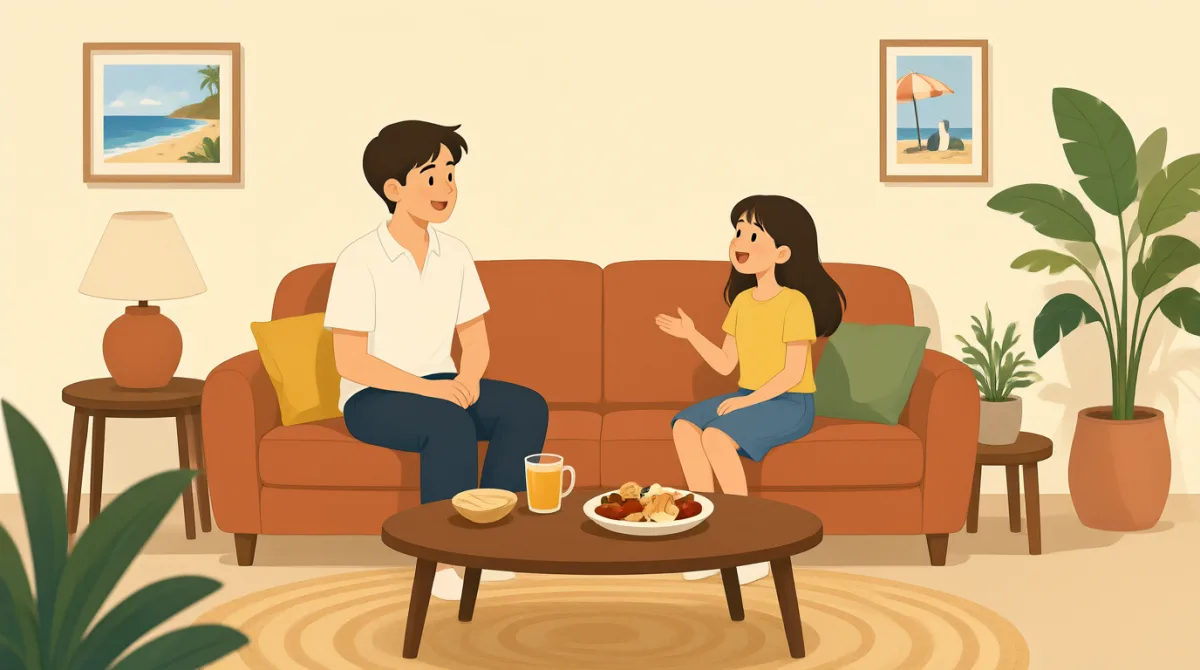

What did you do on your first day at the coast?
ماذا فعلتِ في يومكِ الأول على الساحل؟

I walked along the beach and watched the waves.
تجولتُ على الشاطئ وشاهدتُ الأمواج.
That sounds lovely. Did you go swimming, too?
يبدو ذلك ممتعًا. هل سبحتِ أيضًا؟
No, the water was too cold, so I just put my feet in.
لا، كان الماء باردًا جدًا، لذا غمستُ قدميّ فيه فحسب.
What else did you do during your trip?
ماذا فعلتِ أيضًا خلال رحلتكِ؟
I visited a small market and bought a few snacks.
زرتُ سوقًا صغيرًا واشتريتُ بعض الوجبات الخفيفة.
Did you try any local food while you were there?
هل تذوقتِ أي طعام محلي أثناء وجودكِ هناك؟
Yes, I had fresh fish and a bowl of seafood soup.
نعم، تناولتُ سمكًا طازجًا ووعاءً من حساء المأكولات البحرية.
المفردات8
- walked along the beachتجولتُ على الشاطئ
This means you walked beside the sea on the sand. Use “walked along” to say you moved beside something.
يعني هذا أنكِ مشيتِ بمحاذاة البحر فوق الرمال. استخدمي “walked along” للتعبير عن السير بمحاذاة شيء ما.
- watched the wavesشاهدتُ الأمواج
This means you looked at the water as it moved toward the shore. You can use “watched” for something you looked at for a while.
يعني هذا أنكِ نظرتِ إلى الماء وهو يتحرك باتجاه الشاطئ. يمكنكِ استخدام “watched” لشيء نظرتِ إليه لبعض الوقت.
- put my feet inغمستُ قدميّ فيه
This means Mia put her feet into the water but did not go swimming. Use this phrase when you dip just part of your body into water.
يعني هذا أن ميا وضعت قدميها في الماء لكنها لم تسبح. استخدمي هذه العبارة عندما تغمسين جزءًا من جسمكِ في الماء فقط.
- a small marketسوق صغير
This is a little place where people buy and sell food or other things. You can use “a small” before a singular noun to describe its size.
هذا مكان صغير يشتري فيه الناس الطعام أو أشياء أخرى ويبيعونها. يمكنكِ استخدام “a small” قبل اسم مفرد لوصف حجمه.
- bought a few snacksاشتريتُ بعض الوجبات الخفيفة
This means Mia purchased some small foods to eat between meals. Use “a few” with plural things when you mean a small number.
يعني هذا أن ميا اشترت بعض الأطعمة الصغيرة لتتناولها بين الوجبات. استخدمي “a few” مع الأسماء المعدودة في الجمع للتعبير عن عدد قليل.
- local foodالطعام المحلي
This means food that is common in the place you are visiting. You can ask about it when you travel.
يعني هذا الطعام الشائع في المكان الذي تزورينه. يمكنكِ السؤال عنه أثناء السفر.
- fresh fishسمك طازج
This means fish that is recently caught or prepared. You can use “fresh” to describe food that is not old.
يعني هذا سمكًا صُيد أو أُعدّ حديثًا. يمكنكِ استخدام “fresh” لوصف طعام غير قديم.
- seafood soupحساء المأكولات البحرية
This is soup made with seafood, such as fish or shellfish. You can use this phrase to name a kind of soup.
هو حساء يُحضّر من المأكولات البحرية، مثل السمك أو المحار. يمكنكِ استخدام هذه العبارة لتسمية نوع من الحساء.
الجمل الأساسية8
- 1
What did you do on your first day at the coast?
ماذا فعلتِ في يومكِ الأول على الساحل؟
This is a useful question for asking about someone's activities during a trip. Change “your first day” to another time, such as “your last day.”
هذا سؤال مفيد للاستفسار عمّا فعله شخص ما خلال رحلة. غيّري “your first day” إلى وقت آخر، مثل “your last day.”
- 2
I walked along the beach and watched the waves.
تجولتُ على الشاطئ وشاهدتُ الأمواج.
This describes two past activities in one sentence. Use “I [past activity] and [past activity]” to talk about things you did.
تصف هذه الجملة نشاطين في الماضي. استخدمي “I [past activity] and [past activity]” للتحدث عن أشياء فعلتِها.
- 3
Did you go swimming, too?
هل سبحتِ أيضًا؟
This is a simple way to ask if someone did an activity as well. Replace “go swimming” with another activity, such as “go shopping.”
هذه طريقة بسيطة للسؤال عما إذا كان شخص ما قد قام بنشاط أيضًا. استبدلي “go swimming” بنشاط آخر، مثل “go shopping.”
- 4
No, the water was too cold, so I just put my feet in.
لا، كان الماء باردًا جدًا، لذا غمستُ قدميّ فيه فحسب.
This explains why Mia did not swim and what she did instead. Use “too [adjective], so…” to give a reason and result.
توضح هذه الجملة سبب عدم سباحة ميا وما فعلته بدلًا من ذلك. استخدمي “too [adjective], so…” لذكر السبب والنتيجة.
- 5
What else did you do during your trip?
ماذا فعلتِ أيضًا خلال رحلتكِ؟
Use this question to ask about more activities someone did. “What else” is a helpful way to continue a conversation.
استخدمي هذا السؤال للاستفسار عن أنشطة أخرى قام بها شخص ما. “What else” طريقة مفيدة لمواصلة المحادثة.
- 6
I visited a small market and bought a few snacks.
زرتُ سوقًا صغيرًا واشتريتُ بعض الوجبات الخفيفة.
This sentence gives two examples of things Mia did on her trip. Use the simple past to describe completed activities.
تذكر هذه الجملة مثالين على أشياء فعلتها ميا في رحلتها. استخدمي الماضي البسيط لوصف أنشطة اكتملت.
- 7
Did you try any local food while you were there?
هل تذوقتِ أي طعام محلي أثناء وجودكِ هناك؟
This is a useful question about food someone tried during a visit. Replace “local food” with a dish or drink to ask about something specific.
هذا سؤال مفيد عن الطعام الذي تذوقه شخص ما خلال زيارة. استبدلي “local food” بطبق أو مشروب لتسألي عن شيء محدد.
- 8
Yes, I had fresh fish and a bowl of seafood soup.
نعم، تناولتُ سمكًا طازجًا ووعاءً من حساء المأكولات البحرية.
This is a natural way to say what you ate. Use “I had” followed by foods or drinks when talking about a meal.
هذه طريقة طبيعية لذكر ما أكلتِه. استخدمي “I had” متبوعةً بأطعمة أو مشروبات عند الحديث عن وجبة.