A Day by the Sea
समुद्र किनारे एक दिन
Mia tells Emma about the things she did on vacation, from walking along the beach to trying local food.
मिया एमा को छुट्टियों में की गई गतिविधियों के बारे में बताती है—समुद्र तट पर टहलने से लेकर वहाँ का खाना चखने तक।
संवाद8
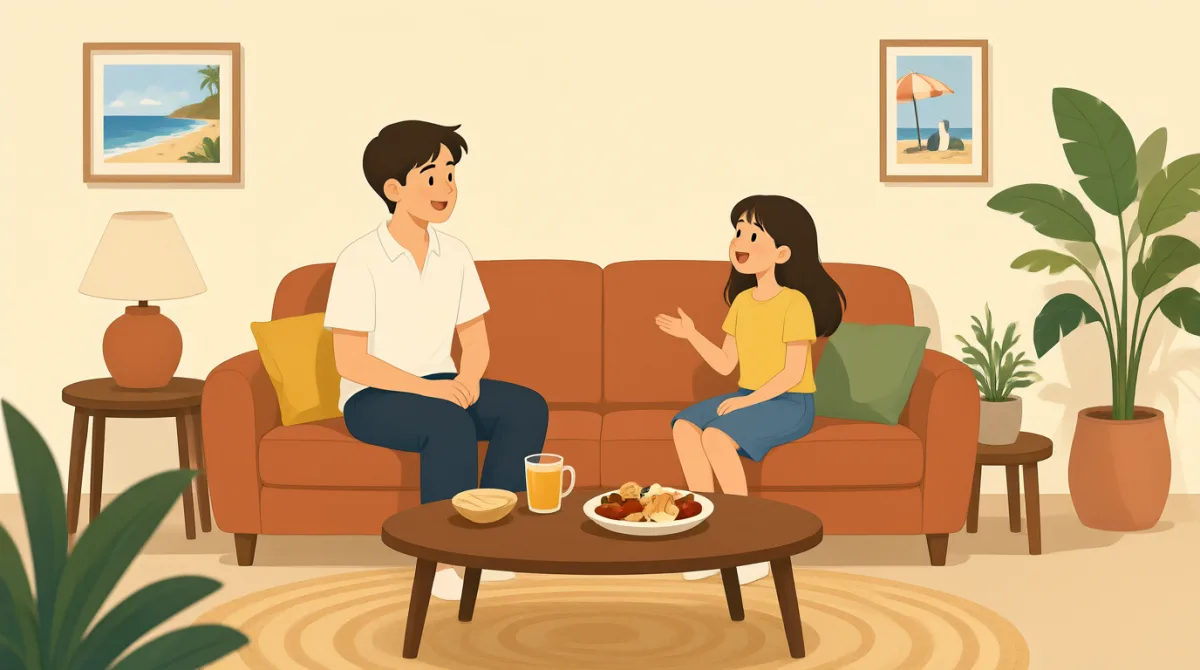

What did you do on your first day at the coast?
समुद्र किनारे अपने पहले दिन तुमने क्या किया?

I walked along the beach and watched the waves.
मैं समुद्र तट पर टहली और लहरें देखती रही।
That sounds lovely. Did you go swimming, too?
अच्छा लग रहा है सुनकर। क्या तुम तैरने भी गई?
No, the water was too cold, so I just put my feet in.
नहीं, पानी बहुत ठंडा था, इसलिए मैंने बस अपने पैर पानी में डाले।
What else did you do during your trip?
अपनी यात्रा के दौरान तुमने और क्या किया?
I visited a small market and bought a few snacks.
मैं एक छोटे से बाज़ार गई और कुछ नाश्ता खरीदा।
Did you try any local food while you were there?
क्या तुमने वहाँ का कोई स्थानीय खाना चखा?
Yes, I had fresh fish and a bowl of seafood soup.
हाँ, मैंने ताज़ी मछली और एक कटोरी समुद्री खाने का सूप पिया।
शब्दावली8
- walked along the beachसमुद्र तट पर टहली
This means you walked beside the sea on the sand. Use “walked along” to say you moved beside something.
इसका मतलब है कि तुम रेत पर समुद्र के किनारे-किनारे चलीं। किसी चीज़ के साथ-साथ चलने की बात कहने के लिए “walked along” का इस्तेमाल करो।
- watched the wavesलहरें देखती रही
This means you looked at the water as it moved toward the shore. You can use “watched” for something you looked at for a while.
इसका मतलब है कि तुमने पानी को किनारे की ओर आते हुए देखा। किसी ऐसी चीज़ के लिए, जिसे तुमने कुछ देर तक देखा हो, “watched” कह सकते हो।
- put my feet inअपने पैर पानी में डाले
This means Mia put her feet into the water but did not go swimming. Use this phrase when you dip just part of your body into water.
इसका मतलब है कि मिया ने पानी में पैर डाले, लेकिन तैरने नहीं गई। शरीर के सिर्फ़ किसी हिस्से को पानी में डालने के लिए इस वाक्यांश का इस्तेमाल करो।
- a small marketएक छोटा बाज़ार
This is a little place where people buy and sell food or other things. You can use “a small” before a singular noun to describe its size.
यह एक छोटी-सी जगह होती है जहाँ लोग खाना या दूसरी चीज़ें खरीदते-बेचते हैं। किसी एकवचन संज्ञा के आकार के बारे में बताने के लिए उसके पहले “a small” का इस्तेमाल कर सकते हो।
- bought a few snacksकुछ नाश्ता खरीदा
This means Mia purchased some small foods to eat between meals. Use “a few” with plural things when you mean a small number.
इसका मतलब है कि मिया ने खाने के बीच में खाने के लिए कुछ हल्की चीज़ें खरीदीं। थोड़ी-सी संख्या बताने के लिए बहुवचन संज्ञा के साथ “a few” का इस्तेमाल करो।
- local foodस्थानीय खाना
This means food that is common in the place you are visiting. You can ask about it when you travel.
इसका मतलब है ऐसा खाना जो उस जगह पर आम तौर पर खाया जाता है जहाँ तुम घूमने गए हो। यात्रा करते समय तुम इसके बारे में पूछ सकते हो।
- fresh fishताज़ी मछली
This means fish that is recently caught or prepared. You can use “fresh” to describe food that is not old.
इसका मतलब है हाल ही में पकड़ी या तैयार की गई मछली। जो खाना पुराना न हो, उसका वर्णन करने के लिए “fresh” का इस्तेमाल कर सकते हो।
- seafood soupसमुद्री खाने का सूप
This is soup made with seafood, such as fish or shellfish. You can use this phrase to name a kind of soup.
यह ऐसा सूप है जो मछली या शंख-सीप जैसे समुद्री खाने से बनाया जाता है। सूप की किसी किस्म का नाम बताने के लिए इस वाक्यांश का इस्तेमाल करो।
मुख्य वाक्य8
- 1
What did you do on your first day at the coast?
समुद्र किनारे अपने पहले दिन तुमने क्या किया?
This is a useful question for asking about someone's activities during a trip. Change “your first day” to another time, such as “your last day.”
यात्रा के दौरान किसी ने क्या-क्या किया, यह पूछने के लिए यह एक उपयोगी सवाल है। “your first day” की जगह कोई और समय रख सकते हो, जैसे “your last day”।
- 2
I walked along the beach and watched the waves.
मैं समुद्र तट पर टहली और लहरें देखती रही।
This describes two past activities in one sentence. Use “I [past activity] and [past activity]” to talk about things you did.
इस वाक्य में बीते समय की दो गतिविधियों का ज़िक्र है। अपनी की हुई गतिविधियों के बारे में बताने के लिए “I [past activity] and [past activity]” का इस्तेमाल करो।
- 3
Did you go swimming, too?
क्या तुम तैरने भी गई?
This is a simple way to ask if someone did an activity as well. Replace “go swimming” with another activity, such as “go shopping.”
किसी से यह पूछने का यह आसान तरीका है कि उसने भी कोई गतिविधि की या नहीं। “go swimming” की जगह कोई दूसरी गतिविधि रखो, जैसे “go shopping”।
- 4
No, the water was too cold, so I just put my feet in.
नहीं, पानी बहुत ठंडा था, इसलिए मैंने बस अपने पैर पानी में डाले।
This explains why Mia did not swim and what she did instead. Use “too [adjective], so…” to give a reason and result.
इसमें बताया गया है कि मिया ने तैराकी क्यों नहीं की और इसके बजाय क्या किया। वजह और उसका नतीजा बताने के लिए “too [adjective], so…” का इस्तेमाल करो।
- 5
What else did you do during your trip?
अपनी यात्रा के दौरान तुमने और क्या किया?
Use this question to ask about more activities someone did. “What else” is a helpful way to continue a conversation.
किसी ने और कौन-सी गतिविधियाँ कीं, यह पूछने के लिए इस सवाल का इस्तेमाल करो। बातचीत आगे बढ़ाने के लिए “What else” बहुत काम आता है।
- 6
I visited a small market and bought a few snacks.
मैं एक छोटे से बाज़ार गई और कुछ नाश्ता खरीदा।
This sentence gives two examples of things Mia did on her trip. Use the simple past to describe completed activities.
यह वाक्य मिया की यात्रा के दौरान की गई दो गतिविधियों के उदाहरण देता है। पूरी हो चुकी गतिविधियों के बारे में बताने के लिए साधारण भूतकाल का इस्तेमाल करो।
- 7
Did you try any local food while you were there?
क्या तुमने वहाँ का कोई स्थानीय खाना चखा?
This is a useful question about food someone tried during a visit. Replace “local food” with a dish or drink to ask about something specific.
यह किसी से उसकी यात्रा के दौरान चखे गए खाने के बारे में पूछने का उपयोगी सवाल है। किसी खास चीज़ के बारे में पूछने के लिए “local food” की जगह किसी व्यंजन या पेय का नाम रखो।
- 8
Yes, I had fresh fish and a bowl of seafood soup.
हाँ, मैंने ताज़ी मछली और एक कटोरी समुद्री खाने का सूप खाया।
This is a natural way to say what you ate. Use “I had” followed by foods or drinks when talking about a meal.
तुमने क्या खाया, यह बताने का यह एक स्वाभाविक तरीका है। खाने या पीने की चीज़ों के बारे में बताते समय “I had” के बाद उन चीज़ों के नाम कहो।