Asking About the Size
ถามเกี่ยวกับขนาด
Emma asks Jack how wide the sofa is and checks whether it will fit in her living room. Jack helps her compare its measurements.
เอ็มมาถามแจ็กว่าโซฟากว้างเท่าไร และเช็กว่าจะวางในห้องนั่งเล่นของเธอได้ไหม แจ็กช่วยเธอเปรียบเทียบขนาด
บทสนทนา8
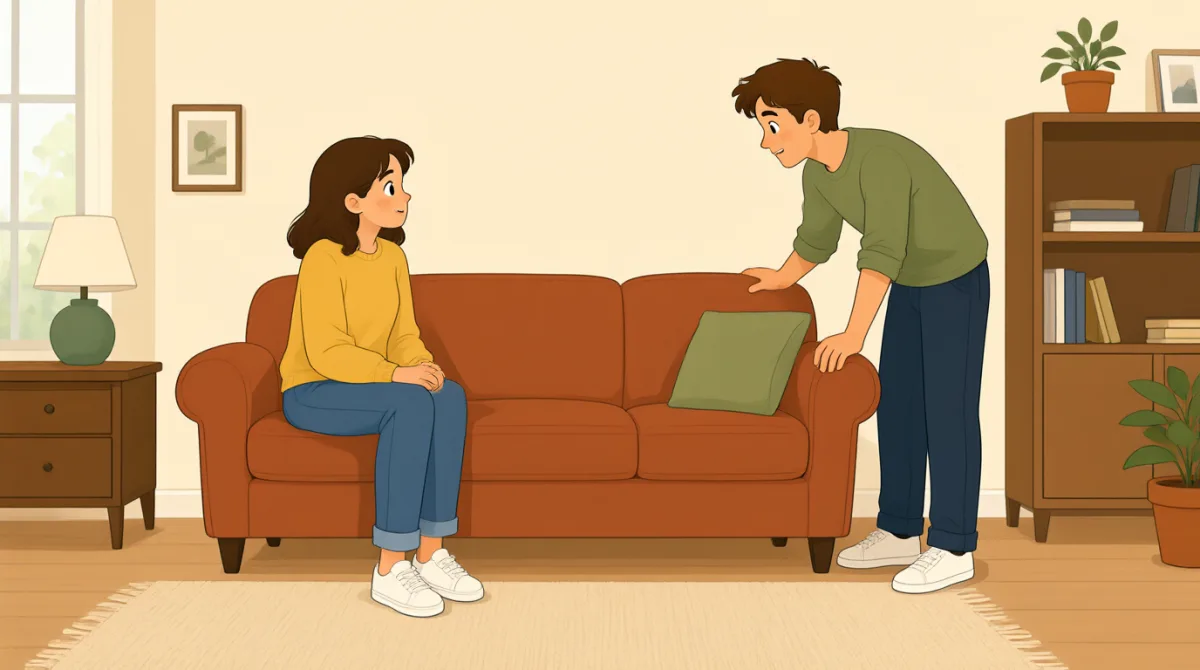

How wide is this sofa? I want to make sure it fits in my living room.
โซฟาตัวนี้กว้างเท่าไรคะ อยากแน่ใจว่ามันวางในห้องนั่งเล่นได้ค่ะ

It's eighty inches wide, and the seat is thirty-six inches deep.
กว้างแปดสิบนิ้วครับ ส่วนที่นั่งลึกสามสิบหกนิ้วครับ
My living room is about nine feet wide. Is that enough space?
ห้องนั่งเล่นของฉันกว้างประมาณเก้าฟุตค่ะ พื้นที่จะพอไหมคะ
It should fit, but leave some room to walk around it.
น่าจะวางได้ครับ แต่เว้นที่ไว้เดินรอบ ๆ ด้วยนะครับ
I measured the wall yesterday. It's ten feet long.
เมื่อวานฉันวัดผนังแล้วค่ะ ยาวสิบฟุต
That gives you about two feet on each side of the sofa.
แบบนั้นก็จะเหลือข้างโซฟาข้างละประมาณสองฟุตครับ
What about the depth? Will it leave enough room in front?
แล้วความลึกล่ะคะ ข้างหน้าจะเหลือที่พอไหม
If you leave three feet between the sofa and the table, you'll have room to walk.
ถ้าเว้นระหว่างโซฟากับโต๊ะไว้สามฟุต ก็จะมีที่เดินครับ
คำศัพท์8
- make sureแน่ใจ
To check that something is true or will happen. Use it when you want to confirm that furniture will fit.
ใช้เมื่อต้องการตรวจสอบว่าสิ่งใดเป็นจริงหรือจะเกิดขึ้น เช่น เช็กให้แน่ใจว่าเฟอร์นิเจอร์วางได้พอดี
- fits in my living roomวางในห้องนั่งเล่นของฉันได้พอดี
Means that something is the right size to go in your living room. You can use “fits in” to talk about whether an item will go in a space.
หมายถึงสิ่งนั้นมีขนาดพอเหมาะที่จะวางในห้องนั่งเล่นของคุณ ใช้ “fits in” เพื่อพูดถึงว่าสิ่งของจะวางในพื้นที่หนึ่งได้หรือไม่
- wideกว้าง
Describes the measurement from one side to the other. Ask “How wide is it?” to find out an item's width.
ใช้บอกระยะจากด้านหนึ่งไปอีกด้านหนึ่ง ถามว่า “How wide is it?” เพื่อถามว่าสิ่งของชิ้นนั้นกว้างเท่าไร
- deepลึก
Describes how far something goes from front to back. Ask “How deep is it?” to check how much space it needs.
ใช้บอกว่าสิ่งของกินระยะจากด้านหน้าไปด้านหลังมากแค่ไหน ถามว่า “How deep is it?” เพื่อเช็กว่าต้องใช้พื้นที่ลึกเท่าไร
- leave some roomเว้นที่ไว้บ้าง
Means to keep some space free. Use it when planning where to put furniture so people can move around.
หมายถึงเหลือพื้นที่ว่างไว้ ใช้ตอนวางแผนจัดเฟอร์นิเจอร์ เพื่อให้คนเดินไปมาได้
- measured the wallวัดผนังแล้ว
Means checked how long or wide the wall is. You can measure a room or wall before buying furniture.
หมายถึงตรวจดูว่าผนังยาวหรือกว้างเท่าไร คุณสามารถวัดห้องหรือผนังก่อนซื้อเฟอร์นิเจอร์ได้
- on each sideข้างละ
Means on both sides of something. Use it to describe how space is divided around an object.
หมายถึงทั้งสองด้านของสิ่งหนึ่ง ใช้อธิบายว่าพื้นที่รอบสิ่งของถูกแบ่งไว้อย่างไร
- room to walkมีที่ให้เดิน
Means enough open space for people to move around. You can use this phrase when arranging furniture.
หมายถึงมีพื้นที่ว่างเพียงพอให้คนเดินไปมา ใช้สำนวนนี้เมื่อจัดวางเฟอร์นิเจอร์ได้
ประโยคสำคัญ8
- 1
How wide is this sofa?
โซฟาตัวนี้กว้างเท่าไรคะ
A simple way to ask for the width of an item. You can replace “sofa” with another piece of furniture.
เป็นวิธีถามความกว้างของสิ่งของแบบง่าย ๆ คุณเปลี่ยน “sofa” เป็นเฟอร์นิเจอร์ชนิดอื่นได้
- 2
I want to make sure it fits in my living room.
อยากแน่ใจว่ามันวางในห้องนั่งเล่นของฉันได้ค่ะ
Use this to explain that you are checking an item's size before buying it. Replace “living room” with another space.
ใช้ประโยคนี้เพื่อบอกว่าคุณกำลังเช็กขนาดของสิ่งของก่อนซื้อ เปลี่ยน “living room” เป็นพื้นที่อื่นได้
- 3
My living room is about nine feet wide.
ห้องนั่งเล่นของฉันกว้างประมาณเก้าฟุตค่ะ
This sentence gives an approximate measurement. Use “about” when you are not giving an exact number.
ประโยคนี้บอกขนาดโดยประมาณ ใช้ “about” เมื่อคุณไม่ได้ระบุตัวเลขที่แน่นอน
- 4
It should fit, but leave some room to walk around it.
น่าจะวางได้ครับ แต่เว้นที่ไว้เดินรอบ ๆ ด้วยนะครับ
This gives a helpful opinion about fit and space. Use “It should fit, but…” to mention a condition or concern.
ประโยคนี้บอกความเห็นที่เป็นประโยชน์เกี่ยวกับการวางของและพื้นที่ ใช้ “It should fit, but…” เพื่อบอกเงื่อนไขหรือข้อกังวล
- 5
I measured the wall yesterday.
เมื่อวานฉันวัดผนังแล้วค่ะ
Use this to say that you checked a wall's size in the past. You can replace “the wall” with “the room” or another object.
ใช้ประโยคนี้เพื่อบอกว่าคุณวัดขนาดผนังไปแล้วในอดีต คุณเปลี่ยน “the wall” เป็น “the room” หรือสิ่งของอื่นได้
- 6
What about the depth?
แล้วความลึกล่ะคะ
A short way to ask about another measurement. Use “What about…?” to bring up a new detail.
เป็นวิธีสั้น ๆ ในการถามถึงขนาดอีกด้าน ใช้ “What about…?” เมื่อต้องการถามรายละเอียดใหม่
- 7
Will it leave enough room in front?
ข้างหน้าจะเหลือที่พอไหมคะ
This asks whether there will be enough open space in front of an item. You can use it when planning a room layout.
ประโยคนี้ถามว่าจะมีพื้นที่ว่างข้างหน้าสิ่งของเพียงพอหรือไม่ ใช้ได้เมื่อวางแผนจัดห้อง
- 8
If you leave three feet between the sofa and the table, you'll have room to walk.
ถ้าเว้นระหว่างโซฟากับโต๊ะไว้สามฟุต ก็จะมีที่เดินครับ
This explains how much space to leave so people can move around. Use “If you leave [space] between [items], you'll have room to walk” for other furniture.
ประโยคนี้อธิบายว่าควรเว้นพื้นที่เท่าไรเพื่อให้คนเดินไปมาได้ ใช้ “If you leave [space] between [items], you'll have room to walk” เมื่อต้องการพูดถึงเฟอร์นิเจอร์ชิ้นอื่น