Commenting on the Long Line
พูดถึงแถวที่ยาวเหยียด
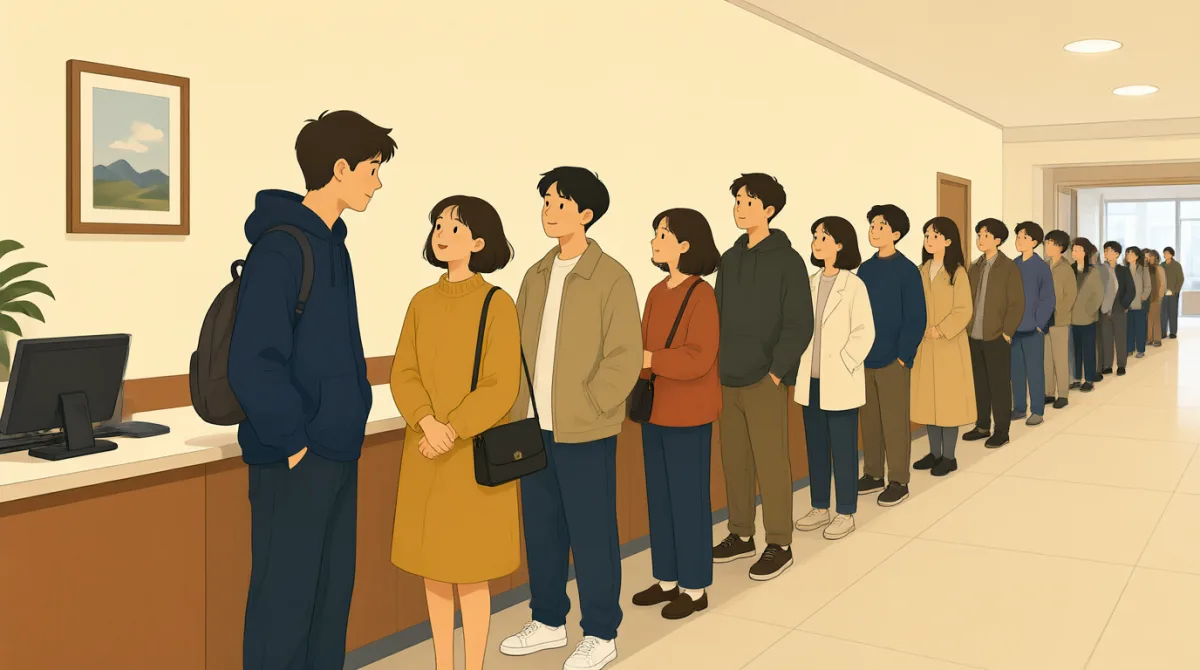
Two people waiting in a long line make eye contact and start a conversation by acknowledging how long the wait is.
คนสองคนที่กำลังต่อแถวยาวสบตากัน แล้วเริ่มคุยด้วยการพูดถึงว่าต้องรอนานแค่ไหน
บทสนทนา8

Wow, this line is never-ending, is it?
โห แถวยาวไม่รู้จักจบเลยเนอะ

Tell me about it! I thought coming at this hour would help, but clearly not.
จริงด้วย! นึกว่ามาตอนนี้แล้วจะช่วยได้ แต่ดูแล้วก็ไม่เลย
Me too! I've been standing here for at least 15 minutes already, and it barely seems to have moved.
ฉันก็เหมือนกัน! ยืนอยู่ตรงนี้มาอย่างน้อย 15 นาทีแล้ว แต่แถวแทบไม่ขยับเลย
At this rate, we'll be here all day. What are you waiting for, if you don't mind me asking?
ถ้ายังช้าแบบนี้ คงได้อยู่ที่นี่กันทั้งวันแน่ ว่าแต่คุณมารอทำอะไร ถ้าไม่ถือที่ถามนะ
Just trying to pick up a new ID. And you?
แค่มารับบัตรประจำตัวใบใหม่ แล้วคุณล่ะ
Passport renewal. Always a joy, isn't it?
มาต่ออายุพาสปอร์ต น่าสนุกตายเลยเนอะ
Definitely not! Well, I guess we're in this together for a while.
ไม่สนุกเลยสักนิด! สงสัยเราคงต้องทนอยู่ด้วยกันอีกพักใหญ่
Looks like it. Good luck to us!
ดูท่าจะเป็นอย่างนั้นนะ ขอให้เราโชคดี!
คำศัพท์6
- never-endingยาวไม่รู้จบ
Means something that seems to go on forever without stopping, often used to complain about long waits or boring tasks.
หมายถึงสิ่งที่ดูเหมือนจะดำเนินต่อไปไม่รู้จบ มักใช้บ่นเวลาต้องรอนานหรือทำงานน่าเบื่อ
- Tell me about it!จริงด้วย! / เข้าใจเลย!
An idiomatic expression used to strongly agree with someone's complaint, like saying 'I know exactly what you mean!' in casual conversations.
สำนวนที่ใช้เห็นด้วยอย่างมากกับคำบ่นของอีกฝ่าย คล้ายกับพูดว่า 'ฉันเข้าใจที่คุณพูดเลย!' ในบทสนทนาสบาย ๆ
- at this rateถ้ายังเป็นแบบนี้
A phrase meaning 'if things continue in this way,' often used to predict a frustrating outcome, like a long delay.
วลีที่หมายถึง 'ถ้าสิ่งต่าง ๆ ยังดำเนินไปแบบนี้' มักใช้คาดเดาผลลัพธ์ที่น่าหงุดหงิด เช่น การรอที่ยืดเยื้อ
- pick upไปรับ
In this context, means to collect or get something that is ready for you, like documents from an office.
ในบริบทนี้ หมายถึงไปรับหรือไปเอาสิ่งที่เตรียมไว้ให้แล้ว เช่น เอกสารจากสำนักงาน
- renewalการต่ออายุ
The process of extending or updating something official, like a passport or license, that is expiring.
กระบวนการขยายอายุหรือปรับปรุงสิ่งที่เป็นทางการ เช่น พาสปอร์ตหรือใบอนุญาตที่กำลังจะหมดอายุ
- joyความสุข
Happiness or pleasure, but here used sarcastically to mean the opposite, like saying something is annoying.
หมายถึงความสุขหรือความเพลิดเพลิน แต่ในที่นี้ใช้ประชดเพื่อสื่อความหมายตรงข้าม เช่น สิ่งที่น่ารำคาญ
ประโยคสำคัญ8
- 1
Wow, this line is never-ending, is it?
โห แถวยาวไม่รู้จักจบเลยเนอะ
This is a casual way to start small talk by complaining and using a tag question ('is it?') to invite agreement. It's useful for breaking the ice in queues and shows how to express frustration politely.
ประโยคนี้เป็นวิธีเริ่มคุยเล่นแบบสบาย ๆ ด้วยการบ่น พร้อมใช้คำถามต่อท้าย ('is it?') เพื่อชวนให้อีกฝ่ายเห็นด้วย เหมาะสำหรับเริ่มคุยกับคนอื่นระหว่างต่อแถว และยังแสดงความหงุดหงิดได้อย่างสุภาพ
- 2
Tell me about it!
จริงด้วย! / เข้าใจเลย!
A common idiomatic response to agree emphatically with a complaint. Use it in everyday chats to show sympathy without adding more details; it's great for building rapport quickly.
เป็นคำตอบติดปากที่ใช้เห็นด้วยอย่างเต็มที่กับคำบ่น ใช้ในการพูดคุยทั่วไปเพื่อแสดงความเข้าใจโดยไม่ต้องอธิบายเพิ่ม เหมาะกับการสร้างความรู้สึกสนิทสนมอย่างรวดเร็ว
- 3
At this rate, we'll be here all day.
ถ้ายังช้าแบบนี้ เราคงได้อยู่ที่นี่กันทั้งวัน
Uses 'at this rate' to predict a negative future based on the current slow pace. The future tense 'we'll be' helps express exaggeration in complaints; useful for shared waiting situations.
ใช้ 'at this rate' เพื่อคาดเดาผลลัพธ์ที่ไม่ดีจากสถานการณ์ที่กำลังดำเนินไปอย่างเชื่องช้า ส่วน 'we'll be' ซึ่งเป็นรูปอนาคตช่วยเน้นการพูดเกินจริงเวลาบ่น ใช้ได้ดีเมื่อกำลังรออะไรบางอย่างด้วยกัน
- 4
What are you waiting for, if you don't mind me asking?
ว่าแต่คุณมารอทำอะไร ถ้าไม่ถือที่ถามนะ
A polite way to ask a personal question by adding 'if you don't mind me asking' to soften it. This structure shows courtesy in conversations; ideal for small talk with strangers.
เป็นวิธีถามคำถามส่วนตัวอย่างสุภาพ โดยเติม 'if you don't mind me asking' เพื่อลดความตรงเกินไป โครงสร้างนี้แสดงความเกรงใจ เหมาะกับการคุยเล่นกับคนแปลกหน้า
- 5
Just trying to pick up a new ID. And you?
แค่มารับบัตรประจำตัวใบใหม่ แล้วคุณล่ะ
A simple response to a question followed by 'And you?' to keep the conversation going. The present continuous 'trying to' adds a casual tone; perfect for reciprocal small talk.
เป็นคำตอบสั้น ๆ ตามด้วย 'And you?' เพื่อชวนให้อีกฝ่ายพูดต่อ รูป present continuous ใน 'trying to' ทำให้ฟังดูเป็นกันเอง เหมาะกับการคุยเล่นโต้ตอบกัน
- 6
Always a joy, isn't it?
น่าสนุกตายเลยเนอะ
Sarcastic use of 'joy' with a tag question to comment on something unpleasant. It demonstrates irony in English; use it to humorously agree about annoyances like bureaucracy.
ใช้ 'joy' ในเชิงประชดร่วมกับคำถามต่อท้าย เพื่อพูดถึงเรื่องที่ไม่น่าพอใจ เป็นตัวอย่างการใช้คำพูดเชิงประชดในภาษาอังกฤษ ใช้พูดเห็นด้วยแบบขำ ๆ เมื่อเจอเรื่องน่ารำคาญ เช่น งานเอกสารราชการ
- 7
Well, I guess we're in this together for a while.
สงสัยเราคงต้องทนอยู่ด้วยกันอีกพักใหญ่
Uses 'I guess' for uncertainty and 'in this together' to show shared experience. This sentence builds camaraderie; useful for ending a chat positively in group waits.
ใช้ 'I guess' เพื่อแสดงความไม่แน่ใจ และใช้ 'in this together' เพื่อบอกว่ากำลังเผชิญประสบการณ์เดียวกัน ประโยคนี้ช่วยสร้างความรู้สึกเป็นพวกเดียวกัน เหมาะสำหรับปิดบทสนทนาในแง่ดีเมื่อต้องรอร่วมกับคนอื่น
- 8
Good luck to us!
ขอให้เราโชคดี!
A mutual well-wish using 'to us' for inclusivity. It's a friendly closer to conversations; say it when sharing a tough situation to end on a positive note.
เป็นคำอวยพรให้โชคดีร่วมกัน โดยใช้ 'to us' เพื่อรวมทุกคนไว้ด้วยกัน เป็นคำพูดเป็นมิตรสำหรับปิดบทสนทนา ใช้เมื่อกำลังเผชิญเรื่องยาก ๆ ร่วมกันเพื่อจบด้วยความรู้สึกดี ๆ