Checking Unit Price Discounts
สอบถามส่วนลดราคาต่อชิ้น
A customer notices a 'buy one get one free' or 'buy two for a reduced price' deal and asks for clarification on how the discount is applied.
ลูกค้าเห็นโปรโมชัน “ซื้อหนึ่งแถมหนึ่ง” หรือ “ซื้อสองชิ้นในราคาพิเศษ” จึงสอบถามว่าคิดส่วนลดอย่างไร
บทสนทนา8
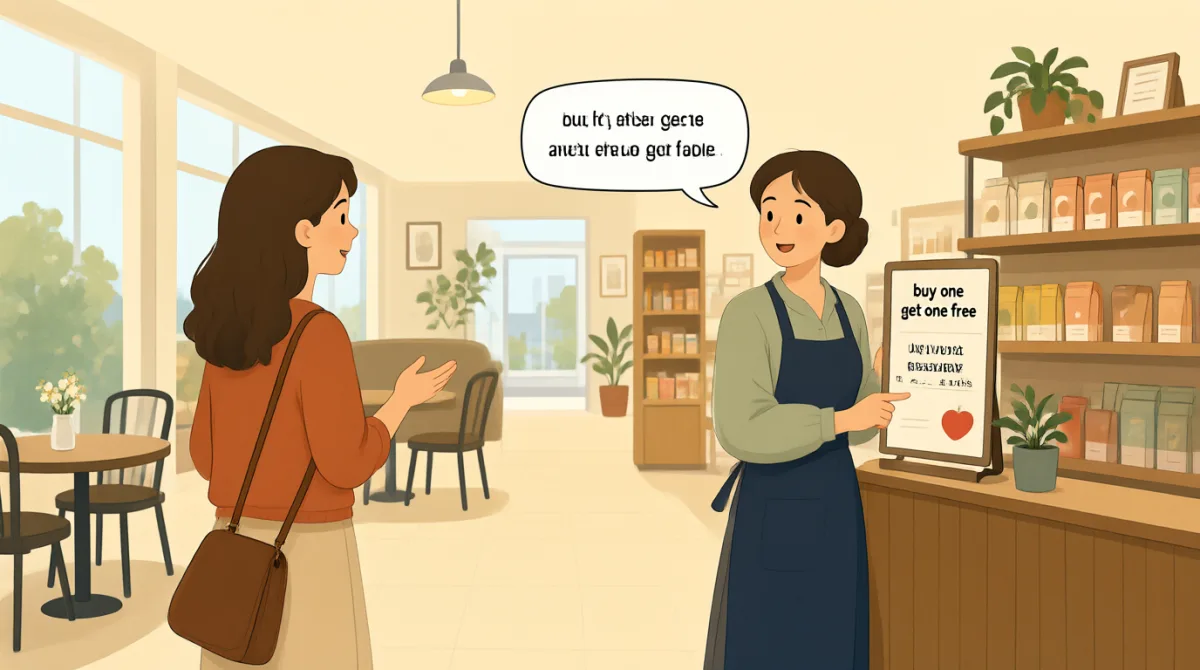

Excuse me, I have a quick question about the cereal sale.
ขอโทษนะคะ ขอถามเรื่องโปรโมชันซีเรียลสักหน่อยค่ะ

Certainly! How can I help you?
ได้เลยครับ มีอะไรให้ช่วยไหมครับ
The sign says 'Buy two for $6,' but it usually costs $4 each. Does that mean I save $2 in total, or is it $6 for the first one and the second one is free?
ป้ายเขียนว่า “ซื้อสองกล่องราคา 6 ดอลลาร์” แต่ปกติกล่องละ 4 ดอลลาร์ แบบนี้หมายความว่าหนูประหยัดได้ทั้งหมด 2 ดอลลาร์ หรือว่ากล่องแรก 6 ดอลลาร์แล้วกล่องที่สองฟรีคะ
Good question! It means you pay $6 for both boxes. So, instead of $8 for two, you're getting them for $6, which saves you $2.
ถามได้ดีครับ หมายความว่าคุณจ่าย 6 ดอลลาร์สำหรับซีเรียลสองกล่อง แทนที่จะจ่าย 8 ดอลลาร์ คุณก็ได้ทั้งสองกล่องในราคา 6 ดอลลาร์ เลยประหยัดไป 2 ดอลลาร์ครับ
Ah, I see. So it's not a buy-one-get-one-free deal, but a discount for purchasing two items.
อ๋อ เข้าใจแล้วค่ะ งั้นก็ไม่ใช่โปรโมชันซื้อหนึ่งแถมหนึ่ง แต่เป็นส่วนลดเมื่อซื้อสองชิ้นสินะคะ
Exactly. Some items might be 'buy one get one free,' but for this cereal, it's a "two for" price. The unit price comes down when you buy two.
ใช่ครับ ของบางอย่างอาจมีโปรโมชัน “ซื้อหนึ่งแถมหนึ่ง” แต่ซีเรียลนี้เป็นราคาแบบ “สองชิ้นในราคา...” ซื้อสองกล่องแล้วราคาต่อชิ้นก็จะถูกลงครับ
Got it. Thanks for clarifying!
เข้าใจแล้วค่ะ ขอบคุณที่อธิบายนะคะ
You're welcome! Let me know if you have any other questions.
ยินดีครับ ถ้ามีคำถามอื่นก็บอกได้เลยนะครับ
คำศัพท์7
- saleโปรโมชันลดราคา
A period or event when items are sold at lower prices than usual, often advertised in stores.
ช่วงเวลาหรือกิจกรรมที่สินค้าขายในราคาถูกกว่าปกติ ซึ่งร้านค้ามักโฆษณาให้ลูกค้าทราบ
- discountส่วนลด
A reduction in the price of an item, making it cheaper to buy.
การลดราคาสินค้าลง ทำให้ซื้อได้ในราคาถูกกว่าเดิม
- dealข้อเสนอพิเศษ
A special offer or bargain that saves money, like a promotion in a store.
ข้อเสนอหรือโปรโมชันพิเศษที่ช่วยให้ประหยัดเงิน เช่น โปรโมชันในร้านค้า
- cerealซีเรียล
A common breakfast food made from grains, often eaten with milk.
อาหารเช้าที่ทำจากธัญพืช นิยมรับประทานกับนม
- unit priceราคาต่อชิ้น
The cost of a single item, which can change with promotions when buying more.
ราคาของสินค้าแต่ละชิ้น ซึ่งอาจเปลี่ยนไปเมื่อมีโปรโมชันสำหรับการซื้อหลายชิ้น
- saveประหยัด
To spend less money than the original price, often used in shopping contexts.
จ่ายเงินน้อยกว่าราคาเดิม มักใช้พูดถึงการซื้อของ
- clarifyingการชี้แจง
The act of making information clear or explaining something that is confusing.
การทำให้ข้อมูลชัดเจนหรืออธิบายสิ่งที่ทำให้สับสน
ประโยคสำคัญ7
- 1
Excuse me, I have a quick question about the cereal sale.
ขอโทษนะคะ ขอถามเรื่องโปรโมชันซีเรียลสักหน่อยค่ะ
This is a polite way to start a conversation with a store employee. Use it when you need to ask something briefly. 'Excuse me' gets attention, and 'quick question' shows it's not time-consuming.
ประโยคนี้ใช้เริ่มต้นพูดกับพนักงานร้านค้าอย่างสุภาพ เหมาะเมื่ออยากถามอะไรสั้น ๆ “Excuse me” ใช้เรียกความสนใจ ส่วน “quick question” บอกว่าใช้เวลาไม่นาน
- 2
The sign says 'Buy two for $6,' but it usually costs $4 each.
ป้ายเขียนว่า “ซื้อสองกล่องราคา 6 ดอลลาร์” แต่ปกติกล่องละ 4 ดอลลาร์
This sentence compares a promotion to the regular price. It's useful for clarifying offers. Note the structure: present simple for facts ('says,' 'costs') and the quote for the sign's text.
ประโยคนี้เปรียบเทียบโปรโมชันกับราคาปกติ ใช้สอบถามให้เข้าใจข้อเสนอได้ดี สังเกตว่ารูปปัจจุบันธรรมดาใน “says” และ “costs” ใช้บอกข้อเท็จจริง ส่วนข้อความในเครื่องหมายคำพูดคือข้อความบนป้าย
- 3
Does that mean I save $2 in total?
แบบนี้หมายความว่าฉันประหยัดได้ทั้งหมด 2 ดอลลาร์ใช่ไหมคะ
A question to confirm savings from a deal. It's practical for shopping; use 'Does that mean' to seek clarification on implications. 'In total' emphasizes the overall amount.
ประโยคนี้ใช้ถามยืนยันว่าข้อเสนอช่วยให้ประหยัดเท่าไร เหมาะกับการซื้อของ ใช้ “Does that mean” เพื่อถามความหมายหรือผลที่ตามมา และ “in total” เน้นยอดรวมทั้งหมด
- 4
It means you pay $6 for both boxes. So, instead of $8 for two, you're getting them for $6, which saves you $2.
หมายความว่าคุณจ่าย 6 ดอลลาร์สำหรับทั้งสองกล่อง แทนที่จะจ่าย 8 ดอลลาร์สำหรับสองกล่อง คุณก็ได้ทั้งคู่ในราคา 6 ดอลลาร์ ซึ่งช่วยให้ประหยัดไป 2 ดอลลาร์
This explains a discount clearly. Useful for customer service. It uses 'It means' for definition, 'instead of' for comparison, and 'which' to add extra info about savings.
ประโยคนี้อธิบายส่วนลดอย่างชัดเจน เหมาะกับงานบริการลูกค้า ใช้ “It means” เพื่อบอกความหมาย “instead of” เพื่อเปรียบเทียบ และ “which” เพื่อเพิ่มข้อมูลเกี่ยวกับเงินที่ประหยัดได้
- 5
So it's not a buy-one-get-one-free deal, but a discount for purchasing two items.
งั้นก็ไม่ใช่โปรโมชันซื้อหนึ่งแถมหนึ่ง แต่เป็นส่วนลดเมื่อซื้อสองชิ้น
This contrasts two types of promotions. Great for understanding store offers. 'So' summarizes, 'not... but' shows difference, and gerund 'purchasing' describes the condition.
ประโยคนี้เปรียบเทียบโปรโมชันสองแบบ เหมาะสำหรับทำความเข้าใจข้อเสนอของร้านค้า “So” ใช้สรุปความ “not... but” ใช้แสดงความแตกต่าง และ “purchasing” ซึ่งเป็นรูปกริยาเติม -ing ใช้บอกเงื่อนไข
- 6
Exactly. Some items might be 'buy one get one free,' but for this cereal, it's a 'two for' price.
ใช่เลย ของบางอย่างอาจมีโปรโมชัน “ซื้อหนึ่งแถมหนึ่ง” แต่ซีเรียลนี้เป็นราคาแบบ “สองชิ้นในราคา...”
Agrees and explains variations. 'Exactly' confirms understanding; 'might be' shows possibility. Useful in conversations to build on ideas with examples.
ประโยคนี้ใช้ยืนยันและอธิบายว่าโปรโมชันมีหลายรูปแบบ “Exactly” ใช้ยืนยันว่าเข้าใจตรงกัน ส่วน “might be” ใช้พูดถึงความเป็นไปได้ เหมาะสำหรับยกตัวอย่างต่อจากสิ่งที่พูดคุยกัน
- 7
Got it. Thanks for clarifying!
เข้าใจแล้วค่ะ ขอบคุณที่อธิบายนะคะ
A casual way to show understanding and end politely. 'Got it' means 'I understand'; use after explanations. It's common in everyday English for quick thanks.
เป็นวิธีพูดอย่างเป็นกันเองเพื่อแสดงว่าเข้าใจและจบบทสนทนาอย่างสุภาพ “Got it” means 'I understand' ใช้หลังจากมีคนอธิบายให้ฟัง เป็นสำนวนที่พบได้บ่อยในภาษาอังกฤษในชีวิตประจำวัน และใช้กล่าวขอบคุณสั้น ๆ ได้