Buying Drinks
Kupowanie napojów
At the store, Emma and Jack choose drinks for the party. They compare a few options and check the prices.
W sklepie Emma i Jack wybierają napoje na przyjęcie. Porównują kilka opcji i sprawdzają ceny.
Dialog8
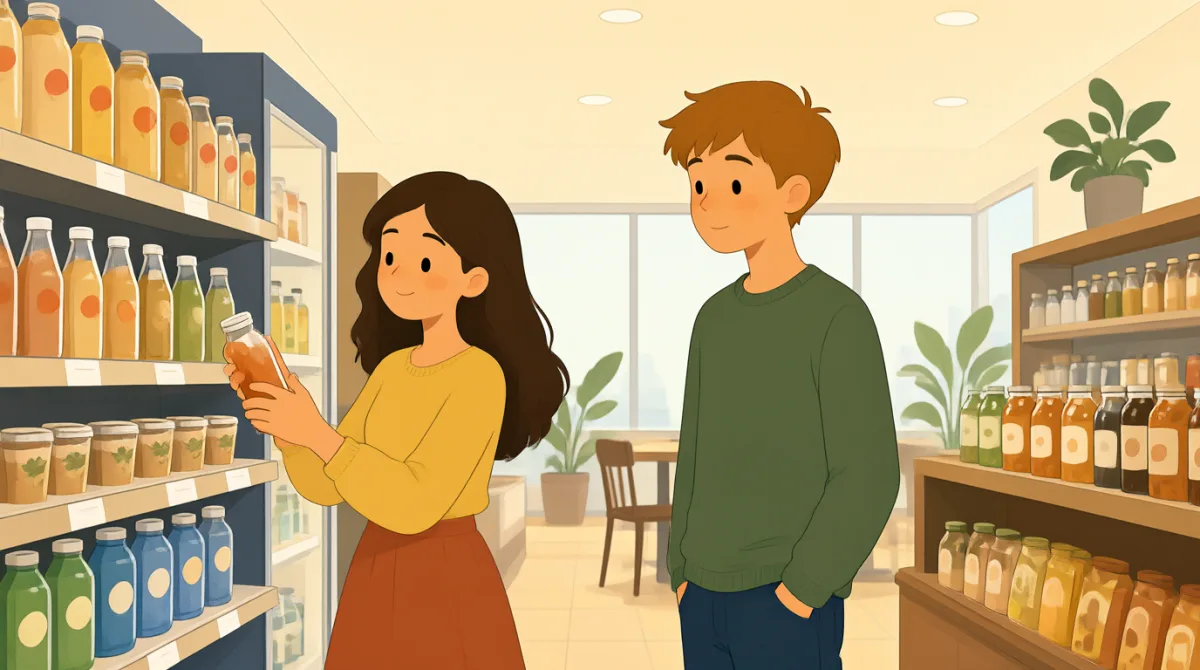

We need drinks for the party. What should we get?
Potrzebujemy napojów na przyjęcie. Co powinniśmy kupić?

Let's get water, juice, and soda. How many people are coming?
Kupmy wodę, sok i napoje gazowane. Ile osób przyjdzie?
About twelve. Maybe we need two bottles of juice and some soda.
Około dwunastu. Może potrzebujemy dwóch butelek soku i trochę napojów gazowanych.
This big bottle is cheaper, but it has a lot of sugar.
Ta duża butelka jest tańsza, ale ma dużo cukru.
How much is the smaller one? I think people may like it better.
Ile kosztuje ta mniejsza? Myślę, że może bardziej im smakować.
It's three dollars. The big one is four dollars, so it's a better deal.
Kosztuje trzy dolary. Duża kosztuje cztery, więc bardziej się opłaca.
Let's get the big one, then. We can also buy sparkling water.
To kupmy tę dużą. Możemy też kupić wodę gazowaną.
Good idea. I'll get two packs of water, and you can pick the juice.
Dobry pomysł. Wezmę dwa zgrzewki wody, a ty możesz wybrać sok.
Słownictwo7
- What should we get?Co powinniśmy kupić?
This is a way to ask what items to buy. You can use it when choosing things with someone.
Tak możesz zapytać, jakie rzeczy warto kupić. Użyj tego pytania, gdy wybierasz coś z drugą osobą.
- How many people are coming?Ile osób przyjdzie?
This question asks about the number of people who will attend. Use it to help decide how much food or drink to buy.
To pytanie dotyczy liczby osób, które wezmą udział w spotkaniu. Dzięki odpowiedzi łatwiej zdecydować, ile jedzenia lub napojów kupić.
- a lot of sugardużo cukru
This means a large amount of sugar. You can use it to talk about what is in food or drinks.
To znaczy, że czegoś jest dużo. Możesz tak mówić o składzie jedzenia lub napojów.
- How much is the smaller one?Ile kosztuje ta mniejsza?
This question asks for the price of a smaller item. Use it when comparing prices in a store.
Tym pytaniem pytasz o cenę mniejszego produktu. Użyj go, gdy porównujesz ceny w sklepie.
- a better dealbardziej się opłaca
This means a choice gives you more for your money. You can use it when comparing prices and sizes.
To znaczy, że za swoje pieniądze dostajesz więcej. Możesz tak powiedzieć, porównując ceny i wielkości produktów.
- Let's get the big one, then.To kupmy tę dużą.
This is a way to make a choice after comparing options. You can replace “the big one” with another item.
Tak możesz zdecydować po porównaniu kilku opcji. Zamiast „the big one” możesz podać nazwę innego produktu.
- pick the juicewybrać sok
Here, “pick” means choose. You can use “pick” when asking someone to choose an item.
W tym kontekście „pick” znaczy „wybrać”. Możesz użyć „pick”, gdy prosisz kogoś o wybranie produktu.
Kluczowe zdania8
- 1
We need drinks for the party.
Potrzebujemy napojów na przyjęcie.
This clearly explains what you need and why. You can replace “drinks” with another item, such as snacks or plates.
To zdanie jasno mówi, czego potrzebujesz i dlaczego. Możesz zastąpić „drinks” inną rzeczą, na przykład przekąskami lub talerzami.
- 2
How many people are coming?
Ile osób przyjdzie?
Use this question to find out how many people will attend. The answer can help you plan how much to buy.
Użyj tego pytania, żeby dowiedzieć się, ile osób weźmie udział w spotkaniu. Odpowiedź pomoże ci zaplanować, ile kupić.
- 3
Maybe we need two bottles of juice and some soda.
Może potrzebujemy dwóch butelek soku i trochę napojów gazowanych.
This is a simple way to suggest an amount to buy. Use “Maybe we need” to make a suggestion without sounding too certain.
To prosty sposób, by zasugerować, ile czegoś kupić. Użyj „Maybe we need”, żeby coś zaproponować, nie brzmiąc przy tym zbyt stanowczo.
- 4
This big bottle is cheaper, but it has a lot of sugar.
Ta duża butelka jest tańsza, ale ma dużo cukru.
This sentence compares an item's price with another feature. You can use “cheaper, but…” to mention both an advantage and a concern.
To zdanie porównuje cenę produktu z inną jego cechą. Możesz użyć „cheaper, but…”, by wspomnieć zarówno o zalecie, jak i o pewnym problemie.
- 5
How much is the smaller one?
Ile kosztuje ta mniejsza?
This is a useful question for checking a price in a store. You can replace “the smaller one” with the item you want to ask about.
To przydatne pytanie, gdy chcesz sprawdzić cenę w sklepie. Zamiast „the smaller one” możesz podać nazwę produktu, o który chcesz zapytać.
- 6
It's three dollars.
Kosztuje trzy dolary.
This is a simple way to state a price. You can change the number and currency to give the price of another item.
Tak możesz w prosty sposób podać cenę. Zmień liczbę i walutę, by podać cenę innego produktu.
- 7
Let's get the big one, then.
To kupmy tę dużą.
Use this to make a decision after discussing the options. Replace “the big one” with the item you choose.
Użyj tego zdania, by podjąć decyzję po omówieniu różnych opcji. Zamiast „the big one” wstaw nazwę wybranego produktu.
- 8
I'll get two packs of water, and you can pick the juice.
Wezmę dwa zgrzewki wody, a ty możesz wybrać sok.
This sentence divides shopping tasks between two people. You can use “I'll get…” and “you can pick…” to say who will buy or choose each item.
To zdanie pozwala podzielić się obowiązkami podczas zakupów. Użyj „I'll get…” i „you can pick…”, by powiedzieć, kto kupi lub wybierze poszczególne rzeczy.