Finding the Right Platform
Znalezienie właściwego peronu
Emma and Jack look at the signs and find the right platform. They check that the train is going in the right direction.
Emma i Jack patrzą na znaki i znajdują właściwy peron. Sprawdzają, czy pociąg jedzie we właściwym kierunku.
Dialog8
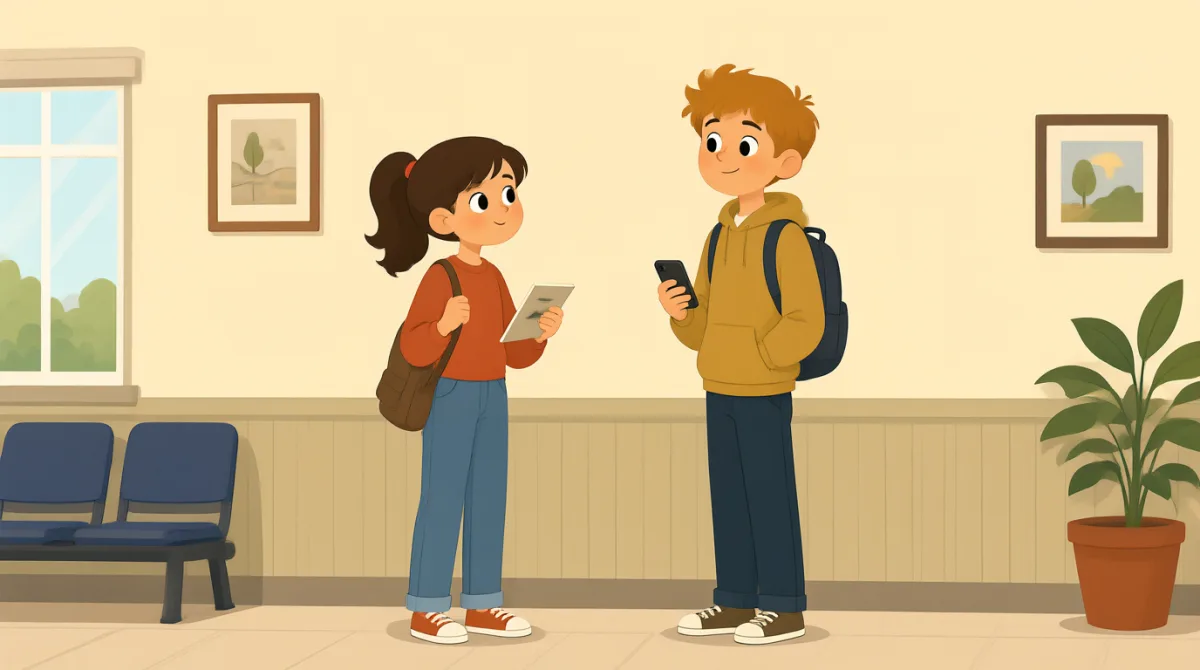

Are we on the right platform?
Jesteśmy na właściwym peronie?

Let’s check the signs.
Sprawdźmy znaki.
This says City Center. Is that our train?
Tu jest napisane „City Center”. To nasz pociąg?
Yes. It goes to the city center.
Tak. Jedzie do centrum miasta.
How do we know which way it goes?
Skąd wiemy, w którą stronę jedzie?
Look at the sign. It says East Station.
Spójrz na znak. Jest na nim napisane „East Station”.
Great. We need the train to East Station.
Świetnie. Potrzebujemy pociągu do stacji East Station.
That’s right. Let’s wait here.
Zgadza się. Poczekajmy tutaj.
Słownictwo7
- platformperon
A platform is the place where you wait for a train. You can check its signs to find the right train.
Peron to miejsce, na którym czekasz na pociąg. Możesz sprawdzić znajdujące się na nim znaki, żeby znaleźć właściwy pociąg.
- signsznaki
Signs show information, such as where a train goes. Look at the signs to find your train.
Znaki pokazują informacje, na przykład dokąd jedzie pociąg. Spójrz na znaki, żeby znaleźć swój pociąg.
- City Centercentrum miasta
City Center means the middle or main area of a city. This sign tells Emma and Jack where the train goes.
„City Center” oznacza centralną lub główną część miasta. Ten znak mówi Emmie i Jackowi, dokąd jedzie pociąg.
- goes tojedzie do
Use “goes to” to say where a train travels. For example, “The train goes to the city center.”
Wyrażenia „goes to” używamy, żeby powiedzieć, dokąd jedzie pociąg. Na przykład: „The train goes to the city center.” (Pociąg jedzie do centrum miasta).
- which wayw którą stronę
“Which way” asks about a direction. You can use it to ask where a train is going.
„Which way” oznacza pytanie o kierunek. Możesz użyć tego wyrażenia, żeby zapytać, dokąd jedzie pociąg.
- East Stationstacja East Station
East Station is the station the travelers need to reach. They check the sign to make sure the train goes there.
East Station to stacja, do której podróżni muszą dotrzeć. Sprawdzają znak, żeby upewnić się, że pociąg tam jedzie.
- wait herepoczekać tutaj
“Wait here” means stay in this place until something arrives. You can use it while waiting for a train.
„Wait here” oznacza pozostać w tym miejscu, dopóki coś nie przyjedzie lub nie nadejdzie. Możesz użyć tego wyrażenia, czekając na pociąg.
Kluczowe zdania8
- 1
Are we on the right platform?
Jesteśmy na właściwym peronie?
Use this to check if you are waiting in the correct place. You can change “platform” to another place, such as “Are we at the right station?”
Użyj tego pytania, żeby sprawdzić, czy czekasz we właściwym miejscu. Możesz zamienić „platform” na inne miejsce, na przykład: „Are we at the right station?” (Czy jesteśmy na właściwej stacji?).
- 2
Let’s check the signs.
Sprawdźmy znaki.
This is a simple way to suggest looking at signs for information. You can use “Let’s check” before other things, like a map or a schedule.
To prosty sposób, żeby zaproponować sprawdzenie informacji na znakach. Możesz użyć „Let’s check” przed innymi rzeczami, na przykład mapą lub rozkładem jazdy.
- 3
This says City Center.
Tu jest napisane „City Center”.
Use this when you read information on a sign. Replace “City Center” with the place or words you see.
Użyj tego zdania, gdy odczytujesz informację z oznaczenia. Zastąp „City Center” nazwą miejsca lub słowami, które widzisz.
- 4
Is that our train?
To nasz pociąg?
Use this to ask if a train is the one you need. You can also use this question for a bus or another vehicle.
Użyj tego pytania, żeby zapytać, czy dany pociąg jest tym, którego potrzebujesz. Możesz użyć tego pytania także w odniesieniu do autobusu lub innego pojazdu.
- 5
How do we know which way it goes?
Skąd wiemy, w którą stronę jedzie?
This asks how to find out a train’s direction. You can use “How do we know” to ask how to find out other information.
To pytanie dotyczy sposobu ustalenia kierunku jazdy pociągu. Możesz użyć „How do we know”, żeby zapytać, jak dowiedzieć się innych informacji.
- 6
Look at the sign.
Spójrz na znak.
Use this to tell someone to read or check a sign. You can replace “the sign” with something else, such as “the map.”
Użyj tego zdania, żeby powiedzieć komuś, aby przeczytał lub sprawdził znak. Możesz zastąpić „the sign” czymś innym, na przykład „the map”.
- 7
We need the train to East Station.
Potrzebujemy pociągu do stacji East Station.
Use this to say which train or destination you need. Replace “East Station” with the name of your destination.
Użyj tego zdania, żeby powiedzieć, którego pociągu lub jakiego kierunku potrzebujesz. Zastąp „East Station” nazwą swojego celu podróży.
- 8
Let’s wait here.
Poczekajmy tutaj.
This is a simple way to suggest staying in the current place. You can use it while waiting for a train, bus, or person.
To prosty sposób, żeby zaproponować pozostanie w obecnym miejscu. Możesz użyć tego zdania, czekając na pociąg, autobus lub jakąś osobę.