Explaining Next Steps and Support
Mia outlines the patient's ongoing care, the hospital's review of the incident, and how the family can receive updates and support. Grace asks who will keep her informed and how she can raise further concerns.
Dialogue11
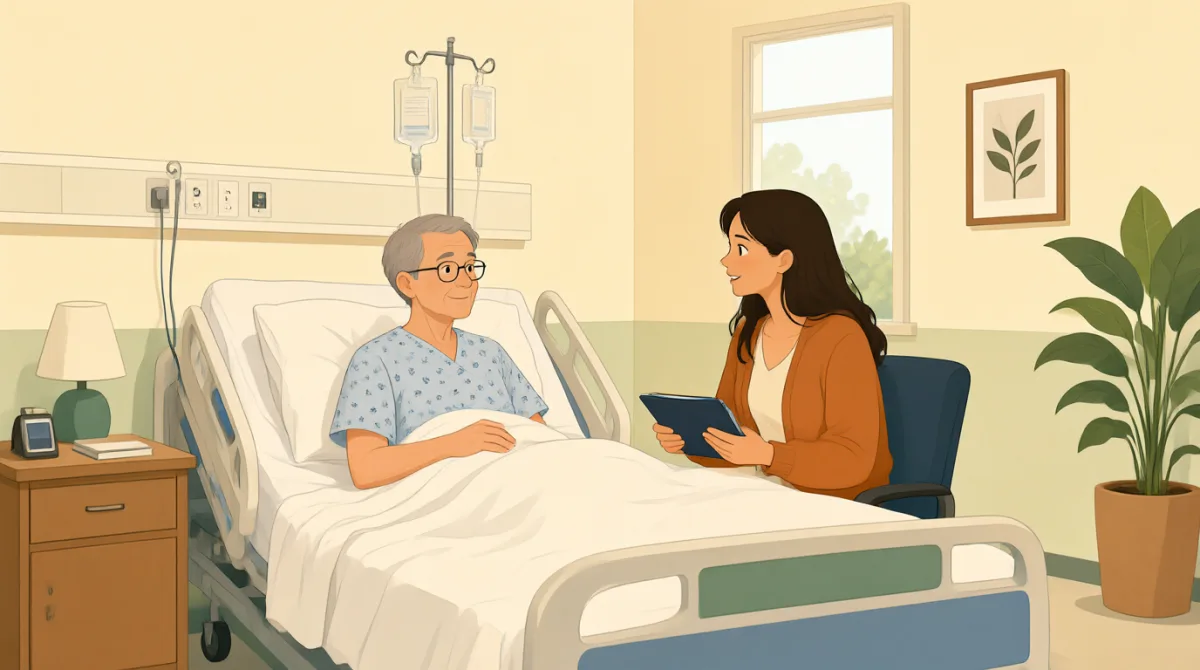

For now, your father will remain under close observation. His care team will monitor him, treat any symptoms, and reassess him regularly. I’ll make sure you hear promptly if his condition changes.

I appreciate that, but I don’t want to hear about a change hours after it happens. Who exactly is responsible for keeping me informed?
I will be your primary contact. If I’m unavailable, the charge nurse will reach out, and I’ll give you the unit’s direct number before you leave today.
And what about the hospital’s review? I need to know whether anyone is actually examining how this happened, not just reassuring me that it won’t happen again.
The hospital has opened a formal review. The team will examine the medication record, the steps involved in administering it, and the safeguards that were—or weren’t—in place.
How long will that take? I understand you may not have all the answers today, but I don’t want the review to disappear into a system I can’t access.
I can’t promise a final date before the review begins, but I can arrange a check-in next week. We’ll tell you what’s been established, what remains unresolved, and when we expect to update you again.
Please put that in writing. And if I think of more questions—or feel that something important has been overlooked—who can I contact besides you?
Of course. I’ll send you my contact details and the patient advocate’s number. You can raise concerns with either of us, and I’ll make sure they’re documented and passed to the review team.
All right. I want updates even if there’s nothing new to report. Silence makes it feel as though everyone has moved on except us.
That’s fair. I’ll contact you at the agreed time even if the review is still underway. You shouldn’t have to chase the hospital for information about your father’s care or what we’re doing next.
Vocabulary8
- under close observation
Being watched carefully by medical staff so they can notice changes in a patient's condition.
- primary contact
The main person responsible for communicating with you. You can ask this person for updates or help.
- formal review
An official examination of what happened and how it happened. Here, the hospital is reviewing the medication error and its safeguards.
- safeguards
Measures designed to prevent mistakes or reduce their harm. The review will examine whether these protections were in place.
- what remains unresolved
The questions that have not yet been answered or settled. This phrase helps explain what is still unknown during an investigation.
- documented
Written down as an official record. Concerns that are documented can be passed on and considered by the review team.
- raise concerns
To bring a worry or problem to someone's attention. You can raise concerns when you think something needs to be examined.
- at the agreed time
At the time both people have arranged. It emphasizes that an update will happen as promised, even if there is no new information.
Key Sentences7
- 1
I will be your primary contact.
This clearly identifies who is responsible for communicating with the family. You can reuse “I’ll be your primary contact” to reassure someone that they have a specific person to reach.
- 2
The team will examine the medication record, the steps involved in administering it, and the safeguards that were—or weren’t—in place.
This gives a concrete description of what an investigation will cover. It is useful when explaining a review without claiming in advance what its findings will be.
- 3
I can’t promise a final date before the review begins, but I can arrange a check-in next week.
This acknowledges uncertainty while offering a definite next step. Use “I can’t promise X, but I can arrange Y” to set realistic expectations and provide practical support.
- 4
We’ll tell you what’s been established, what remains unresolved, and when we expect to update you again.
This sentence promises a transparent update, including what is still unknown and when to expect further contact. It can be adapted for progress reports during an ongoing process.
- 5
You can raise concerns with either of us, and I’ll make sure they’re documented and passed to the review team.
This explains how someone can submit concerns and what will happen to them. The structure is useful for outlining a clear route for feedback or complaints.
- 6
I’ll contact you at the agreed time even if the review is still underway.
This reassures the listener that communication will continue even when there is no final answer. Reuse it when setting expectations for regular updates.
- 7
You shouldn’t have to chase the hospital for information about your father’s care or what we’re doing next.
This recognizes the family’s need for reliable communication and takes responsibility for providing it. “You shouldn’t have to chase us for information” can be adapted to other professional settings.