Warning a Family Member
Emma tells her father, David, about the scam and explains what warning signs to look out for. David shares how he would handle a similar call.
Dialogue10
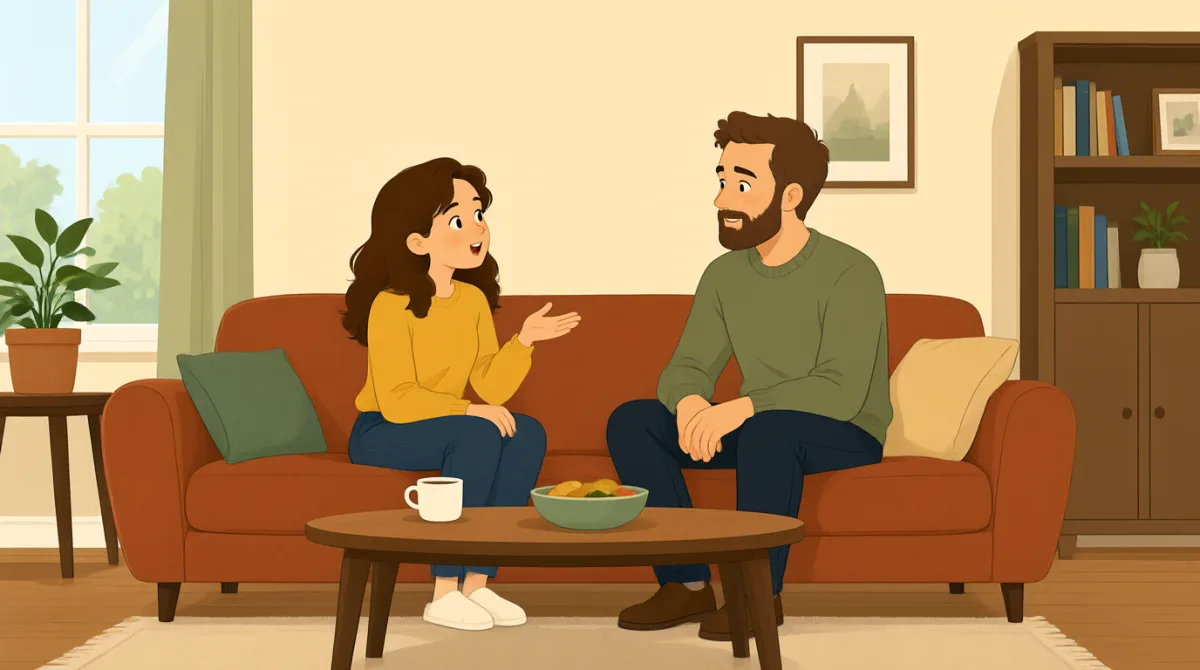

Dad, I got a call from someone claiming to be from my bank. They said there was a problem with my account.

That sounds worrying. Did they ask you to do anything right away, like share a code or move your money?
Yes, they wanted my account details and a one-time code. I didn’t give them anything, and I hung up.
Good thinking. A real bank won’t pressure you to act immediately or ask for your password or security code over the phone.
The caller sounded official, but kept dodging my questions. That’s when I started to smell a rat.
That’s a big warning sign. If you’re unsure, hang up and call the number on your bank card—not one the caller gives you.
I did that, and the bank confirmed it was a scam. I’ve written down the number and what the caller said.
Smart move. If they call again, don’t argue or share anything. Hang up, save any messages, and report it to the bank.
I’ll warn the rest of the family, too. It’s easy to panic when someone says your money is in danger.
Exactly. Take a breath and check through an official channel. A little caution can save you a lot of trouble.
Vocabulary7
- claiming to be from my bank
This describes someone saying they represent your bank. You can use “claiming to be from…” when you are not sure someone is telling the truth.
- right away
This means immediately or without waiting. It is often used when someone wants quick action.
- one-time code
A one-time code is a security code that can usually be used only once. Keep it private, even if a caller says they need it.
- pressure you to act
This means trying to make you do something quickly by making you feel worried or rushed. You can use it to describe pushy salespeople or suspicious callers.
- smell a rat
This informal phrase means to suspect that something is wrong or dishonest. Here, Emma becomes suspicious because the caller avoids her questions.
- warning sign
A warning sign is something that suggests there may be a problem or danger. You can use it to describe a clue that makes you cautious.
- official channel
An official channel is a trusted way to contact an organization, such as the phone number printed on a bank card. It helps you avoid relying on contact details provided by a suspicious caller.
Key Sentences8
- 1
Did they ask you to do anything right away, like share a code or move your money?
This question checks whether someone was asked to take urgent or risky action. Reuse “Did they ask you to…?” to ask about a request someone received.
- 2
I didn’t give them anything, and I hung up.
This sentence explains two actions taken to stay safe during a suspicious call. You can use “I didn’t…, and I…” to describe how you handled a situation.
- 3
A real bank won’t pressure you to act immediately or ask for your password or security code over the phone.
This gives a clear reason to be cautious about unexpected calls. Reuse “A real [organization] won’t…” to explain what legitimate organizations should not do.
- 4
If you’re unsure, hang up and call the number on your bank card—not one the caller gives you.
This gives practical advice using an “If you’re unsure…” condition. You can adapt it to recommend checking contact details through a trusted source.
- 5
The caller sounded official, but kept dodging my questions.
This sentence contrasts a convincing impression with suspicious behavior. Use “sounded…, but…” to describe someone who seemed one way while acting differently.
- 6
If they call again, don’t argue or share anything.
This gives direct advice about what to do if the situation happens again. Reuse “If [something happens], don’t…” to give a clear warning or instruction.
- 7
It’s easy to panic when someone says your money is in danger.
This explains why people may react quickly to a frightening claim. You can use “It’s easy to…” to describe a common reaction or difficulty.
- 8
Take a breath and check through an official channel.
This is a calm, practical way to advise someone to pause and verify information. Reuse “Take a breath and…” when encouraging someone to stay calm before acting.