Asking the Chef a Question
Emma asks Grace how to make the sauce less salty. Grace suggests adding a little water and tasting it again.
Dialogue8
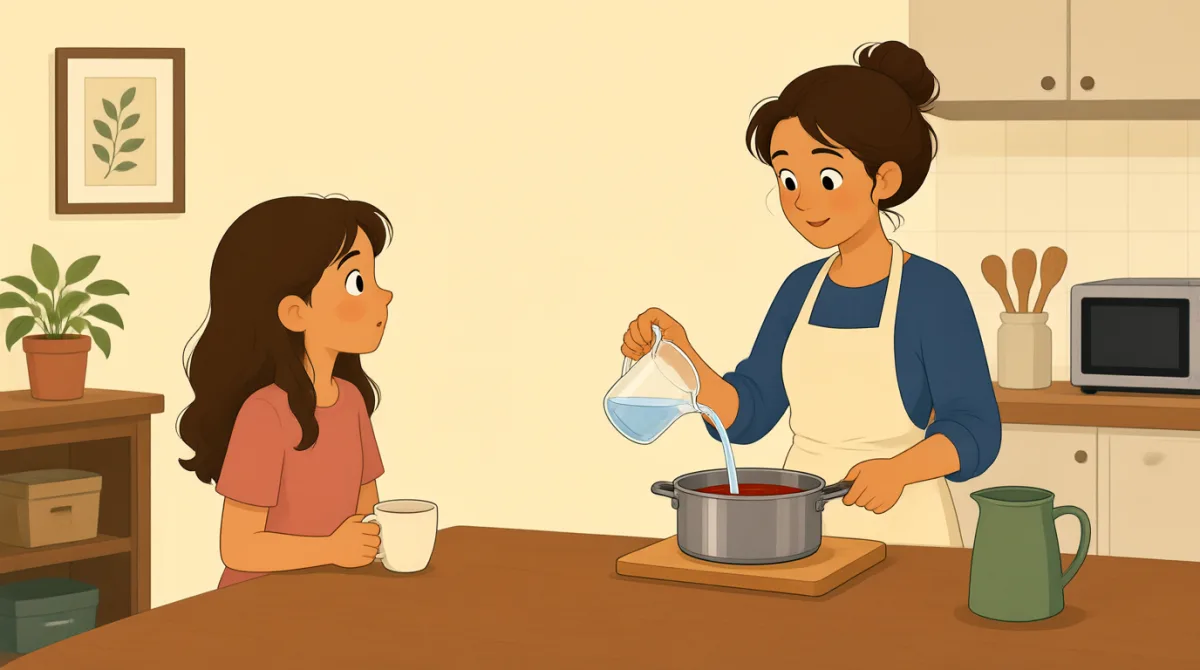

Grace, I think the sauce is too salty. Can I fix it?

Yes. Add a little water, and then stir it well.
Should I add the water now, while it’s still hot?
Yes, that’s fine. Add just a little at first.
Okay, I added some. Should I taste it again?
Yes, use a clean spoon and taste it carefully.
It tastes much better now. Should I add more water?
No, it’s good now. A little water made a big difference.
Vocabulary7
- too salty
This means the sauce has more salt than you want. You can use “too” before an adjective to say something is more than you like.
- fix it
Here, this means to make the sauce taste better. You can use “fix it” when you want to correct a problem.
- stir it well
This means to mix the sauce thoroughly with a spoon. You can say “stir it well” when giving someone a cooking instruction.
- at first
This means at the beginning. Here, Grace says to add only a small amount of water at the beginning.
- taste it again
This means to try the sauce once more to check its flavor. You can use this phrase after changing or adding something to food.
- a clean spoon
This means a spoon that has been washed and is ready to use. It is useful advice when tasting food while cooking.
- made a big difference
This means caused a noticeable change. You can use it to describe how a small action improved a situation.
Key Sentences7
- 1
I think the sauce is too salty.
Use this sentence to describe a problem with food. You can replace “the sauce” and “too salty” to talk about other dishes or problems.
- 2
Can I fix it?
This is a simple way to ask if you can correct a problem. You can use “Can I fix it?” in many everyday situations.
- 3
Add a little water, and then stir it well.
This gives two clear cooking instructions in order. You can use “Add a little [ingredient], and then stir it well” for other recipes.
- 4
Should I add the water now, while it’s still hot?
Use this question to ask if it is the right time to do something. You can replace “add the water” with another action.
- 5
Should I taste it again?
This is a useful way to check what to do next while cooking. You can use “Should I [action] again?” to ask for advice.
- 6
Yes, use a clean spoon and taste it carefully.
This sentence gives practical advice for tasting food safely. You can use “Use a clean [item] and [action] carefully” to give similar instructions.
- 7
A little water made a big difference.
Use this sentence to say that a small change had a noticeable effect. You can replace “water” with another thing that helped.