Asking the Chef a Question
शेफ़ से सवाल पूछना
Emma asks Grace how to make the sauce less salty. Grace suggests adding a little water and tasting it again.
एमा ग्रेस से पूछती हैं कि सॉस का नमकीनपन कैसे कम किया जाए। ग्रेस थोड़ा पानी डालने और फिर से चखने का सुझाव देती हैं।
संवाद8
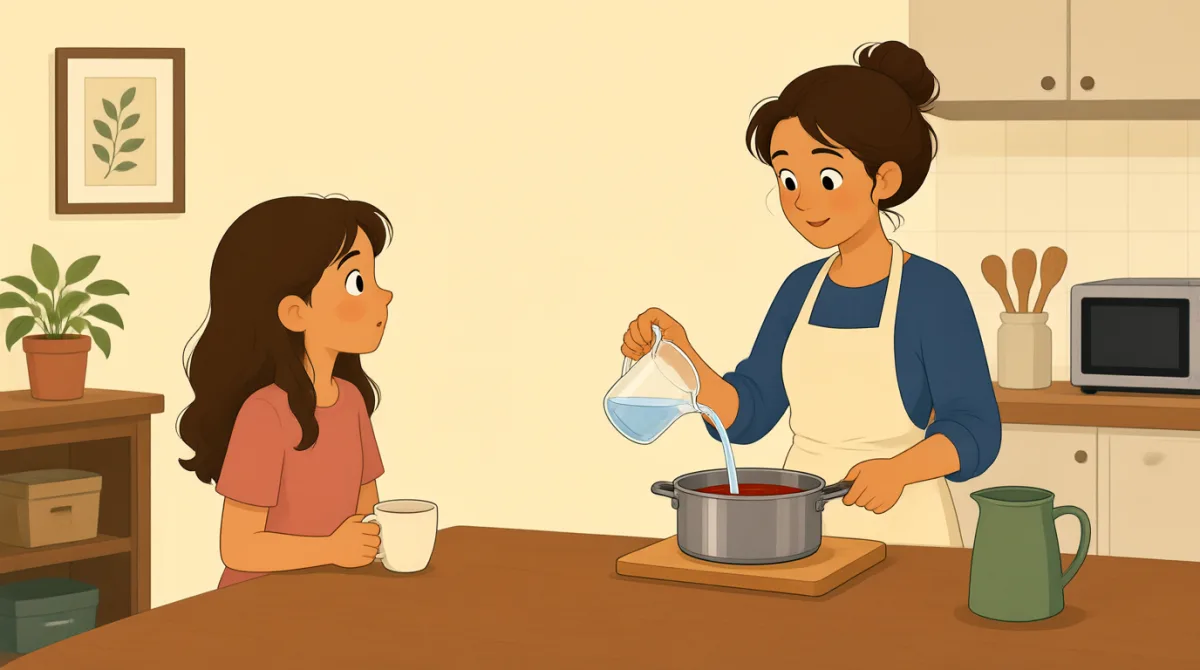

Grace, I think the sauce is too salty. Can I fix it?
ग्रेस, मुझे लगता है कि सॉस बहुत ज़्यादा नमकीन है। क्या मैं इसे ठीक कर सकती हूँ?

Yes. Add a little water, and then stir it well.
हाँ। थोड़ा पानी डालिए, फिर इसे अच्छी तरह चलाइए।
Should I add the water now, while it’s still hot?
क्या मुझे पानी अभी डालना चाहिए, जब यह अभी भी गरम है?
Yes, that’s fine. Add just a little at first.
हाँ, ठीक है। शुरुआत में बस थोड़ा-सा डालिए।
Okay, I added some. Should I taste it again?
ठीक है, मैंने थोड़ा डाल दिया है। क्या मुझे इसे फिर से चखना चाहिए?
Yes, use a clean spoon and taste it carefully.
हाँ, साफ़ चम्मच इस्तेमाल कीजिए और ध्यान से चखिए।
It tastes much better now. Should I add more water?
अब इसका स्वाद काफ़ी बेहतर है। क्या मुझे और पानी डालना चाहिए?
No, it’s good now. A little water made a big difference.
नहीं, अब यह अच्छा है। थोड़े-से पानी से काफ़ी फ़र्क पड़ा।
शब्दावली7
- too saltyबहुत ज़्यादा नमकीन
This means the sauce has more salt than you want. You can use “too” before an adjective to say something is more than you like.
इसका मतलब है कि सॉस में आपकी पसंद से ज़्यादा नमक है। किसी चीज़ के आपकी पसंद से ज़्यादा होने की बात कहने के लिए आप विशेषण से पहले “too” लगा सकते हैं।
- fix itइसे ठीक करना
Here, this means to make the sauce taste better. You can use “fix it” when you want to correct a problem.
यहाँ इसका मतलब है सॉस का स्वाद बेहतर करना। किसी समस्या को सुधारने की बात करते समय आप “fix it” कह सकते हैं।
- stir it wellइसे अच्छी तरह चलाना
This means to mix the sauce thoroughly with a spoon. You can say “stir it well” when giving someone a cooking instruction.
इसका मतलब है चम्मच से सॉस को अच्छी तरह मिलाना। खाना पकाने का निर्देश देते समय आप “stir it well” कह सकते हैं।
- at firstशुरुआत में
This means at the beginning. Here, Grace says to add only a small amount of water at the beginning.
इसका मतलब है आरंभ में। यहाँ ग्रेस कहती हैं कि शुरुआत में थोड़ा-सा ही पानी डालें।
- taste it againइसे फिर से चखना
This means to try the sauce once more to check its flavor. You can use this phrase after changing or adding something to food.
इसका मतलब है सॉस का स्वाद जाँचने के लिए उसे एक बार और चखना। खाने में कुछ बदलने या डालने के बाद आप इस वाक्यांश का इस्तेमाल कर सकते हैं।
- a clean spoonएक साफ़ चम्मच
This means a spoon that has been washed and is ready to use. It is useful advice when tasting food while cooking.
इसका मतलब है ऐसा चम्मच जिसे धोकर इस्तेमाल के लिए तैयार रखा गया हो। खाना पकाते समय उसे चखने के लिए यह उपयोगी सलाह है।
- made a big differenceकाफ़ी फ़र्क पड़ा
This means caused a noticeable change. You can use it to describe how a small action improved a situation.
इसका मतलब है कि कोई साफ़ तौर पर महसूस होने वाला बदलाव हुआ। किसी छोटे-से काम से स्थिति बेहतर होने की बात बताने के लिए आप इसका इस्तेमाल कर सकते हैं।
मुख्य वाक्य7
- 1
I think the sauce is too salty.
मुझे लगता है कि सॉस बहुत ज़्यादा नमकीन है।
Use this sentence to describe a problem with food. You can replace “the sauce” and “too salty” to talk about other dishes or problems.
खाने से जुड़ी किसी समस्या का वर्णन करने के लिए इस वाक्य का इस्तेमाल करें। दूसरे व्यंजनों या समस्याओं के बारे में बात करने के लिए आप “the sauce” और “too salty” की जगह दूसरे शब्द रख सकते हैं।
- 2
Can I fix it?
क्या मैं इसे ठीक कर सकती हूँ?
This is a simple way to ask if you can correct a problem. You can use “Can I fix it?” in many everyday situations.
किसी समस्या को सुधारने की अनुमति पूछने का यह एक आसान तरीका है। रोज़मर्रा की कई स्थितियों में आप “Can I fix it?” कह सकते हैं।
- 3
Add a little water, and then stir it well.
थोड़ा पानी डालिए, फिर इसे अच्छी तरह चलाइए।
This gives two clear cooking instructions in order. You can use “Add a little [ingredient], and then stir it well” for other recipes.
इस वाक्य में खाना पकाने के दो साफ़ निर्देश क्रम से दिए गए हैं। दूसरी रेसिपी के लिए आप “Add a little [ingredient], and then stir it well” का इस्तेमाल कर सकते हैं।
- 4
Should I add the water now, while it’s still hot?
क्या मुझे पानी अभी डालना चाहिए, जब यह अभी भी गरम है?
Use this question to ask if it is the right time to do something. You can replace “add the water” with another action.
कोई काम करने का सही समय है या नहीं, यह पूछने के लिए इस सवाल का इस्तेमाल करें। आप “add the water” की जगह कोई दूसरी क्रिया रख सकते हैं।
- 5
Should I taste it again?
क्या मुझे इसे फिर से चखना चाहिए?
This is a useful way to check what to do next while cooking. You can use “Should I [action] again?” to ask for advice.
खाना पकाते समय आगे क्या करना है, यह जानने के लिए यह एक उपयोगी तरीका है। सलाह माँगने के लिए आप “Should I [action] again?” का इस्तेमाल कर सकते हैं।
- 6
Yes, use a clean spoon and taste it carefully.
हाँ, साफ़ चम्मच इस्तेमाल कीजिए और ध्यान से चखिए।
This sentence gives practical advice for tasting food safely. You can use “Use a clean [item] and [action] carefully” to give similar instructions.
इस वाक्य में खाने को सुरक्षित ढंग से चखने की व्यावहारिक सलाह दी गई है। इसी तरह के निर्देश देने के लिए आप “Use a clean [item] and [action] carefully” का इस्तेमाल कर सकते हैं।
- 7
A little water made a big difference.
थोड़े-से पानी से काफ़ी फ़र्क पड़ा।
Use this sentence to say that a small change had a noticeable effect. You can replace “water” with another thing that helped.
किसी छोटे बदलाव का साफ़ तौर पर महसूस होने वाला असर बताने के लिए इस वाक्य का इस्तेमाल करें। जिस चीज़ से मदद मिली, उसका नाम बताने के लिए आप “water” की जगह कोई दूसरी चीज़ रख सकते हैं।