Asking the Chef a Question
셰프에게 질문하기
Emma asks Grace how to make the sauce less salty. Grace suggests adding a little water and tasting it again.
에마가 그레이스에게 소스를 덜 짜게 만드는 방법을 물어봐요. 그레이스는 물을 조금 넣고 다시 맛보라고 해요.
대화8
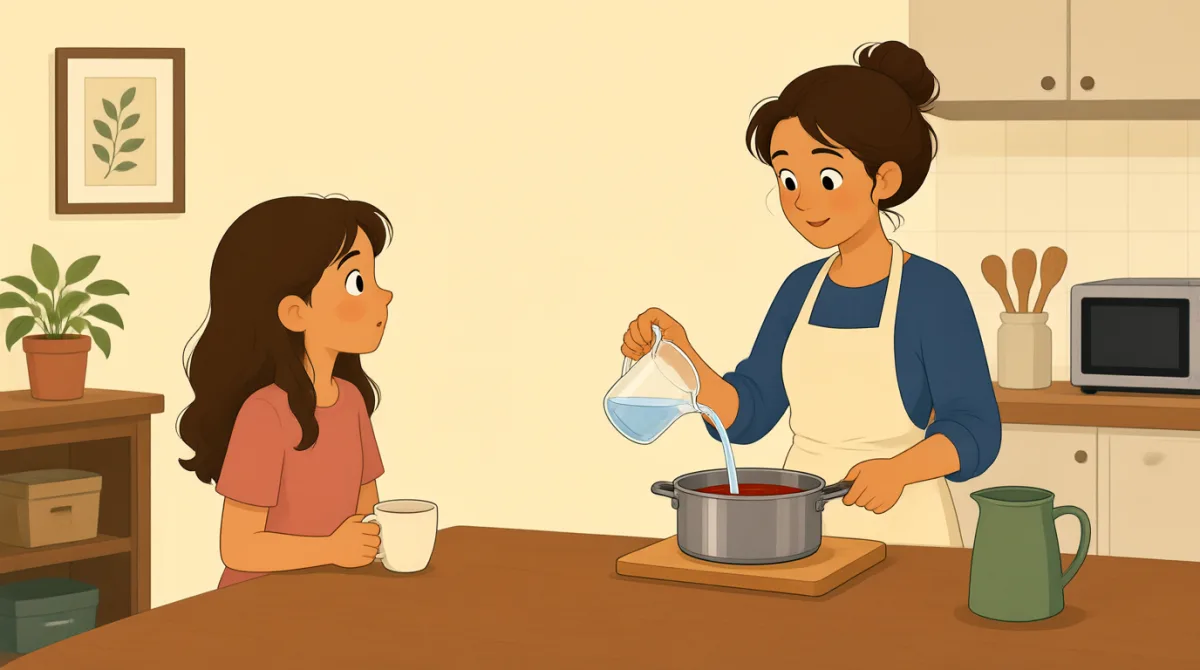

Grace, I think the sauce is too salty. Can I fix it?
그레이스, 소스가 너무 짠 것 같아. 고칠 수 있을까?

Yes. Add a little water, and then stir it well.
응. 물을 조금 넣고 잘 저어.
Should I add the water now, while it’s still hot?
아직 뜨거울 때 지금 물을 넣어야 해?
Yes, that’s fine. Add just a little at first.
응, 괜찮아. 처음에는 조금만 넣어.
Okay, I added some. Should I taste it again?
알겠어, 조금 넣었어. 다시 맛볼까?
Yes, use a clean spoon and taste it carefully.
응, 깨끗한 숟가락으로 조심해서 맛봐.
It tastes much better now. Should I add more water?
이제 훨씬 나아졌어. 물을 더 넣을까?
No, it’s good now. A little water made a big difference.
아니, 이제 괜찮아. 물을 조금 넣었는데도 큰 차이가 났네.
어휘7
- too salty너무 짠
This means the sauce has more salt than you want. You can use “too” before an adjective to say something is more than you like.
소스에 원하는 것보다 소금이 많이 들어갔다는 뜻이에요. 형용사 앞에 “too”를 붙이면 마음에 드는 정도를 넘어섰다는 뜻을 나타낼 수 있어요.
- fix it고치다
Here, this means to make the sauce taste better. You can use “fix it” when you want to correct a problem.
여기서는 소스의 맛을 더 좋게 만든다는 뜻이에요. 문제를 바로잡고 싶을 때 “fix it”이라고 할 수 있어요.
- stir it well잘 저어
This means to mix the sauce thoroughly with a spoon. You can say “stir it well” when giving someone a cooking instruction.
숟가락으로 소스를 골고루 섞으라는 뜻이에요. 요리 방법을 알려 줄 때 “stir it well”이라고 말할 수 있어요.
- at first처음에는
This means at the beginning. Here, Grace says to add only a small amount of water at the beginning.
시작할 때라는 뜻이에요. 여기서 그레이스는 처음에는 물을 조금만 넣으라고 해요.
- taste it again다시 맛보다
This means to try the sauce once more to check its flavor. You can use this phrase after changing or adding something to food.
소스의 맛을 확인하려고 한 번 더 먹어 본다는 뜻이에요. 음식에 뭔가를 더하거나 바꾼 뒤에 이 표현을 쓸 수 있어요.
- a clean spoon깨끗한 숟가락
This means a spoon that has been washed and is ready to use. It is useful advice when tasting food while cooking.
씻어서 바로 사용할 수 있는 숟가락을 뜻해요. 요리하면서 음식을 맛볼 때 유용한 조언이에요.
- made a big difference큰 차이가 났다
This means caused a noticeable change. You can use it to describe how a small action improved a situation.
눈에 띄는 변화를 일으켰다는 뜻이에요. 작은 행동이 상황을 나아지게 했을 때 쓸 수 있어요.
핵심 문장7
- 1
I think the sauce is too salty.
소스가 너무 짠 것 같아.
Use this sentence to describe a problem with food. You can replace “the sauce” and “too salty” to talk about other dishes or problems.
음식에 문제가 있다고 말할 때 쓰는 문장이에요. 다른 음식이나 문제를 말하려면 “the sauce”와 “too salty”를 바꿔 쓸 수 있어요.
- 2
Can I fix it?
고칠 수 있을까?
This is a simple way to ask if you can correct a problem. You can use “Can I fix it?” in many everyday situations.
문제를 바로잡아도 되는지 간단히 물어보는 표현이에요. 일상에서 여러 상황에 “Can I fix it?”을 쓸 수 있어요.
- 3
Add a little water, and then stir it well.
물을 조금 넣고 잘 저어.
This gives two clear cooking instructions in order. You can use “Add a little [ingredient], and then stir it well” for other recipes.
요리할 때 할 일을 순서대로 두 가지 알려 주는 표현이에요. 다른 요리법에서도 “Add a little [ingredient], and then stir it well”을 활용할 수 있어요.
- 4
Should I add the water now, while it’s still hot?
아직 뜨거울 때 지금 물을 넣어야 해?
Use this question to ask if it is the right time to do something. You can replace “add the water” with another action.
지금 어떤 일을 해도 되는지 물을 때 쓰는 질문이에요. “add the water” 부분을 다른 행동으로 바꿔 쓸 수 있어요.
- 5
Should I taste it again?
다시 맛볼까?
This is a useful way to check what to do next while cooking. You can use “Should I [action] again?” to ask for advice.
요리하면서 다음에 무엇을 할지 확인할 때 유용한 표현이에요. 조언을 구할 때 “Should I [action] again?”을 쓸 수 있어요.
- 6
Yes, use a clean spoon and taste it carefully.
응, 깨끗한 숟가락으로 조심해서 맛봐.
This sentence gives practical advice for tasting food safely. You can use “Use a clean [item] and [action] carefully” to give similar instructions.
음식을 안전하게 맛보는 방법을 알려 주는 실용적인 문장이에요. 비슷한 지시를 할 때 “Use a clean [item] and [action] carefully”를 쓸 수 있어요.
- 7
A little water made a big difference.
물을 조금 넣었는데도 큰 차이가 났어.
Use this sentence to say that a small change had a noticeable effect. You can replace “water” with another thing that helped.
작은 변화가 눈에 띄는 효과를 냈다고 말할 때 쓰는 문장이에요. 도움이 된 다른 것을 말하려면 “water”를 바꿔 쓸 수 있어요.