Asking the Chef a Question
پرسیدن سؤال از سرآشپز
Emma asks Grace how to make the sauce less salty. Grace suggests adding a little water and tasting it again.
اما از گریس میپرسد چطور شوری سس را کمتر کند. گریس پیشنهاد میدهد کمی آب اضافه کند و دوباره مزهاش را بچشد.
گفتوگو8
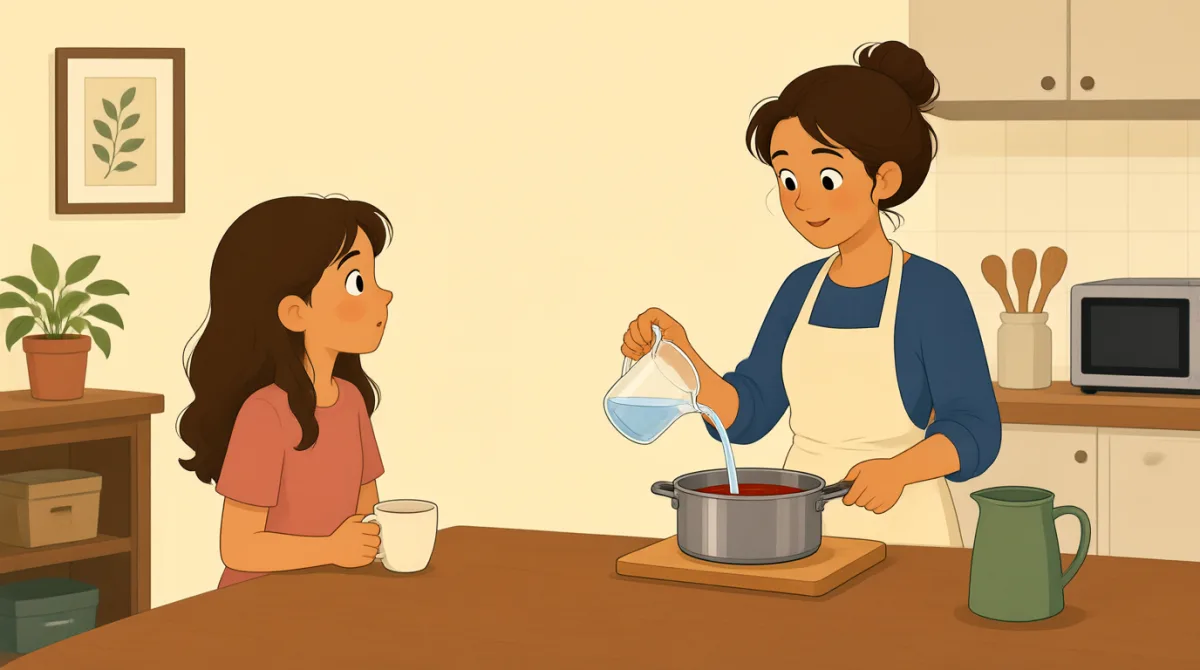

Grace, I think the sauce is too salty. Can I fix it?
گریس، فکر کنم سس خیلی شور شده. میتونم درستش کنم؟

Yes. Add a little water, and then stir it well.
آره. کمی آب اضافه کن و بعد خوب همش بزن.
Should I add the water now, while it’s still hot?
آب رو همین حالا، وقتی هنوز داغه، اضافه کنم؟
Yes, that’s fine. Add just a little at first.
آره، اشکالی نداره. اول فقط یه کم اضافه کن.
Okay, I added some. Should I taste it again?
باشه، یه مقدار اضافه کردم. دوباره مزهاش رو بچشم؟
Yes, use a clean spoon and taste it carefully.
آره، از یه قاشق تمیز استفاده کن و با دقت مزهاش رو بچش.
It tastes much better now. Should I add more water?
الان خیلی بهتر شده. آب بیشتری اضافه کنم؟
No, it’s good now. A little water made a big difference.
نه، الان خوبه. همین یه کم آب خیلی فرق ایجاد کرد.
واژگان7
- too saltyخیلی شور
This means the sauce has more salt than you want. You can use “too” before an adjective to say something is more than you like.
یعنی سس از چیزی که میخواهی نمک بیشتری دارد. میتوانی قبل از یک صفت از “too” استفاده کنی تا بگویی چیزی بیش از حدی است که دوست داری.
- fix itدرستش کردن
Here, this means to make the sauce taste better. You can use “fix it” when you want to correct a problem.
اینجا یعنی کاری کنی مزهٔ سس بهتر شود. وقتی میخواهی مشکلی را برطرف کنی، میتوانی از “fix it” استفاده کنی.
- stir it wellخوب هم زدن
This means to mix the sauce thoroughly with a spoon. You can say “stir it well” when giving someone a cooking instruction.
یعنی سس را با قاشق کاملاً مخلوط کردن. وقتی به کسی دستور آشپزی میدهی، میتوانی بگویی “stir it well”.
- at firstدر ابتدا
This means at the beginning. Here, Grace says to add only a small amount of water at the beginning.
یعنی در آغاز. اینجا گریس میگوید در ابتدا فقط مقدار کمی آب اضافه کند.
- taste it againدوباره مزهاش را چشیدن
This means to try the sauce once more to check its flavor. You can use this phrase after changing or adding something to food.
یعنی یک بار دیگر سس را امتحان کنی تا مزهاش را بررسی کنی. میتوانی بعد از تغییر دادن یا اضافه کردن چیزی به غذا از این عبارت استفاده کنی.
- a clean spoonیک قاشق تمیز
This means a spoon that has been washed and is ready to use. It is useful advice when tasting food while cooking.
یعنی قاشقی که شسته شده و آمادهٔ استفاده است. هنگام چشیدن غذا در حین آشپزی، این توصیه مفیدی است.
- made a big differenceتغییر زیادی ایجاد کرد
This means caused a noticeable change. You can use it to describe how a small action improved a situation.
یعنی باعث تغییری محسوس شد. میتوانی از این عبارت بگویی یک کار کوچک چطور وضعیت را بهتر کرده است.
جملات کلیدی7
- 1
I think the sauce is too salty.
فکر کنم سس خیلی شور شده.
Use this sentence to describe a problem with food. You can replace “the sauce” and “too salty” to talk about other dishes or problems.
از این جمله برای توصیف مشکلی در غذا استفاده کن. میتوانی “the sauce” و “too salty” را عوض کنی و دربارهٔ غذاها یا مشکلات دیگر حرف بزنی.
- 2
Can I fix it?
میتونم درستش کنم؟
This is a simple way to ask if you can correct a problem. You can use “Can I fix it?” in many everyday situations.
این راه سادهای برای پرسیدن این است که آیا میتوانی مشکلی را برطرف کنی یا نه. میتوانی در موقعیتهای روزمرهٔ زیادی از “Can I fix it?” استفاده کنی.
- 3
Add a little water, and then stir it well.
کمی آب اضافه کن و بعد خوب همش بزن.
This gives two clear cooking instructions in order. You can use “Add a little [ingredient], and then stir it well” for other recipes.
این جمله دو دستور آشپزی روشن را بهترتیب بیان میکند. برای دستورهای دیگر هم میتوانی از الگوی “Add a little [ingredient], and then stir it well” استفاده کنی.
- 4
Should I add the water now, while it’s still hot?
آب رو همین حالا، وقتی هنوز داغه، اضافه کنم؟
Use this question to ask if it is the right time to do something. You can replace “add the water” with another action.
از این سؤال بپرس که آیا زمان مناسبی برای انجام کاری است یا نه. میتوانی “add the water” را با کار دیگری جایگزین کنی.
- 5
Should I taste it again?
دوباره مزهاش رو بچشم؟
This is a useful way to check what to do next while cooking. You can use “Should I [action] again?” to ask for advice.
این روش مفیدی است برای اینکه هنگام آشپزی بپرسی قدم بعدی چیست. برای درخواست راهنمایی میتوانی از الگوی “Should I [action] again?” استفاده کنی.
- 6
Yes, use a clean spoon and taste it carefully.
آره، از یه قاشق تمیز استفاده کن و با دقت مزهاش رو بچش.
This sentence gives practical advice for tasting food safely. You can use “Use a clean [item] and [action] carefully” to give similar instructions.
این جمله توصیهای کاربردی برای چشیدن غذا با رعایت بهداشت میدهد. برای دستورهای مشابه میتوانی از الگوی “Use a clean [item] and [action] carefully” استفاده کنی.
- 7
A little water made a big difference.
همین یه کم آب خیلی فرق ایجاد کرد.
Use this sentence to say that a small change had a noticeable effect. You can replace “water” with another thing that helped.
از این جمله برای گفتن اینکه تغییری کوچک اثر محسوسی داشته استفاده کن. میتوانی “water” را با چیز دیگری که کمک کرده جایگزین کنی.