Asking the Chef a Question
向主廚提問
Emma asks Grace how to make the sauce less salty. Grace suggests adding a little water and tasting it again.
Emma問Grace怎樣讓醬汁不那麼鹹。Grace建議加一點水,再嘗一嘗。
對話8
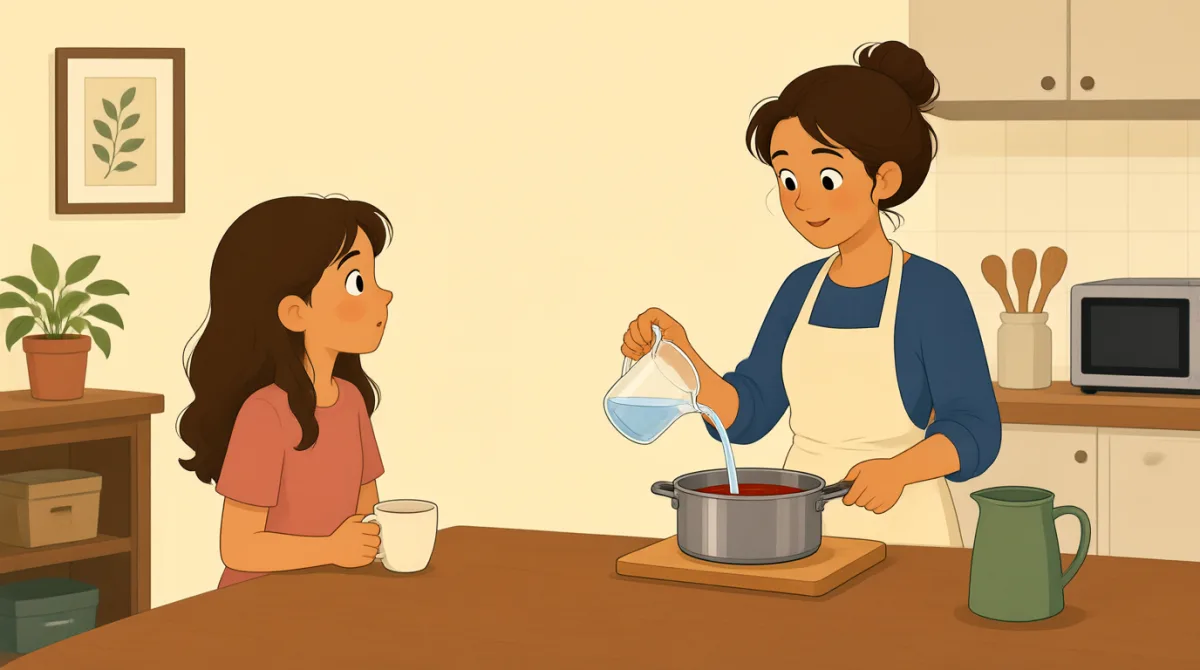

Grace, I think the sauce is too salty. Can I fix it?
Grace,我覺得醬汁太鹹了。我能補救一下嗎?

Yes. Add a little water, and then stir it well.
可以。加一點水,然後攪拌均勻。
Should I add the water now, while it’s still hot?
我現在加水可以嗎?醬汁還是熱的。
Yes, that’s fine. Add just a little at first.
可以,沒問題。先只加一點點。
Okay, I added some. Should I taste it again?
好,我加了一些。要再嚐嚐嗎?
Yes, use a clean spoon and taste it carefully.
要,用乾淨的勺子小心地嘗一嘗。
It tastes much better now. Should I add more water?
現在味道好多了。我還要再加水嗎?
No, it’s good now. A little water made a big difference.
不用了,現在正好。加一點水就有很大改善。
詞彙7
- too salty太鹹
This means the sauce has more salt than you want. You can use “too” before an adjective to say something is more than you like.
這表示醬汁裡的鹽比你希望的多。你可以在形容詞前加上“too”,表示程度超過了你能接受的範圍。
- fix it補救一下
Here, this means to make the sauce taste better. You can use “fix it” when you want to correct a problem.
這裡指讓醬汁的味道變好。想要解決一個問題時,可以用“fix it”。
- stir it well攪拌均勻
This means to mix the sauce thoroughly with a spoon. You can say “stir it well” when giving someone a cooking instruction.
這表示用勺子把醬汁充分攪勻。給別人烹飪建議時,可以說“stir it well”。
- at first一開始
This means at the beginning. Here, Grace says to add only a small amount of water at the beginning.
這表示剛開始的時候。這裡,Grace建議一開始只加少量水。
- taste it again再嘗一嘗
This means to try the sauce once more to check its flavor. You can use this phrase after changing or adding something to food.
這表示再嘗一次醬汁,看看味道怎麼樣。改變或新增食材後,可以用這個說法。
- a clean spoon乾淨的勺子
This means a spoon that has been washed and is ready to use. It is useful advice when tasting food while cooking.
這表示洗乾淨、可以使用的勺子。烹飪時嘗味道,這樣做很實用。
- made a big difference有很大改善
This means caused a noticeable change. You can use it to describe how a small action improved a situation.
這表示帶來了明顯的變化。你可以用它來描述一個小小的舉動怎樣改善了某種情況。
關鍵句7
- 1
I think the sauce is too salty.
我覺得醬汁太鹹了。
Use this sentence to describe a problem with food. You can replace “the sauce” and “too salty” to talk about other dishes or problems.
用這句話來描述食物的問題。你可以替換“the sauce”和“too salty”,談談其他菜或問題。
- 2
Can I fix it?
我能補救一下嗎?
This is a simple way to ask if you can correct a problem. You can use “Can I fix it?” in many everyday situations.
這是一種簡單的問法,用來詢問自己能不能解決某個問題。在日常生活中的許多場合,你都可以用“Can I fix it?”。
- 3
Add a little water, and then stir it well.
加一點水,然後攪拌均勻。
This gives two clear cooking instructions in order. You can use “Add a little [ingredient], and then stir it well” for other recipes.
這句話按順序給出了兩個清楚的烹飪指示。做其他菜時,你也可以用“Add a little [ingredient], and then stir it well”這個句型。
- 4
Should I add the water now, while it’s still hot?
醬汁還熱著的時候,我現在加水可以嗎?
Use this question to ask if it is the right time to do something. You can replace “add the water” with another action.
用這個問句來確認現在是不是做某件事的合適時機。你可以把“add the water”換成其他動作。
- 5
Should I taste it again?
要再嘗一嘗嗎?
This is a useful way to check what to do next while cooking. You can use “Should I [action] again?” to ask for advice.
烹飪時,這句話可以用來詢問下一步該做什麼。你可以用“Should I [action] again?”來徵求建議。
- 6
Yes, use a clean spoon and taste it carefully.
可以,用乾淨的勺子小心地嘗一嘗。
This sentence gives practical advice for tasting food safely. You can use “Use a clean [item] and [action] carefully” to give similar instructions.
這句話給出了安全嘗味道的實用建議。你可以用“Use a clean [item] and [action] carefully”來給出類似的指示。
- 7
A little water made a big difference.
加一點水就有很大改善。
Use this sentence to say that a small change had a noticeable effect. You can replace “water” with another thing that helped.
用這句話來表達一個小小的改變帶來了明顯的效果。你可以把“water”換成其他起了作用的東西。