Dropping Your Phone
휴대폰을 떨어뜨렸어요
Emma drops her phone on the sidewalk and the screen cracks. She tells Jack how it happened.
에마가 인도에서 휴대폰을 떨어뜨려 화면이 깨져요. 에마가 잭에게 어떻게 된 일인지 말해요.
대화8
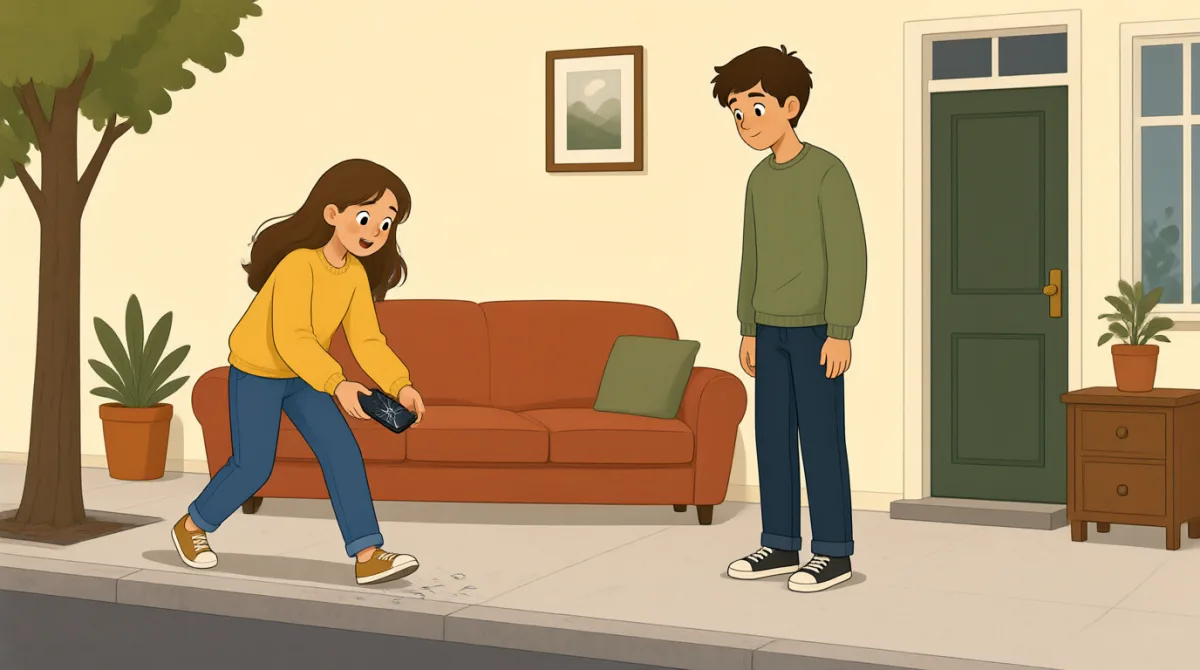

Look at my phone, Jack. I dropped it on the sidewalk.
잭, 내 휴대폰 좀 봐. 인도에서 떨어뜨렸어.

Oh no! Did it fall out of your bag?
어떡해! 가방에서 떨어진 거야?
No, I was holding it when I tripped over a small crack.
아니, 작은 틈에 발이 걸려 넘어질 뻔했을 때 들고 있었어.
That sounds painful. Did you hurt your hands?
아팠겠다. 손 다쳤어?
No, I'm okay. But the screen hit the ground and cracked.
아니, 난 괜찮아. 그런데 화면이 바닥에 부딪혀서 깨졌어.
Can you still use it, or is the screen completely broken?
아직 쓸 수 있어, 아니면 화면이 완전히 망가졌어?
It still turns on, but I can barely read the screen.
전원은 켜지는데 화면을 거의 읽을 수가 없어.
You should take it to a repair shop soon.
곧 수리점에 가져가 봐.
어휘7
- dropped it떨어뜨렸어
This means the phone fell from Emma’s hand. Use “I dropped it” to say that you accidentally let something fall.
이 표현은 휴대폰이 에마의 손에서 떨어졌다는 뜻이에요. 실수로 뭔가를 떨어뜨렸다고 말할 때 “I dropped it”(내가 그걸 떨어뜨렸어)이라고 해요.
- sidewalk인도
A sidewalk is a path beside a road where people walk. You can say, “I saw my friend on the sidewalk.”
“Sidewalk”는 사람들이 걸어 다니는, 도로 옆의 길을 뜻해요. “I saw my friend on the sidewalk.”(인도에서 친구를 봤어.)처럼 말할 수 있어요.
- tripped over발이 걸려 넘어질 뻔하다
This means Emma caught her foot on something and almost fell. You can say, “I tripped over a step.”
이 표현은 에마의 발이 무언가에 걸려 넘어질 뻔했다는 뜻이에요. “I tripped over a step.”(계단 턱에 발이 걸렸어.)처럼 말할 수 있어요.
- hurt your hands손을 다치다
This asks if someone’s hands were injured or painful. Use “Did you hurt your…?” to ask about an injury.
손을 다쳤거나 아픈지 묻는 표현이에요. 다쳤는지 물어볼 때 “Did you hurt your…?”(…을 다쳤어?)를 사용해요.
- turns on켜지다
This means the phone starts working when Emma presses its power button. Use “turn on” for phones, lights, and other devices.
에마가 전원 버튼을 눌렀을 때 휴대폰이 작동하기 시작한다는 뜻이에요. 휴대폰, 조명, 그 밖의 기기가 켜지는 것을 말할 때 “turn on”을 사용해요.
- barely read거의 읽을 수 없다
This means Emma can read the screen only with difficulty. Use “barely” to say that something happens, but only a little.
에마가 화면을 겨우 읽을 수 있다는 뜻이에요. 어떤 일이 일어나긴 하지만 아주 조금만 가능하다고 말할 때 “barely”를 사용해요.
- repair shop수리점
A repair shop is a place where people fix broken things. You can take a phone or another device to a repair shop.
“Repair shop”은 고장 난 물건을 고치는 곳이에요. 휴대폰이나 다른 기기를 수리점에 가져갈 수 있어요.
핵심 문장6
- 1
I dropped it on the sidewalk.
인도에서 떨어뜨렸어.
This explains where and how the phone fell. You can reuse the pattern “I dropped it on…” to say where you accidentally dropped something.
휴대폰이 어디서 어떻게 떨어졌는지 설명하는 문장이에요. “I dropped it on…”(…에서 그걸 떨어뜨렸어)이라는 패턴을 활용하면 실수로 물건을 떨어뜨린 장소를 말할 수 있어요.
- 2
Did it fall out of your bag?
가방에서 떨어진 거야?
This is a simple question about how something was lost or dropped. Replace “your bag” with another place, such as “your pocket.”
무언가를 잃어버리거나 떨어뜨린 경위를 묻는 간단한 질문이에요. “your bag” 대신 “your pocket”(네 주머니)처럼 다른 장소를 넣어 말해 보세요.
- 3
I was holding it when I tripped over a small crack.
작은 틈에 발이 걸려 넘어질 뻔했을 때 그걸 들고 있었어.
This sentence explains what Emma was doing when the accident happened. Use “I was [doing something] when…” to describe an action interrupted by an event.
사고가 났을 때 에마가 무엇을 하고 있었는지 설명하는 문장이에요. 어떤 일이 일어나면서 하던 행동이 중단된 상황은 “I was [doing something] when…”(…하고 있었는데 그때 …했어) 패턴으로 표현해요.
- 4
Did you hurt your hands?
손 다쳤어?
This is a useful way to ask if someone was injured. Replace “your hands” with another body part, such as “your knee.”
누군가 다쳤는지 물어볼 때 유용한 표현이에요. “your hands” 대신 “your knee”(네 무릎)처럼 다른 신체 부위를 넣어 보세요.
- 5
It still turns on, but I can barely read the screen.
전원은 켜지는데 화면을 거의 읽을 수가 없어.
This describes a device that works partly but has a problem. Use “It still…, but…” to explain what works and what does not.
기기가 일부 작동하지만 문제가 있는 상황을 설명해요. 작동하는 점과 그렇지 않은 점을 말할 때 “It still…, but…”(여전히 …하지만 …) 패턴을 사용해요.
- 6
You should take it to a repair shop soon.
곧 수리점에 가져가 봐.
This gives simple advice about getting the phone fixed. Use “You should take it to…” to recommend a place or service.
휴대폰을 수리받으라고 간단히 조언하는 문장이에요. 장소나 서비스를 추천할 때 “You should take it to…”(…에 가져가 보는 게 좋겠어)라고 말해요.