Dropping Your Phone
ফোন ফেলে দেওয়া
Emma drops her phone on the sidewalk and the screen cracks. She tells Jack how it happened.
এমা ফুটপাথে তার ফোন ফেলে দেয়, আর স্ক্রিনে ফাটল ধরে। কীভাবে ঘটনাটি ঘটেছে, সে জ্যাককে তা বলে।
সংলাপ8
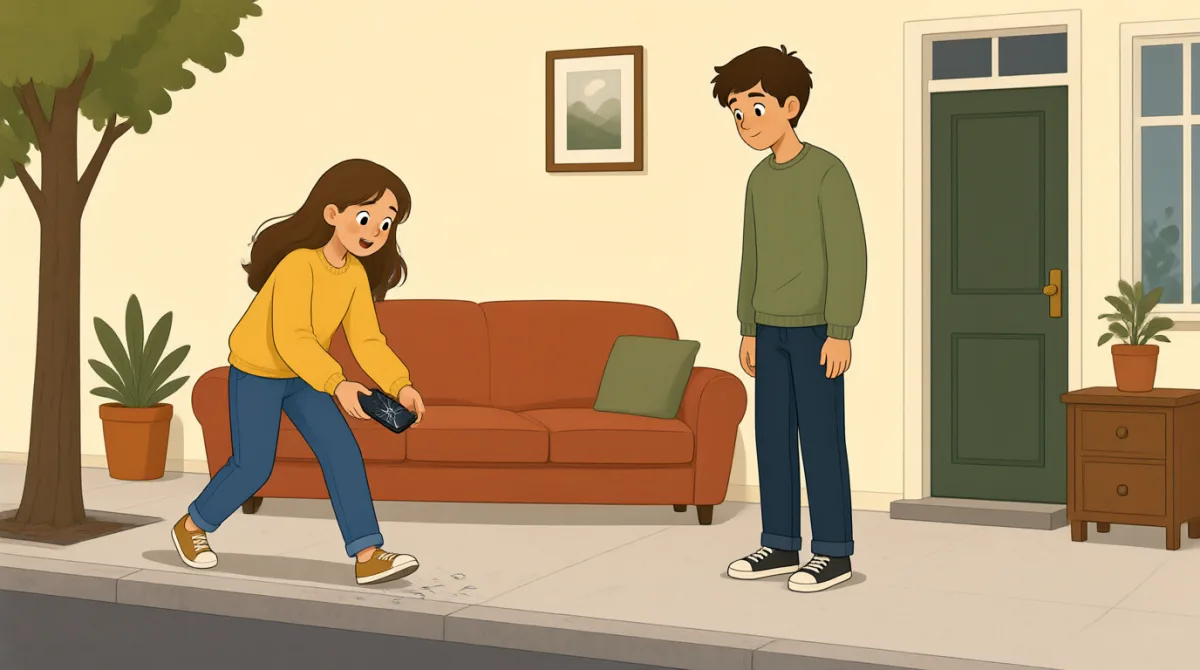

Look at my phone, Jack. I dropped it on the sidewalk.
আমার ফোনটা দেখো, জ্যাক। আমি এটা ফুটপাথে ফেলে দিয়েছি।

Oh no! Did it fall out of your bag?
ওহ না! এটা কি তোমার ব্যাগ থেকে পড়ে গিয়েছিল?
No, I was holding it when I tripped over a small crack.
না, একটা ছোট ফাটলে হোঁচট খাওয়ার সময় এটা আমার হাতে ছিল।
That sounds painful. Did you hurt your hands?
শুনে তো বেশ ব্যথার মনে হচ্ছে। তোমার হাতে কি চোট লেগেছে?
No, I'm okay. But the screen hit the ground and cracked.
না, আমি ঠিক আছি। কিন্তু স্ক্রিনটা মাটিতে আঘাত লেগে ফেটে গেছে।
Can you still use it, or is the screen completely broken?
তুমি কি এখনও এটা ব্যবহার করতে পারছ, নাকি স্ক্রিনটা পুরোপুরি নষ্ট হয়ে গেছে?
It still turns on, but I can barely read the screen.
এটা এখনও চালু হয়, কিন্তু স্ক্রিনটা পড়তে আমার খুব কষ্ট হয়।
You should take it to a repair shop soon.
তোমার উচিত শিগগিরই এটা কোনো মেরামতের দোকানে নিয়ে যাওয়া।
শব্দভান্ডার7
- dropped itফেলে দিয়েছি
This means the phone fell from Emma’s hand. Use “I dropped it” to say that you accidentally let something fall.
এর অর্থ, ফোনটি এমার হাত থেকে পড়ে গেছে। তুমি “I dropped it” বলে বোঝাতে পারো যে অসাবধানতাবশত কোনো জিনিস হাত থেকে পড়ে গেছে।
- sidewalkফুটপাত
A sidewalk is a path beside a road where people walk. You can say, “I saw my friend on the sidewalk.”
ফুটপাত হলো রাস্তার পাশের এমন একটি পথ, যেখানে মানুষ হাঁটে। তুমি বলতে পারো, “I saw my friend on the sidewalk.”
- tripped overহোঁচট খাওয়া
This means Emma caught her foot on something and almost fell. You can say, “I tripped over a step.”
এর অর্থ, এমার পা কোনো কিছুর সঙ্গে আটকে গিয়েছিল এবং সে প্রায় পড়ে যাচ্ছিল। তুমি বলতে পারো, “I tripped over a step.”
- hurt your handsহাতে চোট লাগা
This asks if someone’s hands were injured or painful. Use “Did you hurt your…?” to ask about an injury.
এটি জিজ্ঞেস করার একটি উপায় যে কারও হাতে আঘাত লেগেছে কি না বা হাত ব্যথা করছে কি না। কোনো আঘাতের বিষয়ে জানতে “Did you hurt your…?” ব্যবহার করো।
- turns onচালু হয়
This means the phone starts working when Emma presses its power button. Use “turn on” for phones, lights, and other devices.
এর অর্থ, এমা পাওয়ার বোতাম চাপলে ফোনটি কাজ শুরু করে। ফোন, বাতি এবং অন্যান্য যন্ত্রের জন্য “turn on” ব্যবহার করো।
- barely readকষ্টে পড়তে পারা
This means Emma can read the screen only with difficulty. Use “barely” to say that something happens, but only a little.
এর অর্থ, এমা কেবল অনেক কষ্ট করে স্ক্রিনটি পড়তে পারে। কোনো কাজ খুব সামান্যভাবে বা কষ্টে হয় বোঝাতে “barely” ব্যবহার করো।
- repair shopমেরামতের দোকান
A repair shop is a place where people fix broken things. You can take a phone or another device to a repair shop.
মেরামতের দোকান হলো এমন একটি জায়গা, যেখানে নষ্ট জিনিস ঠিক করা হয়। তুমি ফোন বা অন্য কোনো যন্ত্র মেরামতের দোকানে নিয়ে যেতে পারো।
গুরুত্বপূর্ণ বাক্য6
- 1
I dropped it on the sidewalk.
আমি এটা ফুটপাথে ফেলে দিয়েছি।
This explains where and how the phone fell. You can reuse the pattern “I dropped it on…” to say where you accidentally dropped something.
এই বাক্যে ফোনটি কোথায় এবং কীভাবে পড়েছে, তা বলা হয়েছে। কোনো জিনিস অসাবধানতাবশত কোথায় ফেলে দিয়েছ তা বলতে “I dropped it on…” বাক্যরীতিটি আবার ব্যবহার করতে পারো।
- 2
Did it fall out of your bag?
এটা কি তোমার ব্যাগ থেকে পড়ে গিয়েছিল?
This is a simple question about how something was lost or dropped. Replace “your bag” with another place, such as “your pocket.”
কোনো জিনিস কীভাবে হারিয়ে গেছে বা পড়ে গেছে, সে বিষয়ে এটি একটি সহজ প্রশ্ন। “your bag”-এর জায়গায় “your pocket”-এর মতো অন্য কোনো স্থান বসাতে পারো।
- 3
I was holding it when I tripped over a small crack.
একটা ছোট ফাটলে হোঁচট খাওয়ার সময় এটা আমার হাতে ছিল।
This sentence explains what Emma was doing when the accident happened. Use “I was [doing something] when…” to describe an action interrupted by an event.
দুর্ঘটনাটি ঘটার সময় এমা কী করছিল, এই বাক্যে তা বোঝানো হয়েছে। কোনো ঘটনার কারণে বাধাগ্রস্ত হওয়া কাজ বর্ণনা করতে “I was [doing something] when…” ব্যবহার করো।
- 4
Did you hurt your hands?
তোমার হাতে কি চোট লেগেছে?
This is a useful way to ask if someone was injured. Replace “your hands” with another body part, such as “your knee.”
কেউ আহত হয়েছে কি না জিজ্ঞেস করার এটি একটি কার্যকর উপায়। “your hands”-এর জায়গায় “your knee”-এর মতো শরীরের অন্য কোনো অঙ্গ বসাতে পারো।
- 5
It still turns on, but I can barely read the screen.
এটা এখনও চালু হয়, কিন্তু স্ক্রিনটা পড়তে আমার খুব কষ্ট হয়।
This describes a device that works partly but has a problem. Use “It still…, but…” to explain what works and what does not.
এতে এমন একটি যন্ত্রের কথা বলা হয়েছে, যা আংশিকভাবে কাজ করছে, কিন্তু তাতে সমস্যা আছে। কোন অংশ কাজ করছে এবং কোন অংশ কাজ করছে না, তা বোঝাতে “It still…, but…” ব্যবহার করো।
- 6
You should take it to a repair shop soon.
তোমার উচিত শিগগিরই এটা কোনো মেরামতের দোকানে নিয়ে যাওয়া।
This gives simple advice about getting the phone fixed. Use “You should take it to…” to recommend a place or service.
ফোনটি মেরামত করানোর বিষয়ে এটি একটি সহজ পরামর্শ। কোনো স্থান বা সেবা সুপারিশ করতে “You should take it to…” ব্যবহার করো।