Saying Goodbye at the Door
문 앞에서 작별 인사하기
Mia says goodbye to her child at the classroom door. She offers a kind, simple goodbye before the child goes inside.
미아가 교실 문 앞에서 아이에게 작별 인사를 해요. 아이가 교실에 들어가기 전에 다정하고 간단하게 인사해요.
대화7
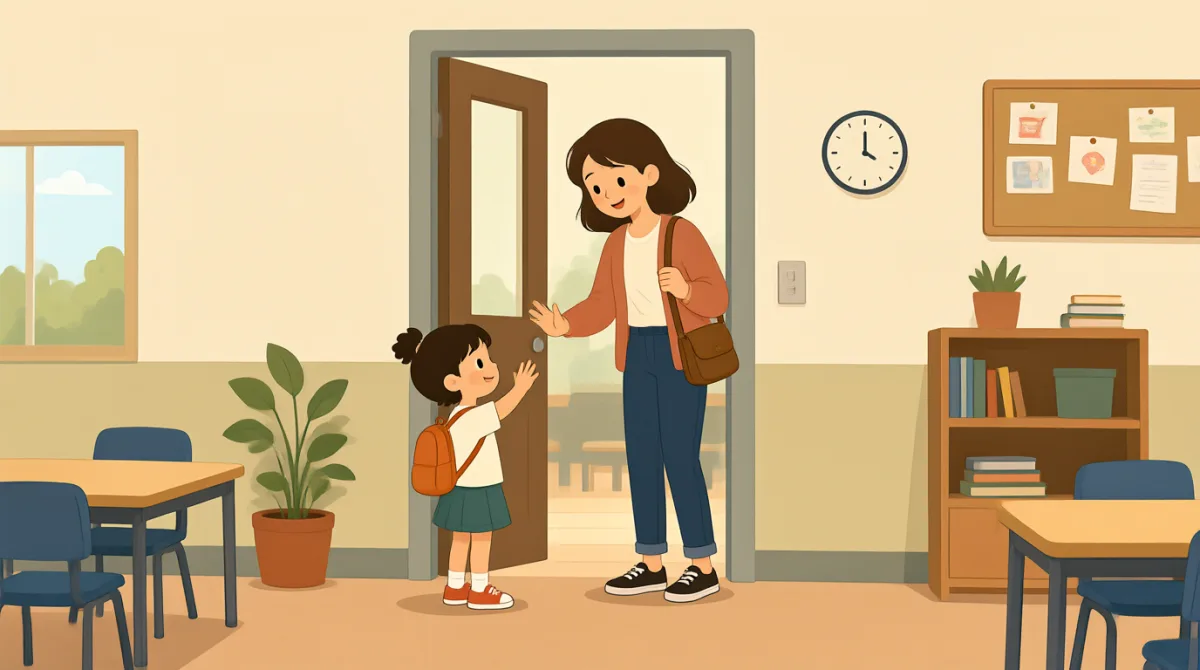

Have a good day, Emma. I love you.
오늘 좋은 하루 보내, 에마. 사랑해.

I love you too, Mom. See you later!
나도 사랑해, 엄마. 이따 봐!
I’ll see you after school. Have fun!
학교 끝나고 보자. 재미있게 보내!
Okay! I’m going inside now.
응! 이제 안으로 들어갈게.
All right. Give me a hug first.
그래. 먼저 안아 줘.
Here you go. Bye, Mom!
자, 여기. 안녕, 엄마!
Bye, Emma. Have a great day!
잘 가, 에마. 멋진 하루 보내!
어휘7
- Have a good day좋은 하루 보내
This is a kind way to wish someone a nice day. You can say it when someone is leaving.
누군가에게 좋은 하루를 보내라고 다정하게 말하는 표현이에요. 상대가 떠날 때 쓸 수 있어요.
- See you later이따 봐
This means you will see the person again later. It is a friendly way to say goodbye.
나중에 그 사람을 다시 만나겠다는 뜻이에요. 친근하게 작별 인사를 할 때 쓰는 표현이에요.
- after school방과 후에
This means when school is finished. You can use it to talk about plans for later.
학교 수업이 끝난 뒤를 뜻해요. 나중에 할 계획을 이야기할 때 쓸 수 있어요.
- Have fun재미있게 보내
This means you hope someone enjoys an activity. You can say it before they go do something.
상대가 어떤 활동을 즐겁게 하길 바란다는 뜻이에요. 누군가 무언가를 하러 가기 전에 말할 수 있어요.
- Give me a hug안아 줘
This is a warm way to ask someone to hug you. You can use it with family or close friends.
누군가에게 자신을 안아 달라고 다정하게 부탁하는 표현이에요. 가족이나 친한 친구에게 쓸 수 있어요.
- Here you go자, 여기
This is a friendly phrase used when giving something to someone. In this dialogue, Emma says it before giving her mom a hug.
누군가에게 무언가를 건넬 때 쓰는 친근한 표현이에요. 이 대화에서 에마는 엄마를 안아 주기 전에 이 말을 해요.
- Have a great day멋진 하루 보내
This is a cheerful way to wish someone a very nice day. You can say it when saying goodbye.
아주 좋은 하루를 보내라고 밝고 다정하게 바라는 표현이에요. 작별 인사를 할 때 쓸 수 있어요.
핵심 문장8
- 1
Have a good day, Emma.
오늘 좋은 하루 보내, 에마.
This is a kind way to say goodbye and wish someone well. You can use it with a name, such as “Have a good day, Sam.”
작별 인사를 하면서 상대가 좋은 하루를 보내길 바라는 다정한 표현이에요. “Have a good day, Sam.”처럼 이름을 넣어 말할 수도 있어요.
- 2
I love you too, Mom.
나도 사랑해, 엄마.
This is a warm reply when someone says “I love you.” Change “Mom” to the other person’s name or title.
누군가 “I love you.”라고 말했을 때 따뜻하게 답하는 표현이에요. “Mom”은 상대방의 이름이나 호칭으로 바꿔 말할 수 있어요.
- 3
I’ll see you after school.
학교 끝나고 보자.
This tells someone when you expect to see them again. You can use the pattern “I’ll see you after work” or “I’ll see you tomorrow.”
언제 다시 만날지 상대에게 알려 주는 말이에요. “I’ll see you after work” 또는 “I’ll see you tomorrow.”처럼 말할 수 있어요.
- 4
Have fun!
재미있게 보내!
This is a short, friendly wish for someone to enjoy an activity. You can say it before a child goes to school or a friend goes out.
상대가 어떤 활동을 즐겁게 하길 바라는 짧고 친근한 표현이에요. 아이가 학교에 가기 전이나 친구가 외출하기 전에 말할 수 있어요.
- 5
I’m going inside now.
이제 안으로 들어갈게.
This tells someone that you are entering a place now. You can use it when going into a classroom, house, or shop.
지금 어떤 장소 안으로 들어간다고 알려 주는 말이에요. 교실이나 집, 가게에 들어갈 때 쓸 수 있어요.
- 6
Give me a hug first.
먼저 안아 줘.
This is a simple way to ask for a hug before someone leaves. You can change “a hug” to another action, such as “Give me a kiss first.”
상대가 떠나기 전에 안아 달라고 간단히 부탁하는 표현이에요. “a hug”를 “a kiss”로 바꿔 “Give me a kiss first.”라고 말할 수도 있어요.
- 7
Here you go.
자, 여기.
This is a natural phrase to say when giving something to someone. You can use it when handing over an item or, as here, offering a hug.
누군가에게 무언가를 건넬 때 자연스럽게 쓰는 표현이에요. 물건을 건넬 때뿐 아니라 여기처럼 포옹을 해 주겠다고 할 때도 쓸 수 있어요.
- 8
Bye, Emma.
잘 가, 에마.
This is a simple, friendly way to say goodbye to someone. Use the person’s name to make it sound warm.
누군가에게 간단하고 친근하게 작별 인사를 하는 표현이에요. 상대의 이름을 넣으면 더 다정하게 들려요.