Walking to School
학교까지 걸어가기
Mia and her child walk to school together. They talk about the day and watch for traffic.
미아와 아이가 함께 걸어서 학교에 가요. 오늘 할 일에 대해 이야기하고 차가 오는지 살펴봐요.
대화8
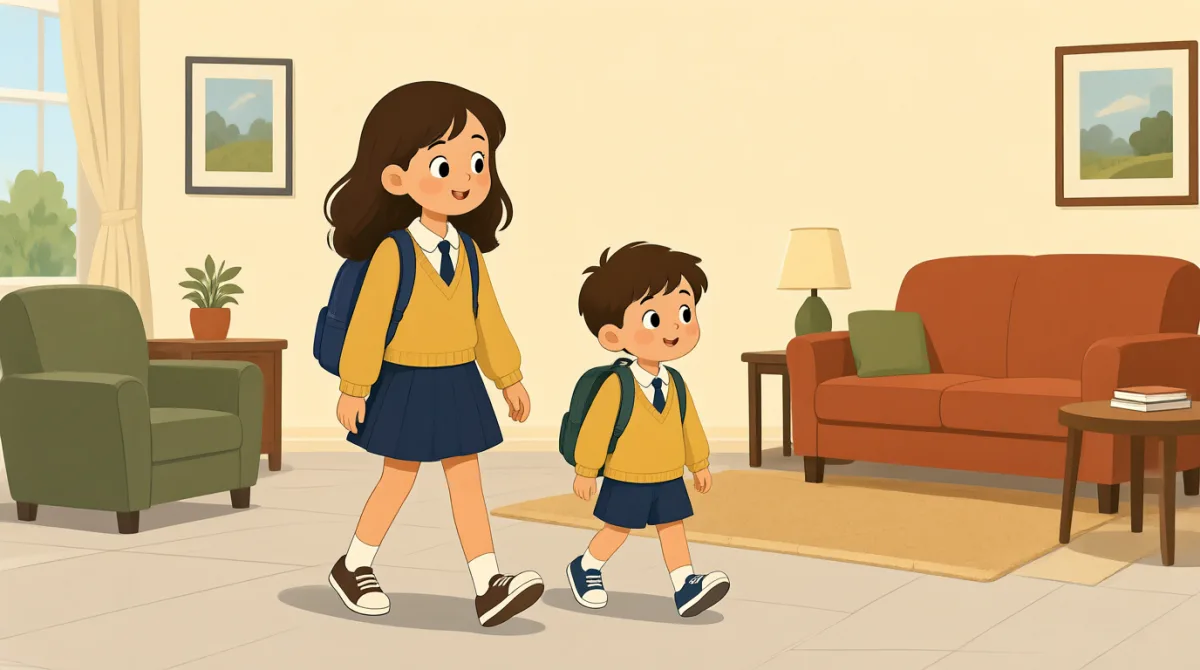

Hold my hand, Emma. We are crossing the street.
내 손 잡아, 에마. 우리 길을 건너고 있어.

Okay, Mom. Is the school far?
알았어, 엄마. 학교 멀어?
No, it is close. We can walk there.
아니, 가까워. 걸어가도 돼.
What do we do at school today?
오늘 학교에서 뭐 해?
You can read and play with your friends.
책도 읽고 친구들이랑 놀 수도 있어.
That sounds fun! Can I run now?
재밌겠다! 이제 뛰어도 돼?
Not near the street. Walk with me, please.
길 근처에서는 안 돼. 엄마랑 같이 걸어, 알았지?
Okay. I see our school!
알았어. 우리 학교 보여!
어휘8
- Hold my hand내 손 잡아
This means to keep your hand in someone else's hand. A parent can say this to keep a child safe.
다른 사람의 손을 잡고 있으라는 뜻이에요. 부모가 아이를 안전하게 지키려고 할 때 이렇게 말할 수 있어요.
- crossing the street길을 건너는 중
This means going from one side of the street to the other. Look for traffic when you cross.
길의 한쪽에서 반대쪽으로 가는 것을 뜻해요. 길을 건널 때는 차가 오는지 살펴보세요.
- Is the school far?학교 멀어?
Use this question to ask if a place is a long way away. You can replace “the school” with another place.
어떤 장소가 먼지 물어볼 때 쓰는 질문이에요. “the school” 대신 다른 장소를 넣어도 돼요.
- close가까운
Here, “close” means not far away. You can say, “The store is close.”
여기서 “close”는 멀지 않다는 뜻이에요. “The store is close.”라고 말할 수 있어요.
- walk there걸어서 거기에 가다
This means go to that place on foot. You can say, “We can walk there” when a place is nearby.
그 장소까지 걸어서 간다는 뜻이에요. 가까운 곳이라면 “We can walk there”라고 말할 수 있어요.
- with your friends친구들과 함께
This means together with people who are your friends. You can use it to talk about who you spend time with.
친구인 사람들과 함께라는 뜻이에요. 누구와 시간을 보내는지 말할 때 쓸 수 있어요.
- near the street길 근처에
This means close to the street. Use it to talk about a place where you should be careful.
길과 가까운 곳이라는 뜻이에요. 조심해야 하는 장소를 말할 때 쓸 수 있어요.
- I see our school!우리 학교가 보여!
Use this sentence when you can see the school. You can replace “our school” with another place you can see.
학교가 보일 때 쓰는 문장이에요. “our school” 대신 눈에 보이는 다른 장소를 넣을 수 있어요.
핵심 문장8
- 1
Hold my hand, Emma.
내 손 잡아, 에마.
This is a simple way to ask a child to hold your hand. Replace “Emma” with the person's name.
아이에게 손을 잡으라고 간단하게 말하는 표현이에요. “Emma” 대신 그 사람의 이름을 넣으면 돼요.
- 2
We are crossing the street.
우리 길을 건너고 있어.
Use this to say that you are crossing the street now. You can replace “the street” with another place you are crossing.
지금 길을 건너고 있다고 말할 때 써요. “the street” 대신 지금 건너고 있는 다른 장소를 넣을 수 있어요.
- 3
Is the school far?
학교 멀어?
This is a useful question when you want to know how far away a place is. Replace “the school” with another place.
어떤 장소가 얼마나 먼지 알고 싶을 때 유용한 질문이에요. “the school” 대신 다른 장소를 넣어 보세요.
- 4
We can walk there.
우리 걸어가도 돼.
Use this to say that walking is a way to get to a place. Replace “there” with a place you have already mentioned.
어떤 장소에 가는 방법으로 걷는 것을 말할 때 써요. “there” 대신 앞에서 이미 언급한 장소를 넣을 수 있어요.
- 5
You can read and play with your friends.
책도 읽고 친구들이랑 놀 수도 있어.
This sentence tells someone about things they can do. You can name other activities after “can.”
상대방이 할 수 있는 일을 알려 주는 문장이에요. “can” 뒤에 다른 활동을 넣어 말할 수도 있어요.
- 6
Can I run now?
이제 뛰어도 돼?
Use this question to ask permission to do something. Replace “run” with another action, such as “play.”
무언가 해도 되는지 허락을 구할 때 쓰는 질문이에요. “run” 대신 “play”처럼 다른 행동을 넣어 보세요.
- 7
Not near the street.
길 근처에서는 안 돼.
This is a short warning about where not to do something. You can use “Not near…” to warn someone about a place.
어떤 행동을 하면 안 되는 장소를 짧게 경고하는 표현이에요. “Not near…”를 써서 특정 장소를 조심하라고 알릴 수 있어요.
- 8
Walk with me, please.
나랑 같이 걸어 줘.
This is a polite way to ask someone to walk beside you. Replace “walk” with another action, such as “wait.”
누군가에게 자기 옆에서 걸어 달라고 정중하게 부탁하는 표현이에요. “walk” 대신 “wait”처럼 다른 행동을 넣을 수 있어요.