Talking to Another Parent
다른 학부모와 이야기하기
After drop-off, Mia talks with another parent about the school morning. They share a friendly greeting before going on their way.
등교를 마친 뒤, 미아가 다른 학부모와 아침 등굣길에 대해 이야기해요. 두 사람은 친근하게 인사를 나누고 각자 갈 길을 가요.
대화7
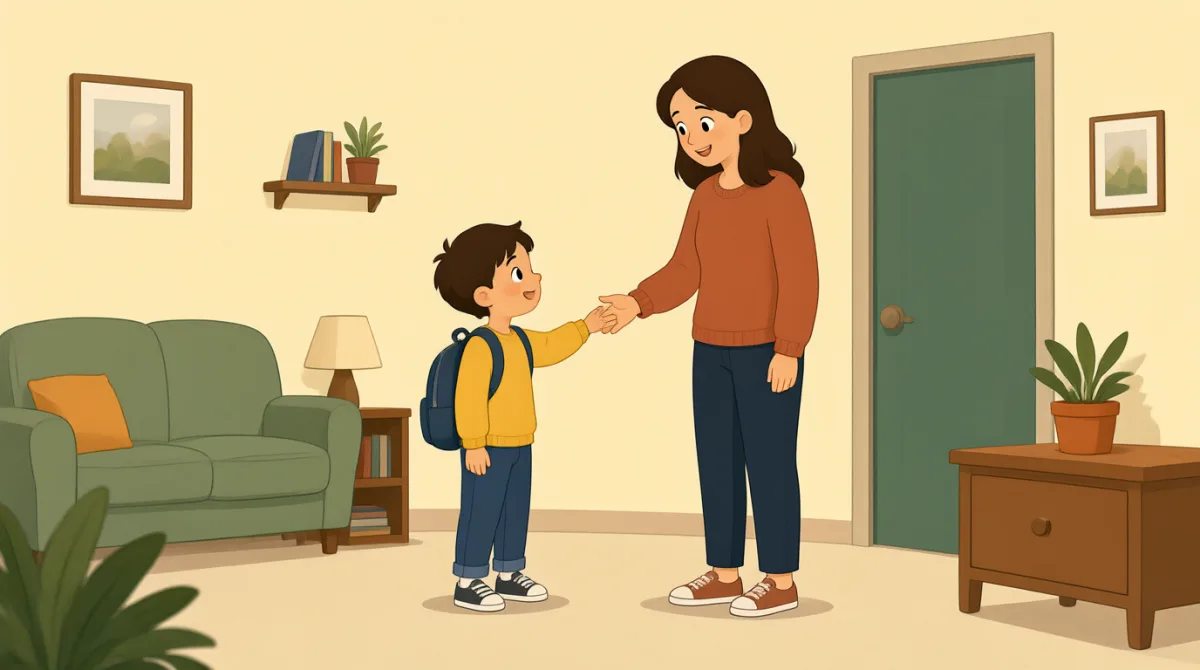

Good morning, Mia. How was drop-off?
좋은 아침이야, 미아. 등교는 어땠어?

Good morning, Jack. It went well, thanks.
좋은 아침이야, 잭. 잘 다녀왔어, 고마워.
Did your child have a good morning?
네 아이는 아침을 잘 보냈어?
Yes. We walked to school together.
응. 같이 걸어서 학교에 갔어.
Nice. I walked with my child, too.
좋네. 나도 아이랑 같이 걸어갔어.
The weather is nice today. Have a good day!
오늘 날씨 좋다. 좋은 하루 보내!
You, too, Mia. See you tomorrow!
너도, 미아. 내일 봐!
어휘7
- Good morning좋은 아침
A friendly greeting used in the morning. You can say it when you meet someone at school.
아침에 쓰는 친근한 인사말이에요. 학교에서 누군가를 만났을 때 이렇게 인사할 수 있어요.
- drop-off등교시키기
The time when a parent takes a child to school. You can ask, “How was drop-off?” to start a conversation.
부모가 아이를 학교에 데려다주는 일이에요. 대화를 시작할 때 “How was drop-off?”(아이 데려다주는 건 어땠어요?)라고 물어볼 수 있어요.
- It went well잘됐어
This means something happened successfully. You can use it to say that an event or activity was good.
무언가가 순조롭게 진행됐다는 뜻이에요. 어떤 행사나 활동이 좋았다고 말할 때 쓸 수 있어요.
- together함께
This means with another person. You can say you did something together when you did it with someone.
다른 사람과 같이 한다는 뜻이에요. 누군가와 함께 어떤 일을 했다면 “together”라고 표현할 수 있어요.
- Nice좋네
A short, friendly way to show that you like or approve of something someone said.
상대방이 한 말이 마음에 들거나 좋다고 생각할 때 친근하게 건네는 짧은 표현이에요.
- Have a good day좋은 하루 보내
A friendly phrase to wish someone a pleasant day. You can say it when you are leaving.
상대방이 즐거운 하루를 보내길 바랄 때 쓰는 친근한 표현이에요. 헤어질 때 말할 수 있어요.
- See you tomorrow내일 봐
A friendly way to say goodbye when you expect to meet the person the next day.
다음 날 다시 만날 예정일 때 친근하게 작별 인사로 쓰는 표현이에요.
핵심 문장8
- 1
How was drop-off?
등교는 어땠어?
This is a simple way to ask how taking a child to school went. You can replace “drop-off” with another event or activity.
아이를 학교에 데려다주는 일이 어땠는지 간단히 물어보는 표현이에요. “drop-off” 대신 다른 행사나 활동을 넣을 수도 있어요.
- 2
It went well, thanks.
잘됐어, 고마워.
Use this to say that something went successfully and to thank the person for asking. You can say, “It went well” about a meeting or a trip.
무언가가 순조롭게 진행됐다고 말하면서 물어봐 준 사람에게 고마움을 전할 때 써요. 회의나 여행에 대해서도 “It went well”이라고 말할 수 있어요.
- 3
Did your child have a good morning?
네 아이는 아침을 잘 보냈어?
This is a friendly question about someone’s child. You can replace “your child” with a name or another person, such as “Did Mia have a good morning?”
상대방의 아이에 관해 친근하게 묻는 표현이에요. “your child” 대신 이름이나 다른 사람을 넣어 “Did Mia have a good morning?”이라고 할 수도 있어요.
- 4
We walked to school together.
우린 같이 걸어서 학교에 갔어.
Use this sentence to say that you and another person walked to school as a group. You can replace “walked to school” with another activity.
나와 다른 사람이 함께 걸어서 학교에 갔다고 말할 때 써요. “walked to school”을 다른 활동으로 바꿔 말할 수도 있어요.
- 5
Nice.
좋네.
This is a short, positive response to something someone tells you. You can use it to show that you think their news is good.
상대방의 말에 짧고 긍정적으로 답하는 표현이에요. 상대방의 소식이 좋다고 생각한다는 걸 보여줄 수 있어요.
- 6
The weather is nice today.
오늘 날씨 좋다.
Use this sentence to make friendly conversation about the weather. You can replace “nice” with another simple description, such as “warm” or “cold.”
날씨에 관해 친근하게 대화를 나눌 때 쓰는 표현이에요. “nice” 대신 “warm”(따뜻한)이나 “cold”(추운)처럼 간단한 묘사로 바꿀 수 있어요.
- 7
Have a good day!
좋은 하루 보내!
This is a friendly way to wish someone well as you leave. You can say it to a parent, teacher, or coworker.
헤어지면서 상대방에게 좋은 하루가 되길 바라는 친근한 표현이에요. 다른 학부모나 선생님, 직장 동료에게도 말할 수 있어요.
- 8
See you tomorrow!
내일 봐!
Use this to say goodbye when you expect to see the person the next day. You can change “tomorrow” to another time, such as “later.”
다음 날 다시 만날 예정일 때 작별 인사로 써요. “tomorrow”를 “later”(나중에)처럼 다른 시간 표현으로 바꿀 수도 있어요.