Favorite Childhood Food
童年最喜歡的食物
Mia asks Emma and Leo what food they loved as children. They talk about family meals and treats they still remember.
Mia問Emma和Leo小時候最喜歡吃什麼。他們聊起家庭餐食和至今仍記得的零食。
對話9
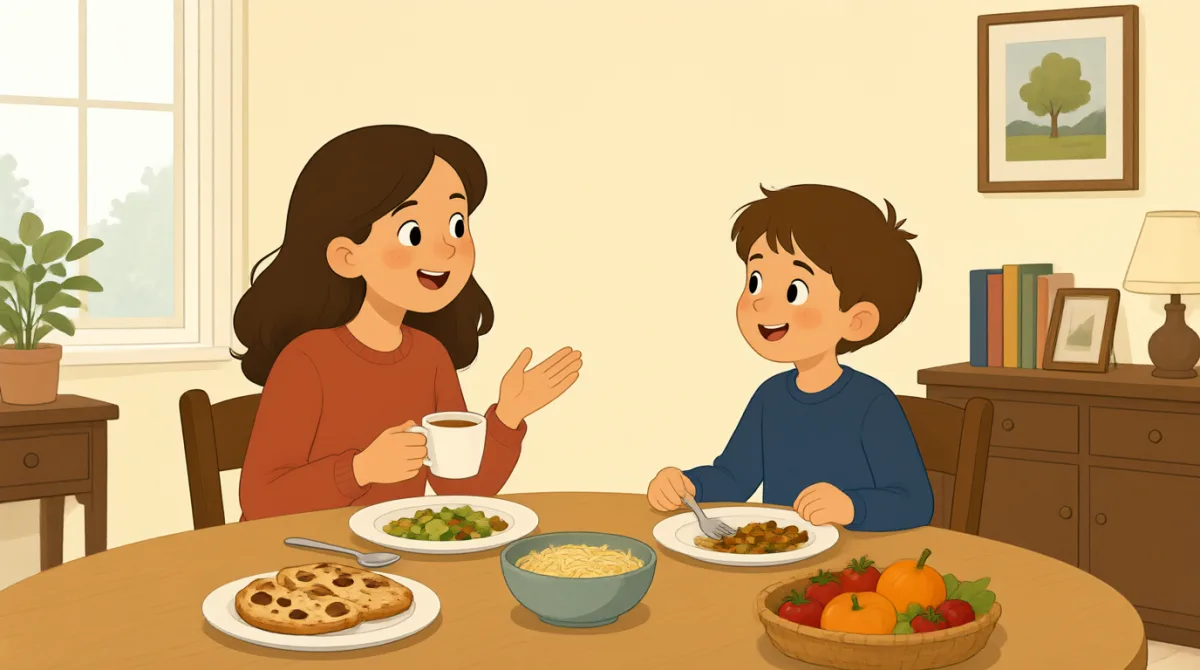

What food did you love as a child, Emma?
艾瑪,你小時候最喜歡吃什麼?

I loved my mother's tomato soup and grilled cheese sandwiches.
我喜歡媽媽做的番茄湯和烤乳酪三明治。

I always asked for my grandmother's noodles when I visited her.
我去奶奶家時,總會點名要吃她做的麵條。
That sounds good! Did you eat them for lunch or dinner?
聽起來真不錯!你午飯還是晚飯吃麵條?
Usually dinner. She made a big pot, and we all ate together.
通常是晚飯。她會煮一大鍋,我們一起吃。
My family had soup on cold days. I still remember its smell.
天氣冷的時候,我們家會喝湯。我至今還記得那股香味。
Did you have a favorite treat, too?
你小時候也有最喜歡的零食嗎?
Yes! My dad bought me strawberry ice cream after school sometimes.
有!爸爸有時會在放學後給我買草莓冰淇淋。
Those little treats made childhood special, didn't they?
那些小零食讓童年變得特別,對吧?
詞彙7
- as a child小時候
This means when someone was young. Use it to talk about things you liked or did in the past.
指一個人年紀還小的時候。可以用它來談談過去喜歡或做過的事。
- grilled cheese sandwiches烤乳酪三明治
These are sandwiches with melted cheese, often cooked in a pan. Emma remembers eating them with tomato soup.
這種三明治裡面夾著融化的乳酪,通常是在平底鍋裡煎烤的。艾瑪記得自己以前常搭配番茄湯吃。
- asked for要;點名要
This means requested or wanted something. You can say, “I asked for my favorite dessert.”
意思是提出請求或想要某樣東西。你可以說:“I asked for my favorite dessert.”(我點了自己最喜歡的甜點。)
- visited her去看望她
This means went to see her. Use “visited” to talk about going to someone’s home or another place.
意思是去見她。可以用“visited”來談去某人的家或其他地方拜訪。
- a big pot一大鍋
A pot is a deep cooking container, and “a big pot” means a large one. You can use this phrase when talking about cooking food for many people.
鍋是一種較深的烹飪容器,“a big pot”就是一口大鍋。談到為很多人做飯時,可以用這個說法。
- ate together一起吃飯
This means shared a meal with other people. You can use it to describe a family meal.
意思是和別人一起吃一頓飯。可以用來描述家庭聚餐。
- after school放學後
This means when school has finished for the day. Use it to talk about activities or treats that happen then.
指當天放學以後。可以用來談談那時會做的活動或吃的零食。
關鍵句8
- 1
What food did you love as a child, Emma?
艾瑪,你小時候最喜歡吃什麼?
This is a friendly way to ask about someone’s childhood favorites. You can replace “food” with another topic, such as “What game did you love as a child?”
這是詢問別人童年最喜歡的東西的一種親切說法。你可以把“food”換成其他話題,比如:“What game did you love as a child?”(你小時候最喜歡玩什麼遊戲?)
- 2
I loved my mother's tomato soup and grilled cheese sandwiches.
我小時候最喜歡媽媽做的番茄湯和烤乳酪三明治。
This sentence describes favorite foods from the past. Use “I loved” to talk about something you enjoyed when you were younger.
這句話是在說過去最喜歡吃的東西。用“I loved”來談談年輕時喜歡的事物。
- 3
I always asked for my grandmother's noodles when I visited her.
我去看望奶奶時,總會點名要吃她做的麵條。
This sentence connects a repeated request with a past visit. You can use “I always asked for...” to describe something you often wanted.
這句話把反覆提出的要求和過去的一次次拜訪聯絡起來。你可以用“I always asked for...”來描述自己常常想要的東西。
- 4
Did you eat them for lunch or dinner?
你午飯還是晚飯吃麵條?
This is a simple way to ask when someone ate a food. Use “Did you eat it for lunch or dinner?” when asking about one food.
這是詢問別人什麼時候吃某種食物的一種簡單說法。如果問的是一種食物,可以說:“Did you eat it for lunch or dinner?”(你午飯還是晚飯吃的?)
- 5
She made a big pot, and we all ate together.
她煮了一大鍋,我們大家一起吃。
This sentence describes preparing food and sharing a meal. You can use “we all ate together” when talking about a group meal.
這句話描述了準備食物並一起吃飯。談到一群人一起用餐時,可以用“we all ate together”。
- 6
My family had soup on cold days.
天氣冷的時候,我們家會喝湯。
This sentence explains when a family usually ate a certain food. Use “on [kind of] days” to talk about a regular routine, such as “on rainy days.”
這句話說明家裡通常會在什麼時候吃某種食物。可以用“on [kind of] days”來談日常習慣,比如“on rainy days”(下雨天)。
- 7
My dad bought me strawberry ice cream after school sometimes.
有時候,放學後爸爸會給我買草莓冰淇淋。
This sentence tells what someone bought and when. You can reuse “bought me [something] after school” to talk about a treat or gift.
這句話說明某人為誰買了什麼,以及是什麼時候買的。你可以套用“bought me [something] after school”來談放學後買的零食或禮物。
- 8
Those little treats made childhood special, didn't they?
那些小零食讓童年變得特別,對吧?
This is a warm way to share a thought and invite someone to agree. You can use “..., didn't they?” after a positive statement.
這是分享感受並邀請對方認同的一種溫暖說法。肯定句後面可以用“..., didn't they?”來徵求對方的贊同。