The First Group Run
初めてのグループラン
Emma joins Grace and Leo for her first group run. They talk about the route and how far they plan to run.
エマは初めてのグループランに、グレースとレオと参加します。走るコースや、どのくらい走る予定かについて話します。
会話8
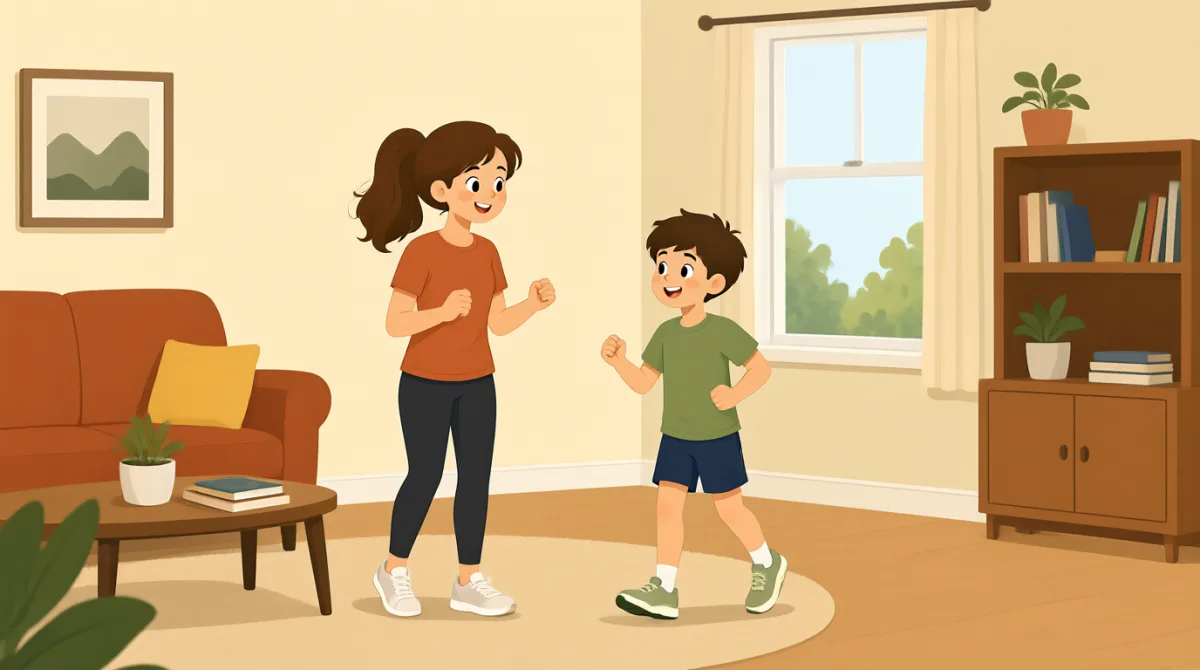

Hi, Emma! Ready for your first group run?
エマ、やっほー!初めてのグループラン、準備はいい?

Yes! Where are we running today?
うん!今日はどこを走るの?
We’ll run along the river path and then turn around.
川沿いの道を走って、それから折り返すよ。

It’s a nice, flat route. We plan to run three miles.
平坦で走りやすいコースだよ。3マイル走る予定なんだ。
Three miles sounds good. Can I run at my own pace?
3マイルならいいね。自分のペースで走ってもいい?
Of course. We’ll stay together, and you can slow down anytime.
もちろん。みんなで一緒に走るし、いつでもペースを落としていいよ。
I might start a little fast, but Grace will keep me in line.
僕、最初にちょっと飛ばしちゃうかもしれないけど、グレースが止めてくれるよ。
Great! Let’s get going. I’m excited to run with you.
いいね!じゃあ、行こう。みんなと走るの、楽しみ!
語彙8
- group runグループラン
A group run is a run that you do with other people. You can use this phrase for a planned run with friends or a club.
「group run」は、ほかの人たちと一緒に走ることです。友達やランニングクラブで予定しているランニングに使えます。
- along the river path川沿いの道を
This means following a path beside the river. Use “along” to say you are moving beside something.
「along the river path」は、川のそばにある道に沿って進むという意味です。「along」は、何かのそばに沿って進むことを表します。
- turn around折り返す
To turn around is to change direction and go back the way you came. You can use it when giving directions.
「turn around」は、進む向きを変えて、来た道を戻ることです。道順を説明するときにも使えます。
- flat route平坦なコース
A flat route has no steep hills. This phrase is useful when talking about how easy or difficult a route is.
「flat route」は、急な坂がないコースのことです。コースが走りやすいかどうかを話すときに便利な表現です。
- at my own pace自分のペースで
This means at the speed that feels comfortable for me. You can say it when you want to move at a speed that suits you.
「at my own pace」は、自分が無理なく感じる速さで、という意味です。自分に合ったペースで進みたいときに使えます。
- stay together一緒にいる
This means to remain with the other people in your group. Use it when making a plan to go somewhere as a group.
「stay together」は、グループのほかの人たちと離れずにいるという意味です。みんなで出かける計画を立てるときに使えます。
- slow downペースを落とす
To slow down is to move less quickly. You can use it when asking someone to go more slowly or describing what you will do.
「slow down」は、動く速さを遅くするという意味です。誰かにもっとゆっくり進んでほしいときや、自分がそうすることを伝えるときに使えます。
- get going始める、出発する
This means to start moving or begin an activity. It is a casual way to say it is time to start.
「get going」は、動き始める、または何かを始めるという意味です。そろそろ出発したり始めたりするときに使う、カジュアルな表現です。
重要な文8
- 1
Where are we running today?
今日はどこを走るの?
This is a simple way to ask about the plan for a run. You can reuse the question with another activity, such as “Where are we walking today?”
ランニングの予定を尋ねる、シンプルな言い方です。「Where are we walking today?」(今日はどこを歩くの?)のように、別の活動に置き換えて使うこともできます。
- 2
We’ll run along the river path and then turn around.
川沿いの道を走って、それから折り返すよ。
This sentence explains a route and what the group will do next. Use “We’ll” to describe a plan for the future.
この文では、コースと次にすることを説明しています。「We’ll」は、これからの予定を表すときに使います。
- 3
We plan to run three miles.
3マイル走る予定なんだ。
This is a clear way to say how far you intend to run. You can use “We plan to” before another activity or goal.
どのくらい走るつもりかを、はっきり伝える言い方です。「We plan to」のあとに、ほかの活動や目標を続けることもできます。
- 4
Can I run at my own pace?
自分のペースで走ってもいい?
This is a polite way to ask if you can choose your own speed. You can use “at my own pace” for other activities, such as studying or walking.
自分で速さを決めてもいいか、丁寧に尋ねる表現です。「at my own pace」は、勉強や散歩などにも使えます。
- 5
We’ll stay together, and you can slow down anytime.
みんなで一緒に走るし、いつでもペースを落としていいよ。
This sentence offers reassurance and gives someone permission to move more slowly. Use “anytime” to show that they can do it whenever they need to.
この文は相手を安心させ、もっとゆっくり進んでもいいと伝えています。「anytime」は、必要なときはいつでもそうしていい、という意味を表します。
- 6
I might start a little fast, but Grace will keep me in line.
僕、最初にちょっと飛ばしちゃうかもしれないけど、グレースが止めてくれるよ。
This sentence says what may happen and who will help. “Might” is useful for talking about something that is possible but not certain.
起こるかもしれないことと、助けてくれる人について話す文です。「Might」は、確実ではないけれど可能性があることを話すときに便利です。
- 7
Let’s get going.
じゃあ、行こう。
This is a casual way to suggest starting an activity. You can use it when it is time to leave or begin.
何かを始めようと提案するときのカジュアルな言い方です。出発したり、始めたりするタイミングで使えます。
- 8
I’m excited to run with you.
みんなと走るの、楽しみ!
This sentence shows that you are happy about doing an activity with someone. You can reuse “I’m excited to” with other plans, such as “I’m excited to meet you.”
誰かと一緒に何かをするのが楽しみだと伝える文です。「I’m excited to」のあとに別の予定を続けて、「I’m excited to meet you.」(会えるのが楽しみ)と言うこともできます。