The First Group Run
पहली सामूहिक दौड़
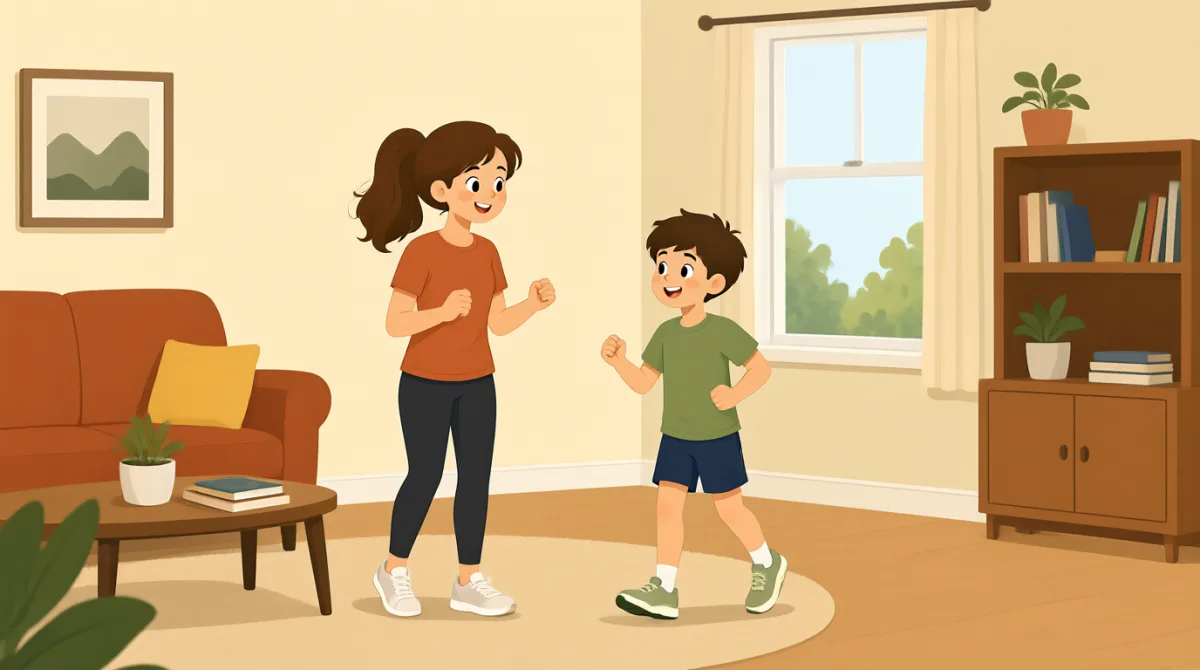
Emma joins Grace and Leo for her first group run. They talk about the route and how far they plan to run.
एमा अपनी पहली सामूहिक दौड़ के लिए ग्रेस और लियो के साथ जाती है। वे रास्ते और तय की गई दूरी के बारे में बात करते हैं।
संवाद8

Hi, Emma! Ready for your first group run?
हाय, एमा! अपनी पहली सामूहिक दौड़ के लिए तैयार हो?

Yes! Where are we running today?
हाँ! आज हम कहाँ दौड़ेंगे?
We’ll run along the river path and then turn around.
हम नदी के किनारे वाले रास्ते पर दौड़ेंगे और फिर वापस मुड़ेंगे।

It’s a nice, flat route. We plan to run three miles.
यह अच्छा, समतल रास्ता है। हम तीन मील दौड़ने का सोच रहे हैं।
Three miles sounds good. Can I run at my own pace?
तीन मील ठीक लगते हैं। क्या मैं अपनी रफ़्तार से दौड़ सकती हूँ?
Of course. We’ll stay together, and you can slow down anytime.
बिल्कुल। हम साथ रहेंगे, और तुम जब चाहो धीमी हो सकती हो।
I might start a little fast, but Grace will keep me in line.
हो सकता है मैं शुरुआत में थोड़ा तेज़ दौड़ने लगूँ, लेकिन ग्रेस मुझे काबू में रखेगी।
Great! Let’s get going. I’m excited to run with you.
बढ़िया! चलो, शुरू करते हैं। तुम्हारे साथ दौड़ने के लिए मैं बहुत उत्साहित हूँ।
शब्दावली8
- group runसामूहिक दौड़
A group run is a run that you do with other people. You can use this phrase for a planned run with friends or a club.
सामूहिक दौड़ वह दौड़ होती है जो आप दूसरे लोगों के साथ लगाते हैं। दोस्तों या किसी क्लब के साथ मिलकर तय की गई दौड़ के लिए इस शब्द का इस्तेमाल कर सकते हैं।
- along the river pathनदी के किनारे वाले रास्ते पर
This means following a path beside the river. Use “along” to say you are moving beside something.
इसका मतलब है नदी के बगल वाले रास्ते पर चलना या दौड़ना। किसी चीज़ के किनारे-किनारे आगे बढ़ने की बात कहने के लिए “along the river path” कहते हैं।
- turn aroundवापस मुड़ना
To turn around is to change direction and go back the way you came. You can use it when giving directions.
“turn around” का मतलब है दिशा बदलकर उसी रास्ते से वापस जाना जिससे आप आए थे। रास्ता बताने के लिए भी इसका इस्तेमाल कर सकते हैं।
- flat routeसमतल रास्ता
A flat route has no steep hills. This phrase is useful when talking about how easy or difficult a route is.
“flat route” ऐसा रास्ता होता है जहाँ कोई खड़ी चढ़ाई नहीं होती। रास्ता आसान है या मुश्किल, यह बताने के लिए यह वाक्यांश काम आता है।
- at my own paceअपनी रफ़्तार से
This means at the speed that feels comfortable for me. You can say it when you want to move at a speed that suits you.
“at my own pace” का मतलब है ऐसी रफ़्तार से जो मुझे आरामदेह लगे। जब आप अपनी सुविधा के मुताबिक़ गति से चलना या काम करना चाहें, तो यह कह सकते हैं।
- stay togetherसाथ रहना
This means to remain with the other people in your group. Use it when making a plan to go somewhere as a group.
“stay together” का मतलब है अपने समूह के बाकी लोगों के साथ बने रहना। समूह के साथ कहीं जाने की योजना बनाते समय इसका इस्तेमाल करें।
- slow downधीमा होना
To slow down is to move less quickly. You can use it when asking someone to go more slowly or describing what you will do.
“slow down” का मतलब है कम तेज़ी से चलना या दौड़ना। किसी से धीरे चलने को कहने या यह बताने के लिए कि आप ऐसा करेंगे, इसका इस्तेमाल कर सकते हैं।
- get goingशुरू करना
This means to start moving or begin an activity. It is a casual way to say it is time to start.
“get going” का मतलब है चलना शुरू करना या कोई गतिविधि शुरू करना। यह अनौपचारिक ढंग से कहने का तरीका है कि अब शुरू करने का समय है।
मुख्य वाक्य8
- 1
Where are we running today?
आज हम कहाँ दौड़ेंगे?
This is a simple way to ask about the plan for a run. You can reuse the question with another activity, such as “Where are we walking today?”
दौड़ की योजना पूछने का यह एक आसान तरीका है। आप इसी सवाल में दूसरी गतिविधि भी रख सकते हैं, जैसे “Where are we walking today?” (आज हम कहाँ टहलेंगे?)।
- 2
We’ll run along the river path and then turn around.
हम नदी के किनारे वाले रास्ते पर दौड़ेंगे और फिर वापस मुड़ेंगे।
This sentence explains a route and what the group will do next. Use “We’ll” to describe a plan for the future.
इस वाक्य में रास्ते और समूह आगे क्या करेगा, यह बताया गया है। भविष्य की योजना बताने के लिए “We’ll” का इस्तेमाल करें।
- 3
We plan to run three miles.
हम तीन मील दौड़ने का सोच रहे हैं।
This is a clear way to say how far you intend to run. You can use “We plan to” before another activity or goal.
आप कितनी दूर दौड़ने का इरादा रखते हैं, यह साफ़-साफ़ बताने का यह एक अच्छा तरीका है। किसी दूसरी गतिविधि या लक्ष्य से पहले “We plan to” का इस्तेमाल कर सकते हैं।
- 4
Can I run at my own pace?
क्या मैं अपनी रफ़्तार से दौड़ सकती हूँ?
This is a polite way to ask if you can choose your own speed. You can use “at my own pace” for other activities, such as studying or walking.
अपनी मनचाही रफ़्तार चुनने की इजाज़त पूछने का यह एक विनम्र तरीका है। पढ़ाई या टहलने जैसी दूसरी गतिविधियों के लिए भी “at my own pace” कह सकते हैं।
- 5
We’ll stay together, and you can slow down anytime.
हम साथ रहेंगे, और तुम जब चाहो धीमी हो सकती हो।
This sentence offers reassurance and gives someone permission to move more slowly. Use “anytime” to show that they can do it whenever they need to.
इस वाक्य से सामने वाले को भरोसा दिलाया जाता है और उसे धीमे चलने की छूट दी जाती है। “anytime” बताता है कि वह ज़रूरत पड़ने पर कभी भी ऐसा कर सकता है।
- 6
I might start a little fast, but Grace will keep me in line.
हो सकता है मैं शुरुआत में थोड़ा तेज़ दौड़ने लगूँ, लेकिन ग्रेस मुझे काबू में रखेगी।
This sentence says what may happen and who will help. “Might” is useful for talking about something that is possible but not certain.
इस वाक्य में बताया गया है कि क्या हो सकता है और कौन मदद करेगा। किसी ऐसी बात के बारे में कहने के लिए “Might” काम आता है जिसकी संभावना हो, लेकिन जो पक्की न हो।
- 7
Let’s get going.
चलो, शुरू करते हैं।
This is a casual way to suggest starting an activity. You can use it when it is time to leave or begin.
किसी गतिविधि को शुरू करने का सुझाव देने का यह अनौपचारिक तरीका है। जब निकलने या शुरू करने का समय हो, तब इसका इस्तेमाल करें।
- 8
I’m excited to run with you.
तुम्हारे साथ दौड़ने के लिए मैं बहुत उत्साहित हूँ।
This sentence shows that you are happy about doing an activity with someone. You can reuse “I’m excited to” with other plans, such as “I’m excited to meet you.”
इस वाक्य से पता चलता है कि आप किसी के साथ कोई गतिविधि करने को लेकर खुश हैं। दूसरी योजनाओं के लिए भी “I’m excited to” का इस्तेमाल कर सकते हैं, जैसे “I’m excited to meet you.” (मैं तुमसे मिलने के लिए बहुत उत्साहित हूँ।)