Waiting at the School Gate
学校の門で待つ
Emma waits at the school gate with Mia, another parent. They talk while the children come out.
エマは、同じく保護者のミアと学校の門で待っています。子どもたちが出てくる間、二人は話をします。
会話6
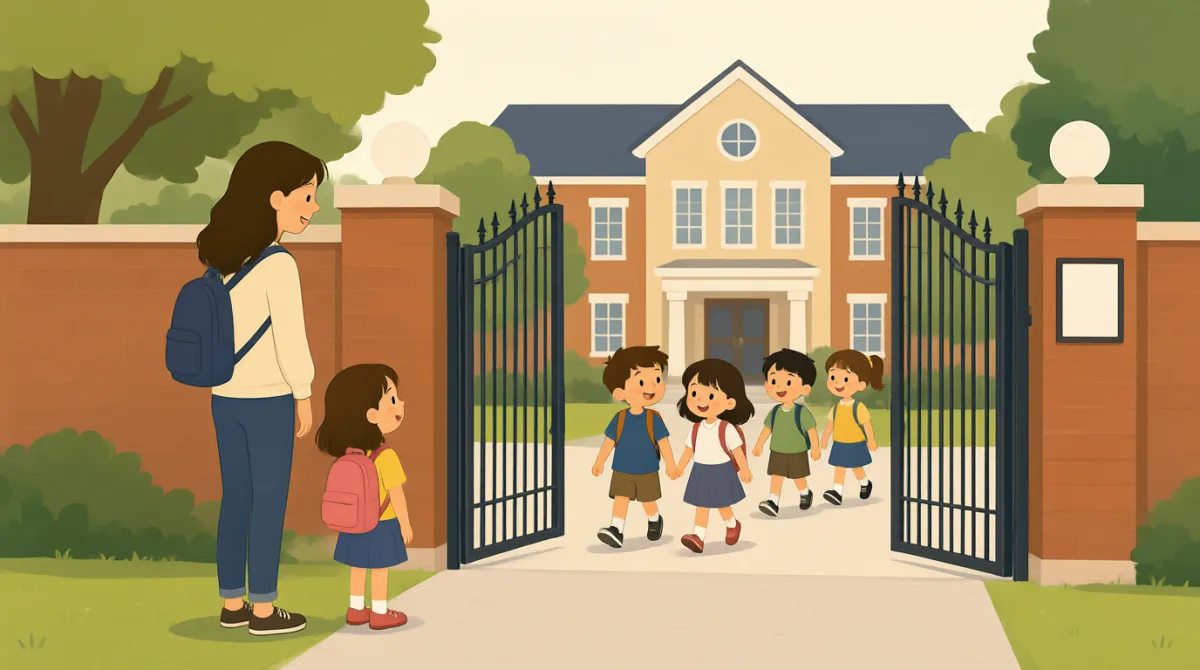

Hi, Mia. Are you waiting for your child, too?
やあ、ミア。ミアも子どもを待ってるの?

Yes. School ends at three today.
うん。今日は3時に学校が終わるよ。
I’m glad the weather is nice.
いい天気でよかったね。
Me too. The children are coming out now.
私も。子どもたちが出てきたよ。
I see my son. He has his blue bag.
息子が見えたよ。青いバッグを持ってる。
There’s my daughter, too. Let’s go say hi.
あ、うちの娘もいるよ。挨拶しに行こう。
語彙6
- waiting for your child子どもを待つ
This means staying until your child arrives. You can use “waiting for” when you are expecting someone.
子どもが来るまで待つ、という意味です。誰かが来るのを待っているときは “waiting for” を使えます。
- ends at three3時に終わる
This tells the time when school finishes. You can say “The movie ends at six” to give an end time.
学校が何時に終わるかを伝える表現です。終わる時刻を言うときは “The movie ends at six” のように言えます。
- the weather is niceいい天気だ
This means the weather is pleasant. You can use it to make friendly conversation.
天気が気持ちいい、という意味です。気軽な会話のきっかけとして使えます。
- coming out出てくる
Here, this means the children are leaving the school building. You can use “coming out” when people leave a place.
ここでは、子どもたちが校舎から出てくるという意味です。人が場所から出てくるときに “coming out” を使えます。
- blue bag青いバッグ
This means a bag that is blue. You can use a color before a thing to describe it.
青色のバッグという意味です。物の前に色を置くと、その物の色を説明できます。
- say hi挨拶する
This means to greet someone. You can say “Let’s go say hi” when you want to greet a person.
誰かに挨拶する、という意味です。人に挨拶したいときは “Let’s go say hi” と言えます。
重要な文8
- 1
Are you waiting for your child, too?
ミアも子どもを待ってるの?
Use this question to ask if someone is waiting for their child as well. Change “your child” to another person or thing to ask what someone is waiting for.
相手も子どもを待っているか聞くときの表現です。“your child” を別の人や物に置き換えると、何を待っているのか尋ねられます。
- 2
School ends at three today.
今日は3時に学校が終わるよ。
This gives the time school finishes. You can use “___ ends at ___” to talk about when an event finishes.
学校が何時に終わるかを伝える文です。“___ ends at ___” は、イベントがいつ終わるかを話すときに使えます。
- 3
I’m glad the weather is nice.
いい天気でよかったね。
This is a friendly way to say you feel happy about the pleasant weather. You can change “the weather is nice” to share another reason you are glad.
気持ちのいい天気でうれしいと伝える、親しみやすい表現です。“the weather is nice” を別の理由に変えると、何がうれしいのかを伝えられます。
- 4
The children are coming out now.
子どもたちが出てきたよ。
Use this to say that children are leaving a place at this moment. You can replace “the children” with other people, such as “The students are coming out now.”
子どもたちが今、ある場所から出てきていると伝える表現です。“the children” を別の人たちに置き換えて、“The students are coming out now.” のように言えます。
- 5
I see my son.
息子が見えたよ。
This is a simple way to say you can see your son. You can replace “my son” with another person or thing you notice.
息子が見えると伝えるシンプルな表現です。“my son” を、気づいた別の人や物に置き換えて使えます。
- 6
He has his blue bag.
彼は青いバッグを持ってる。
Use this sentence to describe what someone has with them. You can change “blue bag” to another item, such as “a red coat.”
誰かが何を持っているかを説明する文です。“blue bag” を “a red coat” のような別の物に変えて使えます。
- 7
There’s my daughter, too.
あ、うちの娘もいるよ。
Use this when you notice someone and want to point them out. “Too” shows that she is there as well.
誰かに気づいて、その人を指し示すときに使います。“Too” は、その人もそこにいることを表します。
- 8
Let’s go say hi.
挨拶しに行こう。
This is a friendly way to suggest greeting someone together. You can use “Let’s go” to suggest doing an activity with another person.
一緒に誰かに挨拶しようと誘う、親しみやすい表現です。“Let’s go” を使うと、相手を何かに誘えます。