Waiting at the School Gate
الانتظار عند بوابة المدرسة
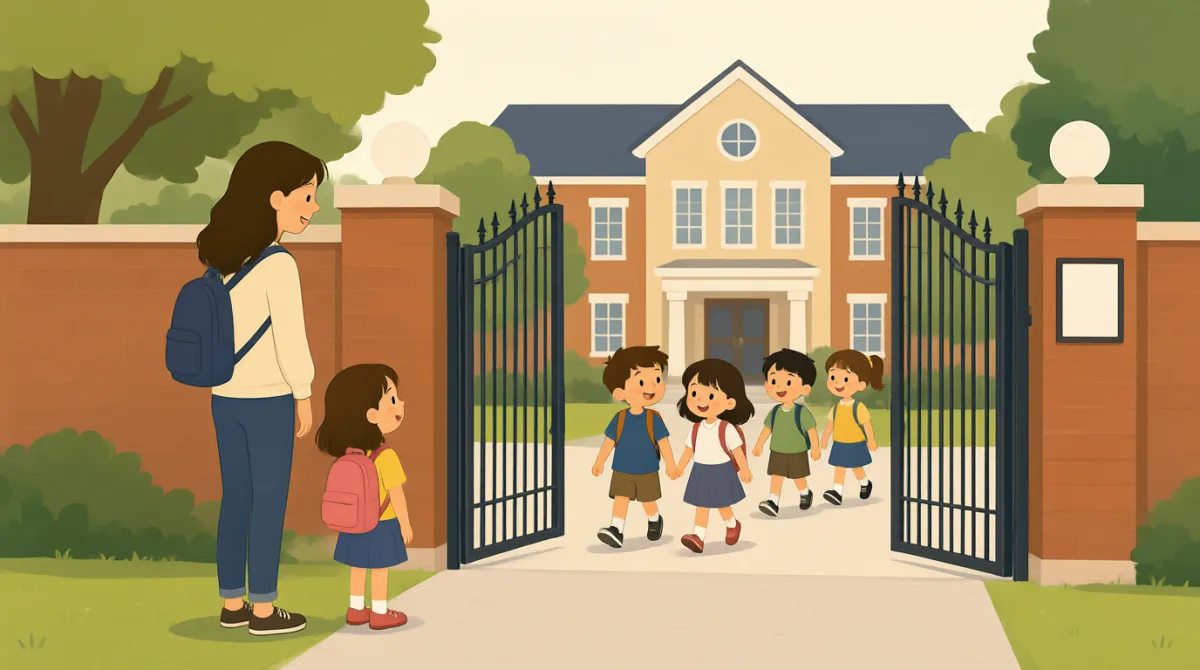
Emma waits at the school gate with Mia, another parent. They talk while the children come out.
تنتظر إيما عند بوابة المدرسة مع ميا، وهي أم أخرى. تتحدثان بينما يخرج الأطفال.
حوار6

Hi, Mia. Are you waiting for your child, too?
مرحبًا يا ميا. هل تنتظرين طفلكِ أيضًا؟

Yes. School ends at three today.
نعم. ينتهي الدوام المدرسي اليوم عند الثالثة.
I’m glad the weather is nice.
أنا سعيدة لأن الطقس جميل.
Me too. The children are coming out now.
وأنا أيضًا. الأطفال يخرجون الآن.
I see my son. He has his blue bag.
أرى ابني. معه حقيبته الزرقاء.
There’s my daughter, too. Let’s go say hi.
وهناك ابنتي أيضًا. هيا نذهب لنسلّم عليها.
المفردات6
- waiting for your childانتظار طفلك
This means staying until your child arrives. You can use “waiting for” when you are expecting someone.
يعني هذا البقاء حتى يصل طفلك. يمكنك استخدام “waiting for” عندما تكون بانتظار شخص ما.
- ends at threeينتهي عند الثالثة
This tells the time when school finishes. You can say “The movie ends at six” to give an end time.
يحدد هذا وقت انتهاء الدوام المدرسي. يمكنك قول “The movie ends at six” لتحديد وقت انتهاء شيء ما.
- the weather is niceالطقس جميل
This means the weather is pleasant. You can use it to make friendly conversation.
يعني هذا أن الطقس لطيف. يمكنك استخدام هذه العبارة لبدء حديث ودي.
- coming outيخرجون
Here, this means the children are leaving the school building. You can use “coming out” when people leave a place.
تعني هذه العبارة هنا أن الأطفال يغادرون مبنى المدرسة. يمكنك استخدام “coming out” عندما يغادر أشخاص مكانًا ما.
- blue bagحقيبة زرقاء
This means a bag that is blue. You can use a color before a thing to describe it.
تعني هذه العبارة حقيبة لونها أزرق. يمكنك وضع اسم اللون قبل الشيء لوصفه.
- say hiيسلّم على
This means to greet someone. You can say “Let’s go say hi” when you want to greet a person.
تعني هذه العبارة تحية شخص ما. يمكنك قول “Let’s go say hi” عندما تريد الذهاب لتحية شخص.
الجمل الأساسية8
- 1
Are you waiting for your child, too?
هل تنتظرين طفلكِ أيضًا؟
Use this question to ask if someone is waiting for their child as well. Change “your child” to another person or thing to ask what someone is waiting for.
استخدمي هذا السؤال لتسألي إن كان شخص ما ينتظر طفله أيضًا. غيّري “your child” إلى شخص أو شيء آخر لتسألي عمّا ينتظره أحدهم.
- 2
School ends at three today.
ينتهي الدوام المدرسي اليوم عند الثالثة.
This gives the time school finishes. You can use “___ ends at ___” to talk about when an event finishes.
توضح هذه الجملة وقت انتهاء الدوام المدرسي. يمكنك استخدام “___ ends at ___” للتحدث عن موعد انتهاء حدث ما.
- 3
I’m glad the weather is nice.
أنا سعيدة لأن الطقس جميل.
This is a friendly way to say you feel happy about the pleasant weather. You can change “the weather is nice” to share another reason you are glad.
هذه طريقة ودية للتعبير عن سعادتك بالطقس اللطيف. يمكنك تغيير “the weather is nice” لتذكري سببًا آخر لسعادتك.
- 4
The children are coming out now.
الأطفال يخرجون الآن.
Use this to say that children are leaving a place at this moment. You can replace “the children” with other people, such as “The students are coming out now.”
استخدمي هذه العبارة لتقولي إن الأطفال يغادرون مكانًا في هذه اللحظة. يمكنك استبدال “the children” بأشخاص آخرين، مثل “The students are coming out now.”
- 5
I see my son.
أرى ابني.
This is a simple way to say you can see your son. You can replace “my son” with another person or thing you notice.
هذه طريقة بسيطة للقول إنك تستطيعين رؤية ابنك. يمكنك استبدال “my son” بشخص أو شيء آخر تلاحظينه.
- 6
He has his blue bag.
معه حقيبته الزرقاء.
Use this sentence to describe what someone has with them. You can change “blue bag” to another item, such as “a red coat.”
استخدمي هذه الجملة لوصف ما يحمله شخص معه. يمكنك تغيير “blue bag” إلى غرض آخر، مثل “a red coat.”
- 7
There’s my daughter, too.
وهناك ابنتي أيضًا.
Use this when you notice someone and want to point them out. “Too” shows that she is there as well.
استخدمي هذه العبارة عندما تلاحظين شخصًا وتريدين الإشارة إليه. توضح “too” أنها موجودة أيضًا.
- 8
Let’s go say hi.
هيا نذهب لنسلّم عليها.
This is a friendly way to suggest greeting someone together. You can use “Let’s go” to suggest doing an activity with another person.
هذه طريقة ودية لاقتراح الذهاب معًا لتحية شخص ما. يمكنك استخدام “Let’s go” لاقتراح القيام بنشاط مع شخص آخر.