Waiting at the School Gate
स्कूल के गेट पर इंतज़ार
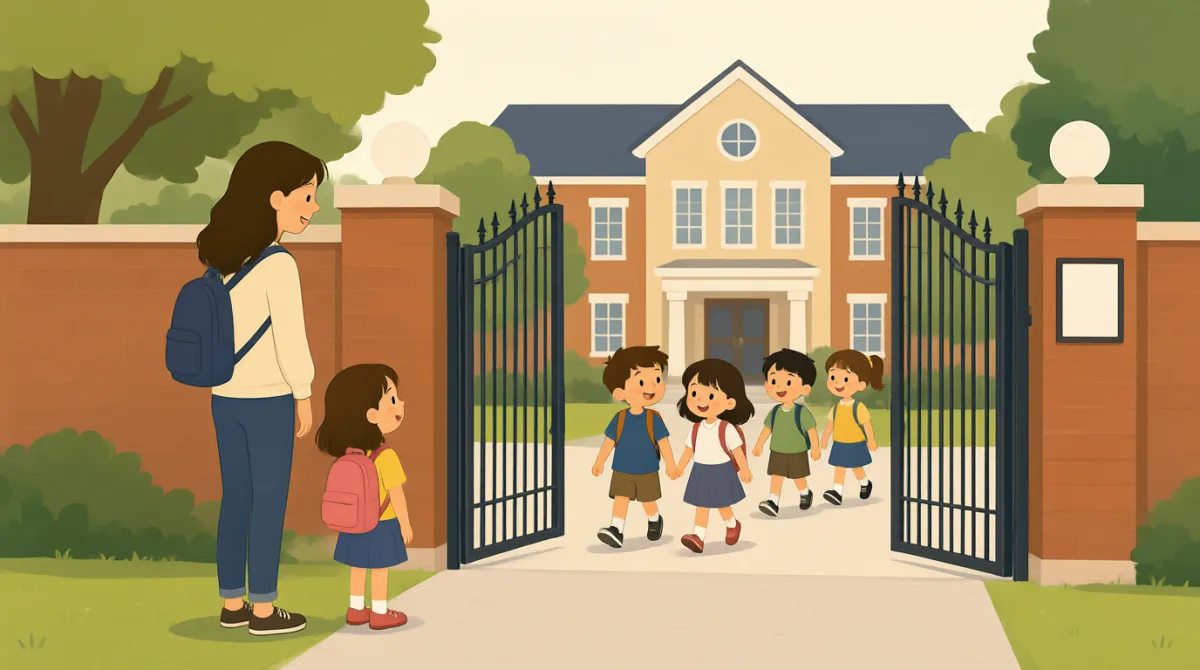
Emma waits at the school gate with Mia, another parent. They talk while the children come out.
एमा एक अन्य अभिभावक, मिया के साथ स्कूल के गेट पर इंतज़ार करती है। बच्चों के बाहर आने तक वे बातें करती हैं।
संवाद6

Hi, Mia. Are you waiting for your child, too?
हाय, मिया। तुम भी अपने बच्चे का इंतज़ार कर रही हो?

Yes. School ends at three today.
हाँ। आज स्कूल तीन बजे छूटता है।
I’m glad the weather is nice.
अच्छा है कि मौसम सुहावना है।
Me too. The children are coming out now.
मुझे भी। बच्चे अब बाहर आ रहे हैं।
I see my son. He has his blue bag.
मुझे मेरा बेटा दिख रहा है। उसके पास नीला बैग है।
There’s my daughter, too. Let’s go say hi.
मेरी बेटी भी वहाँ है। चलो, उससे मिलकर नमस्ते कहते हैं।
शब्दावली6
- waiting for your childअपने बच्चे का इंतज़ार करना
This means staying until your child arrives. You can use “waiting for” when you are expecting someone.
इसका मतलब है अपने बच्चे के आने तक रुके रहना। किसी के आने की उम्मीद में रुकने के लिए “waiting for” कह सकते हैं।
- ends at threeतीन बजे छूटना
This tells the time when school finishes. You can say “The movie ends at six” to give an end time.
इससे पता चलता है कि स्कूल कब खत्म होता है। खत्म होने का समय बताने के लिए आप “The movie ends at six” भी कह सकते हैं।
- the weather is niceमौसम सुहावना होना
This means the weather is pleasant. You can use it to make friendly conversation.
इसका मतलब है कि मौसम अच्छा और खुशनुमा है। बातचीत शुरू करने के लिए आप यह बात कह सकते हैं।
- coming outबाहर आना
Here, this means the children are leaving the school building. You can use “coming out” when people leave a place.
यहाँ इसका मतलब है कि बच्चे स्कूल की इमारत से बाहर निकल रहे हैं। किसी जगह से लोगों के बाहर निकलने पर “coming out” कह सकते हैं।
- blue bagनीला बैग
This means a bag that is blue. You can use a color before a thing to describe it.
इसका मतलब है ऐसा बैग जिसका रंग नीला है। किसी चीज़ का वर्णन करने के लिए उसके नाम से पहले रंग बता सकते हैं।
- say hiनमस्ते कहना
This means to greet someone. You can say “Let’s go say hi” when you want to greet a person.
इसका मतलब है किसी का अभिवादन करना। किसी से मिलने और उसका अभिवादन करने का सुझाव देते हुए आप “Let’s go say hi” कह सकते हैं।
मुख्य वाक्य8
- 1
Are you waiting for your child, too?
क्या तुम भी अपने बच्चे का इंतज़ार कर रही हो?
Use this question to ask if someone is waiting for their child as well. Change “your child” to another person or thing to ask what someone is waiting for.
यह सवाल पूछने के लिए कहें कि क्या कोई अपने बच्चे का इंतज़ार कर रहा है। आप यह जानने के लिए कि कोई किसका या किस चीज़ का इंतज़ार कर रहा है, “your child” की जगह किसी दूसरे व्यक्ति या चीज़ का नाम रख सकते हैं।
- 2
School ends at three today.
आज स्कूल तीन बजे छूटता है।
This gives the time school finishes. You can use “___ ends at ___” to talk about when an event finishes.
इससे पता चलता है कि स्कूल किस समय खत्म होता है। किसी कार्यक्रम के खत्म होने का समय बताने के लिए “___ ends at ___” का इस्तेमाल कर सकते हैं।
- 3
I’m glad the weather is nice.
अच्छा है कि मौसम सुहावना है।
This is a friendly way to say you feel happy about the pleasant weather. You can change “the weather is nice” to share another reason you are glad.
मौसम अच्छा होने पर खुशी जताने का यह एक दोस्ताना तरीका है। अपनी खुशी की कोई और वजह बताने के लिए “the weather is nice” की जगह दूसरी बात कह सकते हैं।
- 4
The children are coming out now.
बच्चे अब बाहर आ रहे हैं।
Use this to say that children are leaving a place at this moment. You can replace “the children” with other people, such as “The students are coming out now.”
किसी जगह से बच्चों के इस समय बाहर निकलने की बात कहने के लिए इसका इस्तेमाल करें। “the children” की जगह दूसरे लोगों का ज़िक्र कर सकते हैं, जैसे “The students are coming out now.”
- 5
I see my son.
मुझे मेरा बेटा दिख रहा है।
This is a simple way to say you can see your son. You can replace “my son” with another person or thing you notice.
यह कहने का आसान तरीका है कि आपको अपना बेटा दिखाई दे रहा है। जिस व्यक्ति या चीज़ पर आपकी नज़र पड़ी है, उसके लिए “my son” की जगह कोई दूसरा नाम रख सकते हैं।
- 6
He has his blue bag.
उसके पास उसका नीला बैग है।
Use this sentence to describe what someone has with them. You can change “blue bag” to another item, such as “a red coat.”
किसी के पास मौजूद चीज़ का वर्णन करने के लिए यह वाक्य कहें। “blue bag” की जगह कोई दूसरी चीज़ रख सकते हैं, जैसे “a red coat.”
- 7
There’s my daughter, too.
वहाँ मेरी बेटी भी है।
Use this when you notice someone and want to point them out. “Too” shows that she is there as well.
किसी को देखकर उसकी ओर ध्यान दिलाने के लिए इसका इस्तेमाल करें। “Too” बताता है कि वह भी वहाँ है।
- 8
Let’s go say hi.
चलो, उससे मिलकर नमस्ते कहते हैं।
This is a friendly way to suggest greeting someone together. You can use “Let’s go” to suggest doing an activity with another person.
किसी का साथ मिलकर अभिवादन करने का सुझाव देने का यह दोस्ताना तरीका है। किसी दूसरे व्यक्ति के साथ कोई काम करने का सुझाव देने के लिए “Let’s go” कह सकते हैं।