The Teacher Has a Message
先生からのお知らせ
Grace, the teacher, gives Emma a short message about Leo's school day. Emma listens and asks a simple question.
先生のグレースが、レオの学校での一日についてエマに短く伝えます。エマは話を聞いて、簡単な質問をします。
会話6
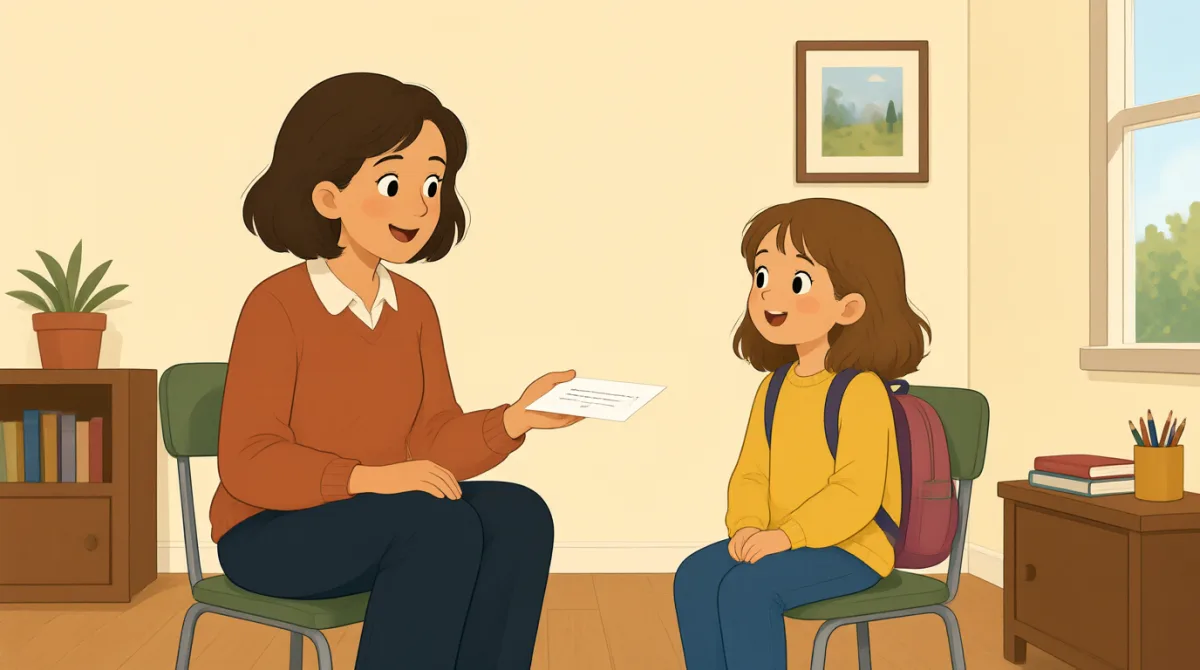

Hi, Emma. Leo had a good day today.
こんにちは、エマ。レオは今日はいい一日を過ごしましたよ。

That’s good. What did he do?
それはよかった。何をしたの?
He read a short book in class.
授業で短い本を読みましたよ。
Did he enjoy it?
楽しんでた?
Yes, he did. He read it aloud.
はい。声に出して読んでいましたよ。
Great! Thank you for telling me.
よかった!教えてくれてありがとう。
語彙7
- had a good dayhad a good day:いい一日を過ごした
This means Leo's day at school went well. You can use it to describe a positive day.
学校でのレオの一日がうまくいった、という意味です。楽しい一日だったことを伝えるときに使えます。
- What did he do?What did he do?:彼は何をしたの?
This is a simple way to ask what someone did. You can change “he” to “you,” “she,” or a person's name.
相手が何をしたのかを簡単に尋ねる言い方です。“he” を “you” や “she”、人の名前に置き換えられます。
- in classin class:授業で
This means in the classroom or during a lesson. For example, you can say, “We read a book in class.”
教室で、または授業中に、という意味です。たとえば “We read a book in class.”(私たちは授業で本を読みました)のように言えます。
- Did he enjoy it?Did he enjoy it?:彼はそれを楽しんだ?
This asks if Leo liked the activity. You can use “Did you enjoy it?” to ask someone about an experience.
レオがその活動を楽しんだかどうかを尋ねています。“Did you enjoy it?” と言えば、相手にその経験について尋ねられます。
- Yes, he did.Yes, he did.:うん、楽しんだよ。
This is a short answer to a question that starts with “Did he.” You can change “he” to “she” or “you.”
“Did he” で始まる質問への短い答えです。“he” を “she” や “you” に置き換えられます。
- read it aloudread it aloud:それを声に出して読む
This means to read the words so other people can hear them. You can say, “She read the story aloud.”
ほかの人にも聞こえるように、書かれた言葉を読むという意味です。“She read the story aloud.”(彼女は物語を声に出して読みました)のように言えます。
- Thank you for telling me.Thank you for telling me.:教えてくれてありがとう。
This is a polite way to thank someone for sharing information. You can use it when a teacher gives you an update.
情報を伝えてくれた人にお礼を言う丁寧な表現です。先生から学校での様子を聞いたときにも使えます。
重要な文8
- 1
Leo had a good day today.
レオは今日はいい一日を過ごしました。
Use this sentence to tell someone that Leo's day went well. You can replace “Leo” with another person's name.
レオの一日がうまくいったことを伝える文です。“Leo” をほかの人の名前に置き換えて使えます。
- 2
What did he do?
彼は何をしたの?
Use this question to ask about someone's past actions. Change “he” to “you” or another person to fit the situation.
相手が過去に何をしたのか尋ねる質問です。状況に合わせて “he” を “you” や別の人に置き換えましょう。
- 3
He read a short book in class.
彼は授業で短い本を読みました。
This sentence describes what Leo did at school. You can change the activity, such as “He drew a picture in class.”
レオが学校でしたことを説明する文です。活動を変えて、“He drew a picture in class.”(彼は授業で絵を描きました)のようにも言えます。
- 4
Did he enjoy it?
彼はそれを楽しんだ?
Use this question to ask if someone liked an activity. Replace “he” with “you” to ask directly.
相手が活動を楽しんだかどうかを尋ねる質問です。“he” を “you” に変えると、相手に直接尋ねられます。
- 5
Yes, he did.
うん、楽しんだよ。
This is a brief, natural answer to “Did he enjoy it?” Use “Yes, I did” when answering about yourself.
“Did he enjoy it?” への、短く自然な答えです。自分のことを答えるときは “Yes, I did” と言います。
- 6
He read it aloud.
彼はそれを声に出して読みました。
This tells someone that Leo read so others could hear. You can replace “read” with another action, such as “said it aloud.”
レオがほかの人にも聞こえるように読んだことを伝えています。“read” を “said it aloud”(それを声に出して言った)のような別の行動に置き換えられます。
- 7
Great!
よかった!
This is a simple way to show that you are pleased or interested. You can use it in many everyday conversations.
うれしい気持ちや興味があることを伝える、簡単な表現です。日常のさまざまな会話で使えます。
- 8
Thank you for telling me.
教えてくれてありがとう。
Use this polite sentence when someone shares useful information with you. You can also say it to thank a teacher for an update.
役立つ情報を伝えてくれた人にお礼を言う文です。先生から学校での様子を聞いたときにも使えます。