Asking About the Day
दिन के बारे में पूछना
Emma greets her child, Leo, and asks about his day at school. He tells her what he did.
एमा अपने बच्चे लियो का अभिवादन करती है और स्कूल में उसके दिन के बारे में पूछती है। वह उसे बताता है कि उसने क्या किया।
संवाद8
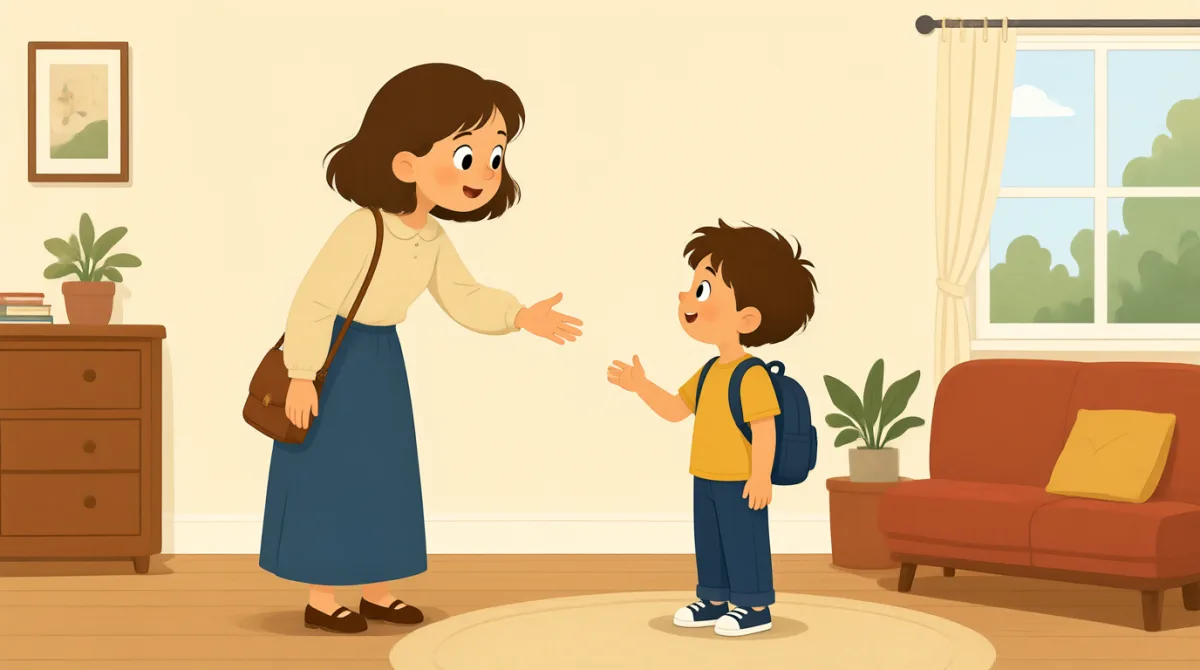

Hi, Leo! How was school today?
हाय, लियो! आज स्कूल कैसा रहा?

It was good! We read a fun story.
अच्छा था! हमने एक मज़ेदार कहानी पढ़ी।
That sounds nice. What else did you do?
अच्छा लगा सुनकर। और क्या किया?
We drew pictures and played outside.
हमने चित्र बनाए और बाहर खेले।
What did you draw?
तुमने क्या बनाया?
I drew a big blue dog.
मैंने एक बड़ा नीला कुत्ता बनाया।
Great! Are you hungry now?
बढ़िया! अब तुम्हें भूख लगी है?
Yes. Can we have a snack?
हाँ। क्या हम कुछ हल्का खा सकते हैं?
शब्दावली7
- How was school today?आज स्कूल कैसा रहा?
This is a friendly way to ask about someone's school day. You can change “school” to another place or activity.
यह किसी से उसके स्कूल के दिन के बारे में पूछने का एक दोस्ताना तरीका है। आप “school” की जगह कोई दूसरी जगह या गतिविधि बता सकते हैं।
- It was good!अच्छा था!
This is a simple way to say that something went well. You can use it to answer questions about your day or an event.
यह बताने का आसान तरीका है कि कोई चीज़ अच्छी रही। आप इसका इस्तेमाल अपने दिन या किसी कार्यक्रम के बारे में पूछे जाने पर जवाब देने के लिए कर सकते हैं।
- read a fun storyएक मज़ेदार कहानी पढ़ना
This means to look at and understand a story that is enjoyable. You can say “read a fun book” or “read a fun story” to talk about reading.
इसका मतलब है ऐसी कहानी को पढ़ना और समझना जो मनोरंजक हो। पढ़ने के बारे में बात करते समय आप “read a fun book” या “read a fun story” कह सकते हैं।
- What else did you do?और क्या किया?
Use this question to ask about more activities. You can replace “do” with another action, such as “What else did you see?”
और गतिविधियों के बारे में पूछने के लिए इस सवाल का इस्तेमाल करें। आप “do” की जगह कोई दूसरी क्रिया रख सकते हैं, जैसे “What else did you see?”।
- played outsideबाहर खेलना
This means to play outdoors, not inside a building. You can use it to talk about where you played.
इसका मतलब है किसी इमारत के अंदर नहीं, बल्कि बाहर खेलना। आप इसका इस्तेमाल यह बताने के लिए कर सकते हैं कि आप कहाँ खेले।
- Are you hungry now?अब तुम्हें भूख लगी है?
This is a way to ask if someone wants food at this time. You can change “hungry” to another feeling, such as “tired”.
किसी से यह पूछने का तरीका है कि क्या उसे इस समय कुछ खाने का मन है। आप “hungry” की जगह कोई दूसरी भावना रख सकते हैं, जैसे “tired”।
- have a snackकुछ हल्का खाना
A snack is a small amount of food between meals. You can use “have a snack” to ask or talk about eating one.
हल्का नाश्ता दो भोजन के बीच थोड़ी-सी खाने की चीज़ होती है। कुछ खाने के बारे में पूछने या बात करने के लिए आप “have a snack” का इस्तेमाल कर सकते हैं।
मुख्य वाक्य8
- 1
Hi, Leo! How was school today?
हाय, लियो! आज स्कूल कैसा रहा?
This is a warm greeting and an easy way to ask about someone's day. Use “How was [place or activity] today?” to ask about another experience.
यह गर्मजोशी से अभिवादन करने और किसी के दिन के बारे में पूछने का आसान तरीका है। किसी दूसरे अनुभव के बारे में पूछने के लिए “How was [place or activity] today?” का इस्तेमाल करें।
- 2
It was good! We read a fun story.
अच्छा था! हमने एक मज़ेदार कहानी पढ़ी।
This gives a simple answer and tells one thing that happened. You can use “It was [feeling]!” and add an activity you did.
इसमें आसान-सा जवाब दिया गया है और साथ ही बताया गया है कि क्या हुआ। आप “It was [feeling]!” कहकर अपने साथ हुई किसी गतिविधि का ज़िक्र कर सकते हैं।
- 3
That sounds nice.
अच्छा लगा सुनकर।
This is a friendly response when someone tells you about something pleasant. You can use it to show interest in their news.
कोई अच्छी बात बताए तो यह दोस्ताना जवाब दिया जा सकता है। उसकी बातों में दिलचस्पी दिखाने के लिए इसका इस्तेमाल करें।
- 4
What else did you do?
और क्या किया?
Use this question to invite someone to share another activity. You can ask it after they tell you one thing they did.
किसी को एक और गतिविधि के बारे में बताने के लिए प्रेरित करने हेतु यह सवाल पूछें। सामने वाला अपने किए हुए किसी एक काम के बारे में बताए, तो आप यह पूछ सकते हैं।
- 5
We drew pictures and played outside.
हमने चित्र बनाए और बाहर खेले।
This sentence names two past activities. You can use “We [past action] and [past action]” to describe things you did with a group.
इस वाक्य में अतीत की दो गतिविधियों का ज़िक्र है। समूह के साथ किए गए काम बताने के लिए आप “We [past action] and [past action]” का इस्तेमाल कर सकते हैं।
- 6
What did you draw?
तुमने क्या बनाया?
This asks someone to say what they made with a pencil, crayons, or paint. You can use “What did you [action]?” to ask about a past activity.
यह किसी से पूछता है कि उसने पेंसिल, रंगीन पेंसिल या पेंट से क्या बनाया। बीती हुई गतिविधि के बारे में पूछने के लिए आप “What did you [action]?” का इस्तेमाल कर सकते हैं।
- 7
Are you hungry now?
अब तुम्हें भूख लगी है?
This asks about someone's feeling at the present time. Use “Are you [feeling] now?” to ask how someone feels.
यह किसी की मौजूदा भावना के बारे में पूछता है। किसी का हाल जानने के लिए “Are you [feeling] now?” का इस्तेमाल करें।
- 8
Yes. Can we have a snack?
हाँ। क्या हम कुछ हल्का खा सकते हैं?
This is a simple way to say yes and politely ask for something to eat. You can use “Can we have [food]?” to ask for food or a drink.
हाँ कहने और खाने के लिए कुछ माँगने का यह आसान और विनम्र तरीका है। खाने या पीने की चीज़ माँगने के लिए आप “Can we have [food]?” का इस्तेमाल कर सकते हैं।