The Teacher Has a Message
शिक्षिका के पास एक संदेश है
Grace, the teacher, gives Emma a short message about Leo's school day. Emma listens and asks a simple question.
शिक्षिका ग्रेस, एमा को लियो के स्कूल के दिन के बारे में एक छोटा-सा संदेश देती हैं। एमा सुनती है और एक आसान-सा सवाल पूछती है।
संवाद6
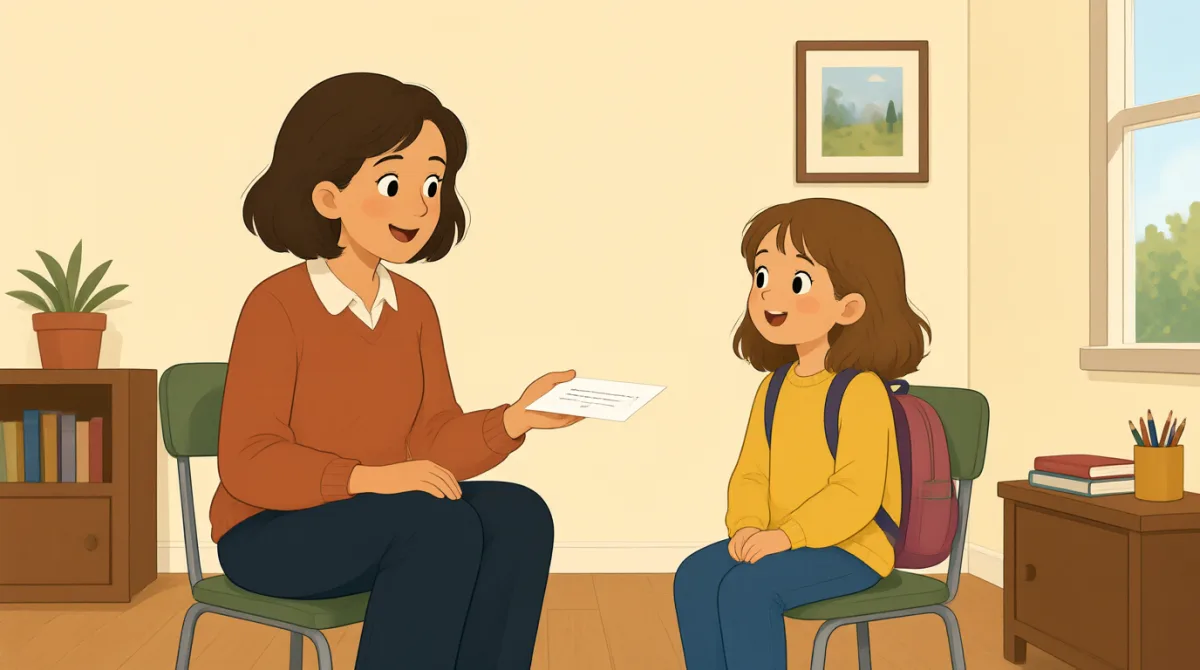

Hi, Emma. Leo had a good day today.
नमस्ते, एमा। लियो का आज का दिन अच्छा रहा।

That’s good. What did he do?
यह तो अच्छा है। उसने क्या किया?
He read a short book in class.
उसने कक्षा में एक छोटी-सी किताब पढ़ी।
Did he enjoy it?
क्या उसे अच्छा लगा?
Yes, he did. He read it aloud.
हाँ, उसे अच्छा लगा। उसने उसे ज़ोर से पढ़ा।
Great! Thank you for telling me.
बहुत बढ़िया! मुझे बताने के लिए धन्यवाद।
शब्दावली7
- had a good dayदिन अच्छा रहा
This means Leo's day at school went well. You can use it to describe a positive day.
इसका मतलब है कि लियो का स्कूल में दिन अच्छा बीता। किसी अच्छे दिन के बारे में बताने के लिए आप इसका इस्तेमाल कर सकते हैं।
- What did he do?उसने क्या किया?
This is a simple way to ask what someone did. You can change “he” to “you,” “she,” or a person's name.
किसी से यह पूछने का यह आसान तरीका है कि उसने क्या किया। आप “he” की जगह “you,” “she” या किसी व्यक्ति का नाम रख सकते हैं।
- in classकक्षा में
This means in the classroom or during a lesson. For example, you can say, “We read a book in class.”
इसका मतलब है कक्षा के कमरे में या पाठ के दौरान। उदाहरण के लिए, आप कह सकते हैं, “We read a book in class.” (हमने कक्षा में एक किताब पढ़ी।)
- Did he enjoy it?क्या उसे अच्छा लगा?
This asks if Leo liked the activity. You can use “Did you enjoy it?” to ask someone about an experience.
इस सवाल से पूछा जाता है कि क्या लियो को वह गतिविधि पसंद आई। किसी से उसके अनुभव के बारे में पूछने के लिए आप “Did you enjoy it?” कह सकते हैं।
- Yes, he did.हाँ, उसे अच्छा लगा।
This is a short answer to a question that starts with “Did he.” You can change “he” to “she” or “you.”
यह “Did he” से शुरू होने वाले सवाल का छोटा जवाब है। आप “he” की जगह “she” या “you” रख सकते हैं।
- read it aloudउसे ज़ोर से पढ़ा
This means to read the words so other people can hear them. You can say, “She read the story aloud.”
इसका मतलब है शब्दों को इस तरह पढ़ना कि दूसरे लोग उन्हें सुन सकें। आप कह सकते हैं, “She read the story aloud.” (उसने कहानी ज़ोर से पढ़ी।)
- Thank you for telling me.मुझे बताने के लिए धन्यवाद।
This is a polite way to thank someone for sharing information. You can use it when a teacher gives you an update.
किसी से जानकारी साझा करने के लिए धन्यवाद कहने का यह विनम्र तरीका है। जब कोई शिक्षक आपको कोई नई जानकारी दे, तब आप इसका इस्तेमाल कर सकते हैं।
मुख्य वाक्य8
- 1
Leo had a good day today.
लियो का आज का दिन अच्छा रहा।
Use this sentence to tell someone that Leo's day went well. You can replace “Leo” with another person's name.
किसी को यह बताने के लिए इस वाक्य का इस्तेमाल करें कि लियो का दिन अच्छा बीता। आप “Leo” की जगह किसी और व्यक्ति का नाम रख सकते हैं।
- 2
What did he do?
उसने क्या किया?
Use this question to ask about someone's past actions. Change “he” to “you” or another person to fit the situation.
किसी के बीते हुए कामों के बारे में पूछने के लिए इस सवाल का इस्तेमाल करें। परिस्थिति के अनुसार “he” की जगह “you” या किसी दूसरे व्यक्ति का नाम रखें।
- 3
He read a short book in class.
उसने कक्षा में एक छोटी-सी किताब पढ़ी।
This sentence describes what Leo did at school. You can change the activity, such as “He drew a picture in class.”
यह वाक्य बताता है कि लियो ने स्कूल में क्या किया। आप गतिविधि बदल सकते हैं, जैसे “He drew a picture in class.” (उसने कक्षा में एक चित्र बनाया।)
- 4
Did he enjoy it?
क्या उसे अच्छा लगा?
Use this question to ask if someone liked an activity. Replace “he” with “you” to ask directly.
किसी से यह पूछने के लिए इस सवाल का इस्तेमाल करें कि उसे कोई गतिविधि पसंद आई या नहीं। सीधे पूछने के लिए “he” की जगह “you” रखें।
- 5
Yes, he did.
हाँ, उसे अच्छा लगा।
This is a brief, natural answer to “Did he enjoy it?” Use “Yes, I did” when answering about yourself.
“Did he enjoy it?” का यह छोटा और स्वाभाविक जवाब है। अपने बारे में जवाब देते समय “Yes, I did” कहें।
- 6
He read it aloud.
उसने उसे ज़ोर से पढ़ा।
This tells someone that Leo read so others could hear. You can replace “read” with another action, such as “said it aloud.”
इससे पता चलता है कि लियो ने इस तरह पढ़ा कि दूसरे लोग सुन सकें। आप “read” की जगह कोई दूसरी क्रिया रख सकते हैं, जैसे “said it aloud.”
- 7
Great!
बहुत बढ़िया!
This is a simple way to show that you are pleased or interested. You can use it in many everyday conversations.
खुशी या दिलचस्पी दिखाने का यह आसान तरीका है। रोज़मर्रा की कई बातचीतों में आप इसका इस्तेमाल कर सकते हैं।
- 8
Thank you for telling me.
मुझे बताने के लिए धन्यवाद।
Use this polite sentence when someone shares useful information with you. You can also say it to thank a teacher for an update.
जब कोई आपके साथ काम की जानकारी साझा करे, तब धन्यवाद देने के लिए इस विनम्र वाक्य का इस्तेमाल करें। कोई नई जानकारी देने पर आप किसी शिक्षक को भी यह कह सकते हैं।