Asking Permission in a Restaurant/Cafe
रेस्तरां/कैफ़े में अनुमति माँगना
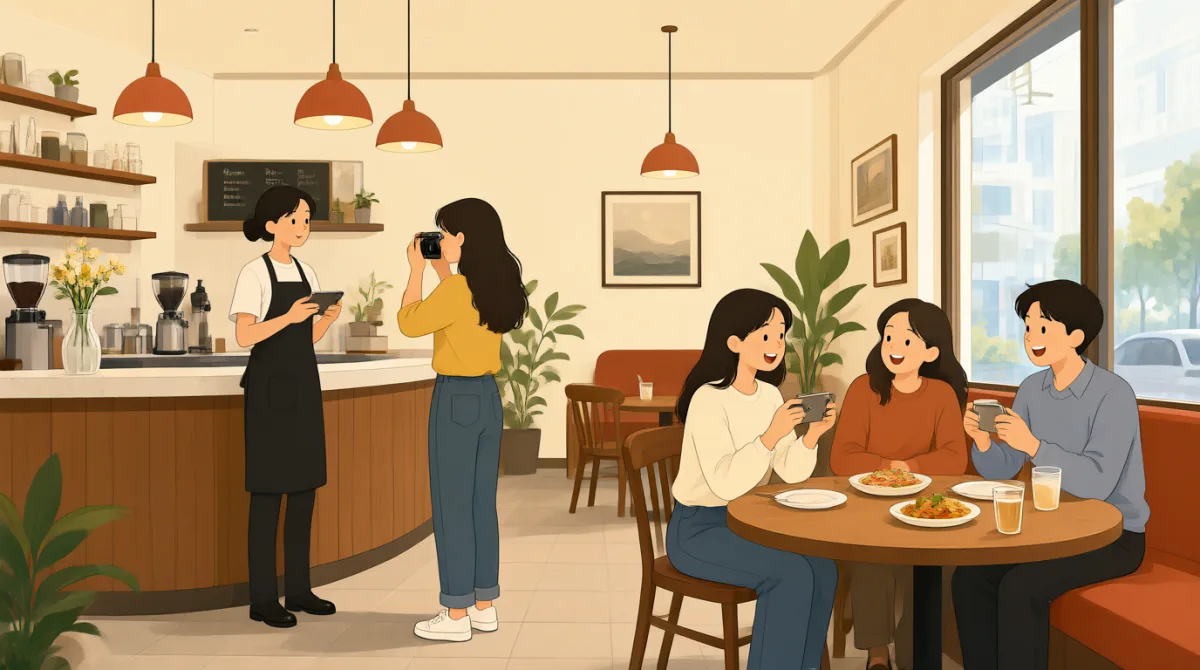
A customer wants to take photos of their food, the interior design, or friends at a restaurant or cafe. They are unsure about the establishment's policy or if it would disturb others, so they ask a staff member.
एक ग्राहक रेस्तरां या कैफ़े में अपने खाने, अंदरूनी सजावट या दोस्तों की तस्वीरें लेना चाहता है। उसे जगह के नियमों का पता नहीं है या चिंता है कि इससे दूसरों को परेशानी हो सकती है, इसलिए वह स्टाफ़ के किसी सदस्य से पूछता है।
संवाद6

Excuse me, I have a quick question. Is it okay to take photos in here?
माफ़ कीजिए, एक छोटी-सी बात पूछनी थी। क्या यहाँ तस्वीरें लेना ठीक है?

Yes, of course! You're welcome to take pictures of your food and the interior. We just ask that you be mindful of other customers' privacy.
जी, बिल्कुल! आप अपने खाने और यहाँ की सजावट की तस्वीरें ले सकते हैं। बस दूसरे ग्राहकों की निजता का ध्यान रखिएगा।
Great, thanks! I just wanted to get a shot of my latte, it looks amazing. And maybe a quick one of the general decor.
बहुत बढ़िया, शुक्रिया! मैं बस अपनी लाटे की एक तस्वीर लेना चाहती थी, यह बहुत शानदार लग रही है। और शायद यहाँ की सजावट की भी एक झटपट तस्वीर।
No problem at all. Just avoid using a flash, as it can be disruptive to others. And please, no photos of other guests without their permission.
कोई बात नहीं। बस फ़्लैश का इस्तेमाल मत कीजिएगा, इससे दूसरों को परेशानी हो सकती है। और कृपया, दूसरे मेहमानों की अनुमति के बिना उनकी तस्वीरें न लें।
Understood. I'll be careful not to bother anyone. Thanks for letting me know!
समझ गई। मैं ध्यान रखूँगी कि किसी को परेशानी न हो। बताने के लिए शुक्रिया!
You're very welcome. Enjoy your coffee and your meal!
आपका स्वागत है। अपनी कॉफ़ी और खाने का आनंद लीजिए!
शब्दावली8
- Excuse meमाफ़ कीजिए
A polite phrase used to get someone's attention or interrupt politely, like when you want to ask a question in public.
किसी का ध्यान खींचने या विनम्रता से बीच में बोलने के लिए इस्तेमाल होने वाला वाक्यांश। जैसे, सार्वजनिक जगह पर कोई सवाल पूछना हो।
- Mindfulध्यान रखने वाला
Being careful and aware of something, especially how your actions affect others; useful when following rules in shared spaces.
किसी बात के प्रति सावधान और जागरूक रहना, खासकर इस बात के लिए कि आपके कामों का दूसरों पर क्या असर पड़ता है। साझा जगहों के नियमों का पालन करते समय यह उपयोगी है।
- Privacyनिजता
The right to keep personal information or images private; important in situations like taking photos of people.
अपनी निजी जानकारी या तस्वीरें निजी रखने का अधिकार। लोगों की तस्वीरें लेते समय यह बहुत मायने रखता है।
- Shotतस्वीर
Informal word for a photograph or picture; commonly used in casual conversations about photography.
किसी फ़ोटो या तस्वीर के लिए अनौपचारिक शब्द। फ़ोटोग्राफ़ी के बारे में आम बातचीत में इसका इस्तेमाल होता है।
- Decorसजावट
Short for decoration; refers to the style and items that make a place look attractive, like in a restaurant.
किसी जगह को आकर्षक दिखाने वाली शैली और चीज़ें, जैसे किसी रेस्तरां की सजावट।
- Flashफ़्लैश
The bright light from a camera used in low-light conditions; often avoided in public to not disturb others.
कम रोशनी में कैमरे से निकलने वाली तेज़ रोशनी। दूसरों को परेशान न करने के लिए सार्वजनिक जगहों पर अक्सर इसका इस्तेमाल नहीं किया जाता।
- Disruptiveपरेशान करने वाला
Something that interrupts or disturbs the normal flow; used to describe actions that bother people around you.
ऐसी चीज़ जो सामान्य गतिविधि में बाधा डाले या लोगों को परेशान करे। आसपास के लोगों को खलने वाले कामों के लिए यह शब्द इस्तेमाल होता है।
- Botherपरेशान करना
To annoy or disturb someone; in this context, it means to cause inconvenience to others.
किसी को खीझ या परेशानी देना। इस संदर्भ में इसका मतलब है दूसरों को असुविधा पहुँचाना।
मुख्य वाक्य5
- 1
Excuse me, I have a quick question. Is it okay to take photos in here?
माफ़ कीजिए, एक छोटी-सी बात पूछनी थी। क्या यहाँ तस्वीरें लेना ठीक है?
This is a polite way to ask for permission; 'Is it okay' is a common, indirect question for requests. Use it when seeking approval in public places to show respect.
'Excuse me' (माफ़ कीजिए) कहकर आप विनम्रता से बात शुरू कर सकते हैं। 'Is it okay' अनुमति माँगने का एक आम और अप्रत्यक्ष तरीका है। सम्मान दिखाने के लिए सार्वजनिक जगहों पर मंज़ूरी माँगते समय इसका इस्तेमाल करें।
- 2
Yes, of course! You're welcome to take pictures of your food and the interior.
जी, बिल्कुल! आप अपने खाने और यहाँ की सजावट की तस्वीरें ले सकते हैं।
A friendly response giving permission; 'You're welcome to' means you are allowed and encouraged to do something. Useful for service staff or hosts to make guests feel comfortable.
यह अनुमति देने वाला दोस्ताना जवाब है। 'You're welcome to' का मतलब है कि आपको कुछ करने की इजाज़त है और आप ऐसा कर सकते हैं। मेहमानों को सहज महसूस कराने के लिए स्टाफ़ या मेज़बान इसका इस्तेमाल कर सकते हैं।
- 3
Just avoid using a flash, as it can be disruptive to others.
बस फ़्लैश का इस्तेमाल मत कीजिएगा, इससे दूसरों को परेशानी हो सकती है।
This gives advice with a condition; 'as' explains the reason ('because'). 'Avoid' means to stay away from doing something. Use this to set gentle rules without being strict.
इस वाक्य में एक शर्त के साथ सलाह दी गई है। 'as' यहाँ वजह बताता है, यानी 'क्योंकि'। 'Avoid' का मतलब है कोई काम करने से बचना। सख़्ती किए बिना विनम्रता से नियम बताने के लिए इसका इस्तेमाल करें।
- 4
Understood. I'll be careful not to bother anyone.
समझ गई। मैं ध्यान रखूँगी कि किसी को परेशानी न हो।
Shows agreement and promise; 'Understood' means you get it, and 'not to' is used for negative infinitive. Practical for confirming you'll follow instructions in social situations.
इससे सहमति और वादा जताया जाता है। 'Understood' का मतलब है कि आप बात समझ गए हैं। 'not to' का इस्तेमाल किसी काम को न करने की बात कहने के लिए होता है। सामाजिक स्थितियों में निर्देशों का पालन करने की पुष्टि करते समय यह काम आता है।
- 5
You're very welcome. Enjoy your coffee and your meal!
आपका बहुत स्वागत है। अपनी कॉफ़ी और खाने का आनंद लीजिए!
A warm closing response; 'You're very welcome' is a polite reply to thanks. 'Enjoy' wishes someone a good experience. Use at the end of helpful interactions to be courteous.
यह बातचीत को गर्मजोशी से समाप्त करने का तरीका है। 'You're very welcome' धन्यवाद के जवाब में कहा जाने वाला विनम्र वाक्यांश है। 'Enjoy' कहकर आप किसी के अच्छे अनुभव की कामना करते हैं। मददगार बातचीत के अंत में शिष्टता दिखाने के लिए इसका इस्तेमाल करें।