Asking Permission to Photograph a Display or Exhibit
किसी प्रदर्शनी या कला-कृति की तस्वीर लेने की अनुमति माँगना
Someone is at a museum, art gallery, or exhibition and sees an interesting display or piece of art. They notice a 'no photography' sign or are unsure, so they ask a staff member if photography is permitted.
कोई व्यक्ति संग्रहालय, कला दीर्घा या प्रदर्शनी में एक दिलचस्प प्रदर्शनी या कला-कृति देखता है। उसे ‘फ़ोटोग्राफ़ी मना है’ का संकेत दिखाई देता है या वह नियम को लेकर निश्चित नहीं होता, इसलिए वह कर्मचारी से पूछता है कि तस्वीरें लेने की अनुमति है या नहीं।
संवाद8
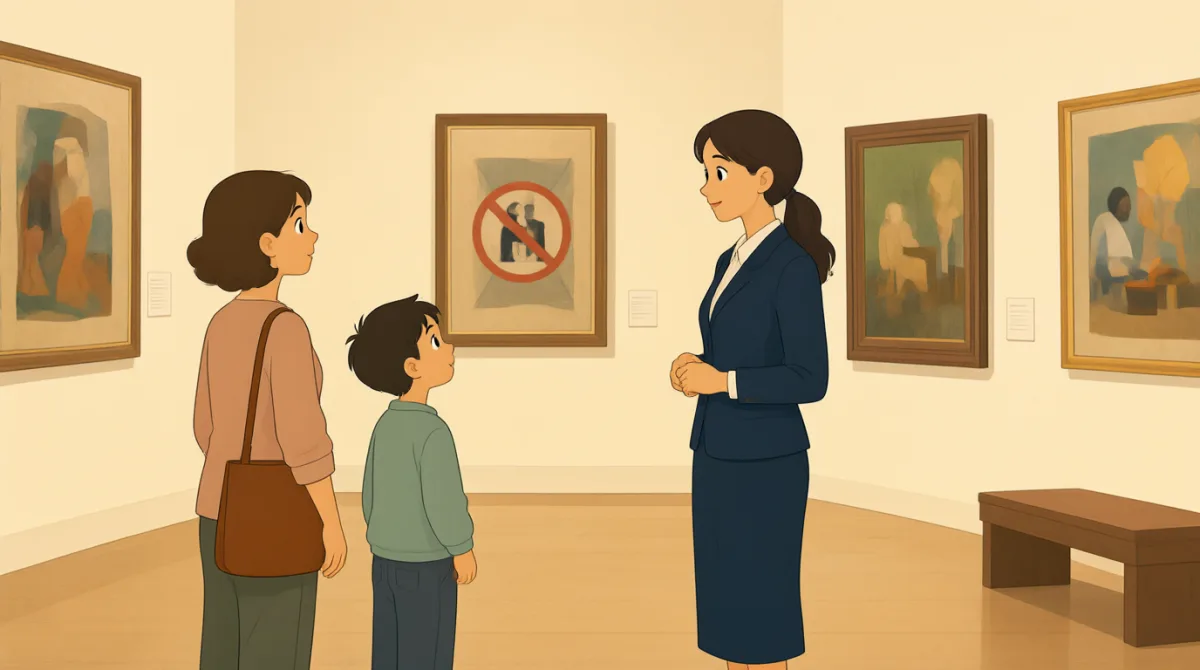

Excuse me, I have a quick question. I'm really enjoying this exhibit.
माफ़ कीजिए, मुझे एक छोटा-सा सवाल पूछना था। मुझे यह प्रदर्शनी बहुत पसंद आ रही है।

Certainly, how can I help you?
ज़रूर, मैं आपकी क्या मदद कर सकता हूँ?
I was wondering, is it okay to take photos of the display? I see some signs, but I'm not entirely sure about this section.
मैं पूछना चाह रही थी, क्या इस प्रदर्शनी की तस्वीरें लेना ठीक है? मुझे कुछ संकेत दिख रहे हैं, लेकिन इस हिस्से के नियमों को लेकर मैं पूरी तरह निश्चित नहीं हूँ।
For this particular exhibit, photography is generally allowed for personal use without flash. However, some individual pieces may have specific restrictions indicated on their labels.
इस विशेष प्रदर्शनी की तस्वीरें निजी इस्तेमाल के लिए आम तौर पर बिना फ़्लैश के ली जा सकती हैं। हालाँकि, कुछ अलग-अलग वस्तुओं पर उनके लेबल में विशेष पाबंदियाँ बताई गई हो सकती हैं।
Oh, I see. So no flash, that's important to remember. And I should check individual labels?
अच्छा, समझ गई। तो फ़्लैश नहीं—यह याद रखना ज़रूरी है। और मुझे हर वस्तु के लेबल भी देखने चाहिए?
Exactly. Most pieces are fine, but there are a few sensitive artifacts. We appreciate your understanding and cooperation.
बिल्कुल। ज़्यादातर वस्तुओं की तस्वीरें ले सकते हैं, लेकिन कुछ ऐसी कलाकृतियाँ हैं जिन्हें विशेष देखभाल की ज़रूरत है। आपकी समझ और सहयोग के लिए हम आभारी हैं।
Understood. Thank you very much for clarifying that for me.
समझ गई। यह बात स्पष्ट करने के लिए आपका बहुत-बहुत धन्यवाद।
You're welcome. Enjoy the rest of your visit!
कोई बात नहीं। अपनी आगे की यात्रा का आनंद लीजिए!
शब्दावली8
- excuse meमाफ़ कीजिए
A polite phrase used to get someone's attention or interrupt politely, common in public places like museums.
किसी का ध्यान खींचने या विनम्रता से बीच में बोलने के लिए इस्तेमाल होने वाला शिष्ट वाक्यांश। संग्रहालय जैसी सार्वजनिक जगहों पर यह आम है।
- exhibitप्रदर्शनी
A display of art, objects, or information in a museum or gallery; useful when talking about shows or displays.
संग्रहालय या कला दीर्घा में कला, वस्तुओं या जानकारी का प्रदर्शन। किसी शो या प्रदर्शन के बारे में बात करते समय यह शब्द काम आता है।
- wonderingसोच रही थी
The present continuous form of 'wonder,' used to express curiosity or uncertainty about something, like asking if something is allowed.
'wonder' का वर्तमान निरंतर रूप, जिसका इस्तेमाल किसी बात को लेकर जिज्ञासा या अनिश्चितता जताने के लिए होता है—जैसे यह पूछना कि किसी चीज़ की अनुमति है या नहीं।
- photographyफ़ोटोग्राफ़ी
The act of taking photos; in this context, it refers to rules about using cameras in places like museums.
तस्वीरें लेने की क्रिया। यहाँ इसका मतलब संग्रहालय जैसी जगहों पर कैमरे के इस्तेमाल से जुड़े नियमों से है।
- flashफ़्लैश
The bright light from a camera; often not allowed in exhibits to protect sensitive items.
कैमरे से निकलने वाली तेज़ रोशनी। नाज़ुक वस्तुओं की सुरक्षा के लिए प्रदर्शनी में इसका इस्तेमाल अक्सर मना होता है।
- restrictionsपाबंदियाँ
Rules or limits on what you can do; here, it means limits on taking photos of certain items.
किसी काम को करने पर लगे नियम या सीमाएँ। यहाँ इसका मतलब कुछ खास वस्तुओं की तस्वीरें लेने पर लगी सीमाओं से है।
- labelsलेबल
Small tags or signs attached to items providing information or rules; check them for specific instructions.
वस्तुओं पर लगे छोटे टैग या सूचना-पट्ट, जिन पर जानकारी या नियम लिखे होते हैं। खास निर्देश जानने के लिए इन्हें देखें।
- cooperationसहयोग
Working together politely to follow rules; used to thank someone for following guidelines.
नियमों का पालन करने के लिए विनम्रता से साथ देना। दिशा-निर्देशों का पालन करने वाले व्यक्ति को धन्यवाद देते समय यह शब्द इस्तेमाल होता है।
मुख्य वाक्य7
- 1
Excuse me, I have a quick question.
माफ़ कीजिए, मुझे एक छोटा-सा सवाल पूछना था।
This is a polite way to start a conversation and ask for information. Use it in public to get attention without being rude. 'Quick' shows it's not time-consuming.
बातचीत शुरू करने और जानकारी माँगने का यह एक विनम्र तरीका है। सार्वजनिक जगह पर बिना रूखे लगे किसी का ध्यान खींचने के लिए इसका इस्तेमाल करें। 'quick' बताता है कि इसमें ज़्यादा समय नहीं लगेगा।
- 2
I was wondering, is it okay to take photos of the display?
मैं पूछना चाह रही थी, क्या इस प्रदर्शनी की तस्वीरें लेना ठीक है?
A soft, indirect way to ask for permission. 'I was wondering' makes the question polite and less direct. Useful for situations where you're unsure about rules. Grammar: Past continuous for ongoing thought.
अनुमति माँगने का यह एक नरम और अप्रत्यक्ष तरीका है। 'I was wondering' सवाल को विनम्र और कम सीधा बनाता है। नियमों को लेकर अनिश्चित होने पर यह उपयोगी है। व्याकरण: जारी विचार बताने के लिए भूतकाल निरंतर का इस्तेमाल।
- 3
For this particular exhibit, photography is generally allowed for personal use without flash.
इस विशेष प्रदर्शनी की तस्वीरें निजी इस्तेमाल के लिए आम तौर पर बिना फ़्लैश के ली जा सकती हैं।
This explains rules clearly. 'Generally allowed' means usually okay but with conditions. Use this pattern to give permissions with limits. 'Particular' specifies one thing among many.
यह वाक्य नियमों को साफ़ तौर पर समझाता है। 'Generally allowed' का मतलब है कि आम तौर पर अनुमति है, लेकिन कुछ शर्तों के साथ। सीमाओं सहित अनुमति देने के लिए इस ढाँचे का इस्तेमाल करें। 'Particular' कई चीज़ों में से किसी एक खास चीज़ को बताता है।
- 4
Oh, I see. So no flash, that's important to remember.
अच्छा, समझ गई। तो फ़्लैश नहीं—यह याद रखना ज़रूरी है।
Shows understanding and repeats key info for confirmation. 'Oh, I see' is a common response to new information. Useful for clarifying and showing you're listening.
इससे समझ जताते हुए मुख्य जानकारी को दोहराकर पुष्टि की जाती है। 'Oh, I see' नई जानकारी मिलने पर दिया जाने वाला आम जवाब है। बात स्पष्ट करने और यह दिखाने के लिए कि आप ध्यान से सुन रहे हैं, इसका इस्तेमाल करें।
- 5
Exactly. Most pieces are fine, but there are a few sensitive artifacts.
बिल्कुल। ज़्यादातर वस्तुओं की तस्वीरें ले सकते हैं, लेकिन कुछ ऐसी कलाकृतियाँ हैं जिन्हें विशेष देखभाल की ज़रूरत है।
Agrees and adds details. 'Exactly' confirms the previous point. Use this to build on someone's understanding. 'Most... but' structure contrasts general and specific rules.
यह सहमति जताता है और साथ में कुछ और जानकारी देता है। 'Exactly' पिछली बात की पुष्टि करता है। किसी की समझ पर आगे बात जोड़ने के लिए इसका इस्तेमाल करें। 'Most... but' का ढाँचा आम नियमों और खास अपवादों के बीच अंतर दिखाता है।
- 6
Understood. Thank you very much for clarifying that for me.
समझ गई। यह बात स्पष्ट करने के लिए आपका बहुत-बहुत धन्यवाद।
Polite way to end by showing comprehension and gratitude. 'Clarifying' means making something clear. Use after explanations to wrap up conversations nicely.
समझ और आभार जताते हुए बातचीत समाप्त करने का यह विनम्र तरीका है। 'Clarifying' का मतलब है किसी बात को स्पष्ट करना। किसी की बात समझाने के बाद बातचीत को अच्छे ढंग से समाप्त करने के लिए इसका इस्तेमाल करें।
- 7
You're welcome. Enjoy the rest of your visit!
कोई बात नहीं। अपनी आगे की यात्रा का आनंद लीजिए!
Standard polite response to thanks, with a friendly wish. Use this in service situations like museums to end positively. 'You're welcome' is a common reply to 'thank you.'
धन्यवाद के जवाब में दिया जाने वाला यह आम विनम्र उत्तर है, जिसके साथ एक दोस्ताना शुभकामना भी है। संग्रहालय जैसी सेवा-संबंधी जगहों पर बातचीत को अच्छे ढंग से समाप्त करने के लिए इसका इस्तेमाल करें। 'You're welcome' का आम जवाब 'thank you' के बाद दिया जाता है।