Negotiating a Trade Agreement
व्यापार समझौते पर बातचीत
Delegations from two countries enter a detailed negotiation session to discuss terms, tariffs, and regulations for a new bilateral trade agreement, encountering some points of contention.
दो देशों के प्रतिनिधिमंडल नए द्विपक्षीय व्यापार समझौते की शर्तों, शुल्कों और नियमों पर विस्तार से बातचीत करने के लिए बैठक में शामिल होते हैं। इस दौरान कुछ मुद्दों पर मतभेद भी सामने आते हैं।
संवाद9
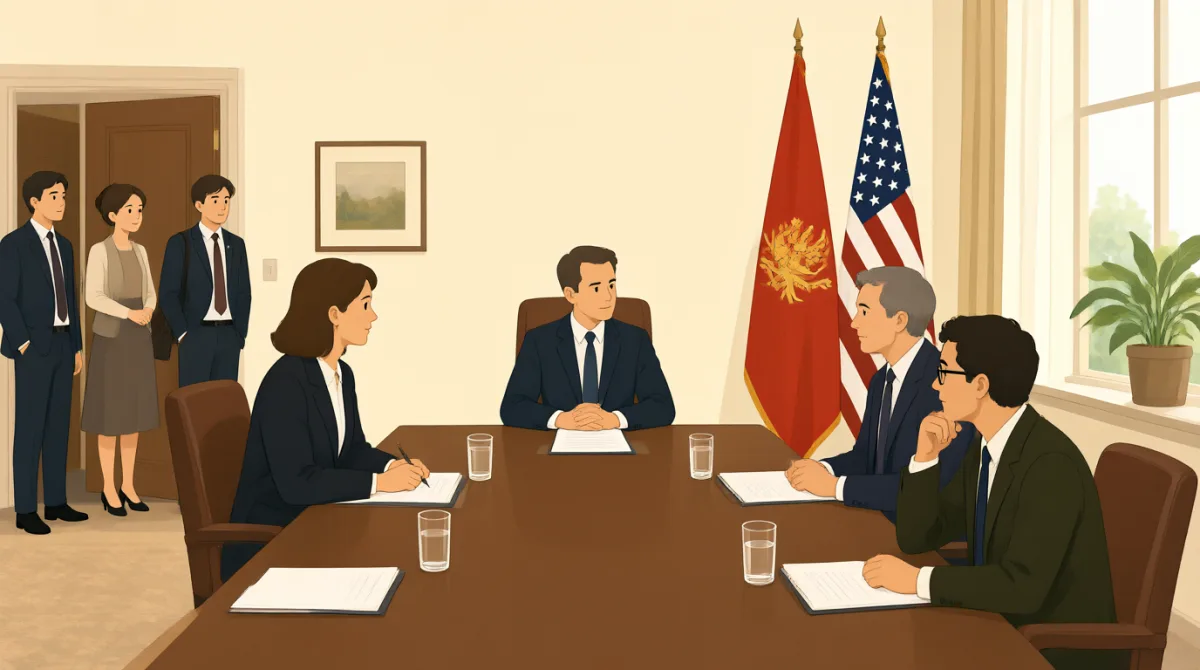

Good morning, Ambassador Chen. We appreciate you making the time for this critical session. Let's delve into the specifics of the agricultural tariffs.
सुप्रभात, राजदूत Chen। इस महत्वपूर्ण बैठक के लिए समय निकालने की हम आपकी सराहना करते हैं। आइए, कृषि शुल्कों की बारीकियों पर चर्चा करें।

Good morning, Mr. Wilson. Indeed. Our primary concern remains the proposed 15% tariff on our specialty crops. It would significantly impact our farmers.
सुप्रभात, श्री Wilson। बिल्कुल। हमारी मुख्य चिंता हमारी विशेष फसलों पर प्रस्तावित 15% शुल्क को लेकर है। इससे हमारे किसानों पर गंभीर असर पड़ेगा।
We understand your concerns, Ambassador, but this tariff is crucial for protecting our emerging domestic industries. Perhaps we could explore a phased reduction over five years?
हम आपकी चिंताएँ समझते हैं, राजदूत, लेकिन हमारे उभरते घरेलू उद्योगों की रक्षा के लिए यह शुल्क बेहद ज़रूरी है। शायद हम पाँच साल में इसे चरणबद्ध तरीके से घटाने पर विचार कर सकते हैं?
A phased reduction is certainly a point for discussion, but five years seems rather extended. Would two to three years be more feasible, coupled with some non-tariff concessions on your side?
चरणबद्ध कटौती पर निश्चित रूप से चर्चा हो सकती है, लेकिन पाँच साल का समय कुछ ज़्यादा लगता है। क्या दो से तीन साल अधिक व्यावहारिक होंगे, अगर आप अपनी ओर से कुछ गैर-शुल्क रियायतें भी दें?
That's an interesting counter-proposal. What sort of non-tariff concessions do you have in mind, Ambassador? We're open to exploring options that demonstrate mutual benefit.
यह एक दिलचस्प जवाबी प्रस्ताव है। राजदूत, आपके मन में किस तरह की गैर-शुल्क रियायतें हैं? हम ऐसे विकल्पों पर विचार करने के लिए तैयार हैं जिनसे दोनों पक्षों को लाभ हो।
Specifically, we'd like to see streamlined customs procedures for our manufactured goods and mutual recognition of certain product certifications. This would significantly reduce trade barriers.
विशेष रूप से, हम चाहेंगे कि हमारे निर्मित सामानों के लिए सीमा-शुल्क प्रक्रियाएँ सरल की जाएँ और कुछ उत्पाद प्रमाणपत्रों को दोनों देश मान्यता दें। इससे व्यापार की बाधाएँ काफी कम होंगी।
Streamlining customs is something we can certainly work towards. Mutual recognition of certifications, however, requires further internal review due to our regulatory frameworks. It's a complex area.
सीमा-शुल्क प्रक्रियाओं को सरल बनाने की दिशा में हम निश्चित रूप से काम कर सकते हैं। हालाँकि, हमारे नियामक ढाँचे के कारण प्रमाणपत्रों को पारस्परिक मान्यता देने के लिए आंतरिक समीक्षा की ज़रूरत होगी। यह एक जटिल विषय है।
We understand the complexities. Perhaps a commitment to initiate a working group dedicated to harmonizing those standards within the first year of the agreement's implementation? That might bridge the gap.
हम इसकी जटिलताओं को समझते हैं। क्या आप समझौते के लागू होने के पहले साल के भीतर उन मानकों में सामंजस्य लाने के लिए एक कार्यदल बनाने की प्रतिबद्धता दे सकते हैं? इससे मतभेद कम हो सकते हैं।
A working group dedicated to harmonization. That's a constructive approach, Ambassador. Let me consult with my team on that specific timeframe and the agricultural tariff reduction. We're making progress.
मानकों में सामंजस्य लाने के लिए एक कार्यदल। यह रचनात्मक तरीका है, राजदूत। मैं इस समय-सीमा और कृषि शुल्क में कटौती के बारे में अपनी टीम से सलाह लेता हूँ। हम आगे बढ़ रहे हैं।
शब्दावली8
- appreciateसराहना करना
To feel grateful for something or someone; in negotiations, use it to politely thank others, like 'We appreciate your effort.'
किसी चीज़ या व्यक्ति के लिए आभारी महसूस करना। बातचीत में इसका इस्तेमाल दूसरों को विनम्रता से धन्यवाद देने के लिए करें, जैसे 'We appreciate your effort.' (हम आपके प्रयास की सराहना करते हैं।)
- delve intoगहराई से चर्चा करना
To examine or discuss something in detail; useful in meetings to suggest going deeper into a topic, e.g., 'Let's delve into the details.'
किसी विषय की बारीकी से जाँच या चर्चा करना। बैठकों में किसी मुद्दे पर विस्तार से बात करने का सुझाव देने के लिए यह उपयोगी है, जैसे 'Let's delve into the details.' (आइए, बारीकियों पर चर्चा करें।)
- tariffशुल्क
A tax imposed on imported or exported goods; common in trade talks, like 'The tariff on crops is 15%.'
आयात या निर्यात किए जाने वाले सामान पर लगाया जाने वाला कर। व्यापार वार्ताओं में यह आम शब्द है, जैसे 'The tariff on crops is 15%.' (फसलों पर शुल्क 15% है।)
- concernचिंता
A feeling of worry or interest about a problem; in diplomacy, express it as 'Our main concern is the impact on farmers.'
किसी समस्या को लेकर बेचैनी या फ़िक्र। कूटनीति में इसे इस तरह व्यक्त कर सकते हैं: 'Our main concern is the impact on farmers.' (हमारी मुख्य चिंता किसानों पर पड़ने वाला असर है।)
- crucialबेहद ज़रूरी
Very important or essential; use it to emphasize importance, such as 'This is crucial for our industries.'
बहुत महत्वपूर्ण या अनिवार्य। किसी बात की अहमियत पर ज़ोर देने के लिए इसका इस्तेमाल करें, जैसे 'This is crucial for our industries.' (यह हमारे उद्योगों के लिए बेहद ज़रूरी है।)
- concessionsरियायतें
Something given up or allowed in negotiations to reach an agreement; practical in bargaining, e.g., 'We need concessions on tariffs.'
समझौते तक पहुँचने के लिए बातचीत में किसी पक्ष द्वारा छोड़ी गई माँग या दी गई छूट। सौदेबाज़ी में यह शब्द उपयोगी है, जैसे 'We need concessions on tariffs.' (हमें शुल्कों पर रियायतें चाहिए।)
- streamlinedसरल बनाया हुआ
Made simpler and more efficient; often used for processes, like 'streamlined customs procedures' to reduce delays.
जिसे अधिक आसान और कुशल बनाया गया हो। इसका इस्तेमाल अक्सर प्रक्रियाओं के लिए होता है, जैसे 'streamlined customs procedures' (सरल बनाई गई सीमा-शुल्क प्रक्रियाएँ), ताकि देरी कम हो।
- harmonizingसामंजस्य लाना
Making different things consistent or in agreement; in trade, it means aligning standards, e.g., 'harmonizing certifications.'
अलग-अलग चीज़ों को एकसमान या परस्पर अनुरूप बनाना। व्यापार के संदर्भ में इसका मतलब मानकों को एकरूप करना है, जैसे 'harmonizing certifications.' (प्रमाणपत्रों में सामंजस्य लाना।)
मुख्य वाक्य7
- 1
We appreciate you making the time for this critical session.
इस महत्वपूर्ण बैठक के लिए समय निकालने की हम आपकी सराहना करते हैं।
This polite opening shows gratitude and sets a positive tone; use it at the start of meetings. 'Appreciate' is followed by a gerund ('making') for actions.
बैठक की शुरुआत में यह विनम्र वाक्य आभार जताता है और सकारात्मक माहौल बनाता है। 'Appreciate' के बाद किसी काम की बात हो, तो क्रिया का '-ing' रूप आता है, जैसे 'making'।
- 2
Let's delve into the specifics of the agricultural tariffs.
आइए, कृषि शुल्कों की बारीकियों पर चर्चा करें।
Suggests starting a detailed discussion; 'delve into' is an idiomatic phrase for in-depth exploration, useful in professional talks to move forward.
यह वाक्य विस्तार से चर्चा शुरू करने का सुझाव देता है। 'Delve into' का अर्थ है किसी विषय की गहराई में जाना। आगे की बात बढ़ाने के लिए औपचारिक बातचीत में यह उपयोगी है।
- 3
Our primary concern remains the proposed 15% tariff on our specialty crops.
हमारी मुख्य चिंता हमारी विशेष फसलों पर प्रस्तावित 15% शुल्क को लेकर है।
Expresses a key issue clearly; 'primary concern' highlights the main worry, and 'remains' shows it hasn't changed—great for stating positions in negotiations.
यह किसी अहम मुद्दे को साफ़ तौर पर सामने रखता है। 'Primary concern' मुख्य चिंता पर ज़ोर देता है, जबकि 'remains' बताता है कि चिंता पहले जैसी ही बनी हुई है। बातचीत में अपना पक्ष रखने के लिए यह उपयोगी है।
- 4
We understand your concerns, but this tariff is crucial for protecting our emerging domestic industries.
हम आपकी चिंताएँ समझते हैं, लेकिन हमारे उभरते घरेलू उद्योगों की रक्षा के लिए यह शुल्क बेहद ज़रूरी है।
Acknowledges the other side while defending your view; uses 'but' for contrast, common in diplomatic language to balance empathy and firmness.
यह वाक्य दूसरे पक्ष की बात समझते हुए अपने नज़रिए का बचाव करता है। 'But' से विरोध या अंतर दिखता है। सहानुभूति और दृढ़ता के बीच संतुलन बनाने के लिए कूटनीतिक बातचीत में यह आम है।
- 5
Perhaps we could explore a phased reduction over five years?
शायद हम पाँच साल में इसे चरणबद्ध तरीके से घटाने पर विचार कर सकते हैं?
Proposes a compromise politely with 'perhaps' and a question; 'explore' means to consider options, and 'phased reduction' describes gradual change—ideal for suggesting alternatives.
'Perhaps' और सवाल के रूप से यह विनम्रता से समझौते का सुझाव देता है। 'Explore' का मतलब विकल्पों पर विचार करना है और 'phased reduction' धीरे-धीरे की जाने वाली कटौती को कहते हैं। दूसरे विकल्प सुझाने के लिए यह अच्छा तरीका है।
- 6
That's an interesting counter-proposal. What sort of non-tariff concessions do you have in mind?
यह एक दिलचस्प जवाबी प्रस्ताव है। आपके मन में किस तरह की गैर-शुल्क रियायतें हैं?
Responds positively to an offer and asks for details; 'counter-proposal' is a negotiation term for a response idea, helping to keep dialogue open and collaborative.
यह प्रस्ताव का सकारात्मक जवाब देते हुए उसकी जानकारी माँगता है। 'Counter-proposal' बातचीत में दिए गए जवाबी सुझाव को कहते हैं। इससे बातचीत खुली और सहयोगपूर्ण बनी रहती है।
- 7
We're making progress.
हम आगे बढ़ रहे हैं।
Ends positively by noting advancement; simple present continuous tense shows ongoing improvement, useful to encourage and conclude sessions on a hopeful note.
यह वाक्य प्रगति का ज़िक्र करके बातचीत को सकारात्मक ढंग से आगे बढ़ाता या समाप्त करता है। वर्तमान निरंतर काल से पता चलता है कि सुधार जारी है। बैठक का समापन आशावादी ढंग से करने के लिए यह उपयोगी है।