Sleeping Better
Mieux dormir
Leo tells Mia that he tried the new habits and slept better. They talk about how he will keep up the changes.
Leo raconte à Mia qu’il a essayé de nouvelles habitudes et qu’il a mieux dormi. Ils parlent de la façon dont il va maintenir ces changements.
Dialogue8
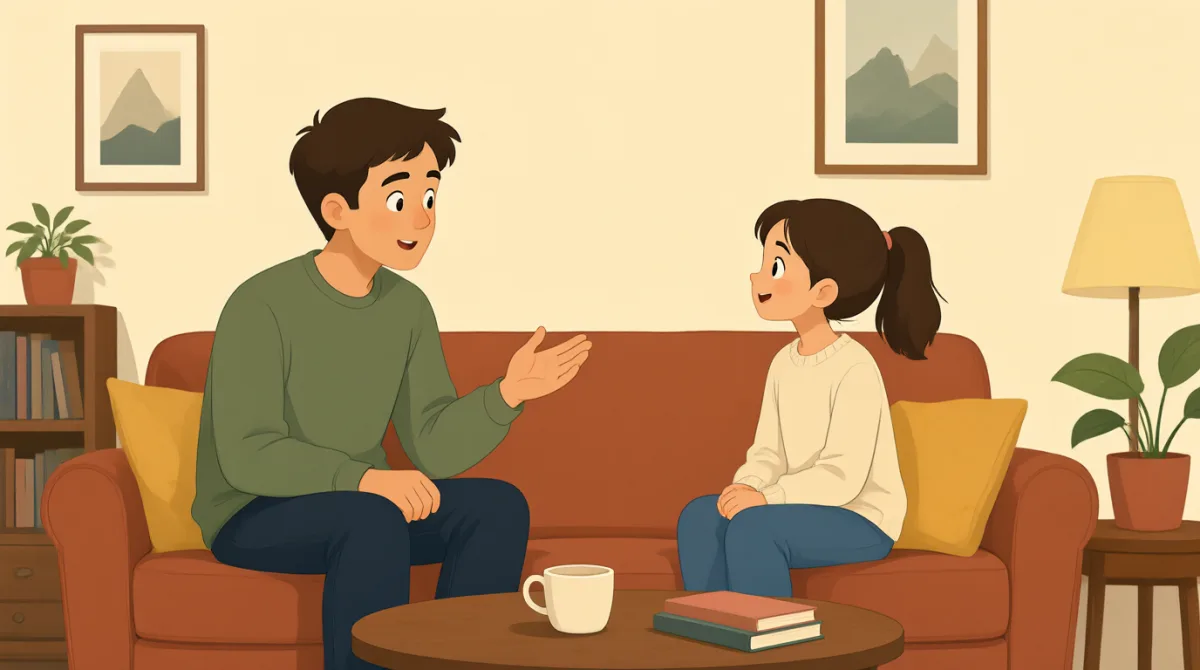

I put my phone away early last night, and I slept much better.
Hier soir, j’ai rangé mon téléphone tôt et j’ai beaucoup mieux dormi.

That’s great! Did you go to bed earlier, too?
C’est super ! Tu t’es couché plus tôt aussi ?
Yes, I went to bed at ten. I woke up feeling rested.
Oui, je me suis couché à dix heures. Je me suis réveillé en pleine forme.
How do you feel at work today?
Comment tu te sens au travail aujourd’hui ?
Much better. I’m not sleepy, and I can focus more easily.
Beaucoup mieux. Je n’ai pas sommeil et j’arrive à me concentrer plus facilement.
Will you keep putting your phone away before bed?
Tu vas continuer à ranger ton téléphone avant de te coucher ?
I will. I’ll try to keep the same bedtime every night.
Oui. Je vais essayer de me coucher à la même heure tous les soirs.
Good plan. If you keep it up, you may sleep well more often.
Bonne idée. Si tu continues comme ça, tu dormiras peut-être bien plus souvent.
Vocabulaire6
- put my phone awayranger son téléphone
To put your phone away is to stop using it and place it somewhere. You can say this when you want to avoid looking at your phone.
« To put your phone away » (ranger son téléphone), c’est arrêter de l’utiliser et le poser quelque part. Tu peux dire ça quand tu veux éviter de regarder ton téléphone.
- go to bedse coucher
To go to bed means to get into bed to sleep. You can use it to talk about what time you plan to sleep.
« To go to bed » (se coucher), c’est aller au lit pour dormir. Tu peux employer cette expression pour parler de l’heure à laquelle tu comptes te coucher.
- sleepyavoir sommeil
Sleepy means tired and ready to sleep. You can use it to explain how you feel during the day.
« Sleepy » (avoir sommeil) décrit la sensation de fatigue quand on est prêt à dormir. Tu peux employer ce mot pour expliquer comment tu te sens pendant la journée.
- focus more easilyse concentrer plus facilement
To focus more easily means to give your attention to something without as much difficulty. You can use it when you can work or study better.
« To focus more easily » (se concentrer plus facilement), c’est réussir à porter son attention sur quelque chose sans autant de difficulté. Tu peux employer cette expression quand tu arrives à mieux travailler ou étudier.
- keep the same bedtimese coucher à la même heure
This means to go to bed at the same time each night. You can use it to talk about building a regular sleep routine.
« Keep the same bedtime » signifie se coucher à la même heure chaque soir. Tu peux employer cette expression pour parler de la mise en place d’une routine de sommeil régulière.
- keep it upcontinuer comme ça
To keep it up means to continue doing something. You can use it to encourage someone to continue a good habit.
« Keep it up » signifie continuer à faire quelque chose. Tu peux employer cette expression pour encourager quelqu’un à garder une bonne habitude.
Phrases clés7
- 1
I put my phone away early last night, and I slept much better.
Hier soir, j’ai rangé mon téléphone tôt et j’ai beaucoup mieux dormi.
Use this sentence to say that a change you made helped you sleep. You can replace “put my phone away” with another action you tried.
Utilise cette phrase pour dire qu’un changement que tu as fait t’a aidé à mieux dormir. Tu peux remplacer « put my phone away » par une autre action que tu as essayée.
- 2
Did you go to bed earlier, too?
Tu t’es couché plus tôt aussi ?
This is a simple way to ask if someone went to bed earlier than usual. You can replace “go to bed” with another activity to ask about a change.
C’est une façon simple de demander à quelqu’un s’il s’est couché plus tôt que d’habitude. Tu peux remplacer « go to bed » par une autre activité pour demander s’il a changé ses habitudes.
- 3
I woke up feeling rested.
Je me suis réveillé en pleine forme.
Use this to describe waking up with energy after a good night’s sleep. You can replace “rested” with another feeling, such as “happy” or “tired.”
Utilise cette phrase pour décrire le fait de se réveiller plein d’énergie après une bonne nuit de sommeil. Tu peux remplacer « rested » par un autre sentiment, comme « happy » ou « tired ».
- 4
I’m not sleepy, and I can focus more easily.
Je n’ai pas sommeil et j’arrive à me concentrer plus facilement.
This sentence explains how someone feels and works after sleeping better. You can use “I can focus more easily” when a task feels easier to concentrate on.
Cette phrase explique comment quelqu’un se sent et travaille après avoir mieux dormi. Tu peux utiliser « I can focus more easily » quand tu veux dire qu’il est plus facile de se concentrer sur une tâche.
- 5
Will you keep putting your phone away before bed?
Tu vas continuer à ranger ton téléphone avant de te coucher ?
Use this question to ask if someone plans to continue a habit. You can replace “putting your phone away” with another action.
Utilise cette question pour demander à quelqu’un s’il compte continuer une habitude. Tu peux remplacer « putting your phone away » par une autre action.
- 6
I’ll try to keep the same bedtime every night.
Je vais essayer de me coucher à la même heure tous les soirs.
This is a useful way to talk about a plan or goal. You can replace “keep the same bedtime” with another regular habit.
C’est une façon pratique de parler d’un projet ou d’un objectif. Tu peux remplacer « keep the same bedtime » par une autre habitude régulière.
- 7
If you keep it up, you may sleep well more often.
Si tu continues comme ça, tu dormiras peut-être bien plus souvent.
This sentence encourages someone to continue a good habit and explains a possible result. You can use “If you keep it up” to talk about other positive results, too.
Cette phrase encourage quelqu’un à garder une bonne habitude et décrit un résultat possible. Tu peux aussi utiliser « If you keep it up » pour parler d’autres résultats positifs.