Going to the Police Station
Se rendre au commissariat
Leo reports the stolen bike to an officer and answers questions about where and when it disappeared. He asks what will happen next.
Léo signale le vol de son vélo à un agent et répond à ses questions sur le lieu et le moment où il a disparu. Il demande ce qui va se passer ensuite.
Dialogue8
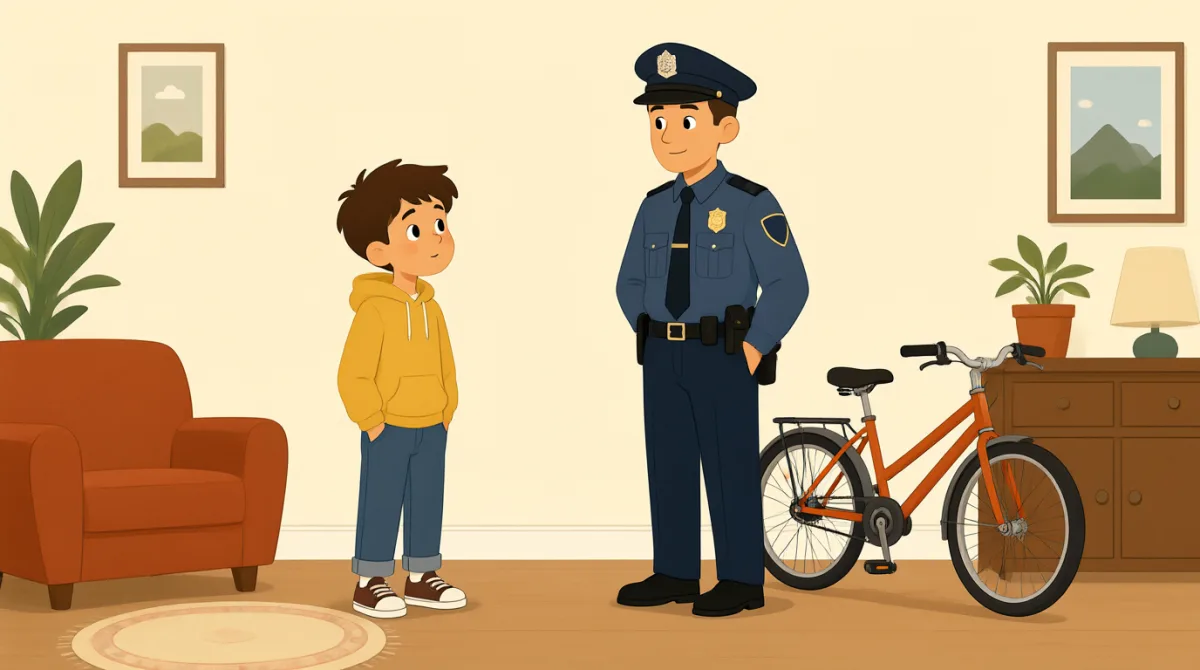

Hi, I need to report a stolen bike. It was taken today.
Bonjour, je voudrais signaler le vol de mon vélo. On me l’a volé aujourd’hui.

I’m sorry to hear that. Where did you last see it?
Je suis désolée de l’apprendre. Où l’avez-vous vu pour la dernière fois ?
I left it at the bike rack near the shops around two o’clock.
Je l’ai laissé au parking à vélos près des magasins vers deux heures.
When did you come back and find it was gone?
Quand êtes-vous revenu et avez-vous constaté qu’il avait disparu ?
A little after three. The lock was on the ground, but the bike was gone.
Un peu après trois heures. L’antivol était par terre, mais le vélo avait disparu.
Did you see anyone near the bike rack?
Avez-vous vu quelqu’un près du parking à vélos ?
No, I didn’t. What will happen next?
Non, je n’ai vu personne. Que va-t-il se passer ensuite ?
I’ll take your report and give you a case number. We’ll contact you with updates.
Je vais enregistrer votre déclaration et vous donner un numéro de dossier. Nous vous tiendrons au courant.
Vocabulaire8
- report a stolen bikesignaler le vol d’un vélo
To tell the police that someone took your bike. You can use “report a stolen [item]” for other things that have been stolen.
Cela veut dire informer la police que quelqu’un a volé votre vélo. Vous pouvez utiliser “report a stolen [item]” pour parler d’autres objets volés.
- takenvolé
Here, “taken” means stolen. You can say, “My bag was taken,” to explain that someone stole it.
Ici, “taken” signifie « volé ». Vous pouvez dire “My bag was taken” pour expliquer que quelqu’un a volé votre sac.
- last see itvoir pour la dernière fois
This means the most recent time you saw the bike. You can ask, “Where did you last see it?” about a missing item.
Cela désigne la dernière fois que vous avez vu le vélo. Vous pouvez demander “Where did you last see it?” à propos d’un objet disparu.
- bike rackparking à vélos
A bike rack is a place where you can park and lock a bike. You might find one near shops, a school, or a station.
Un “bike rack” est un endroit où l’on peut garer et attacher son vélo. On en trouve souvent près des magasins, d’une école ou d’une gare.
- come backrevenir
To come back means to return to a place. You can say, “I came back at three,” to tell someone when you returned.
“Come back” signifie retourner quelque part. Vous pouvez dire “I came back at three” pour indiquer à quelqu’un à quel moment vous êtes revenu.
- was goneavait disparu
This means the bike was no longer there. You can say, “My phone was gone,” when you return and cannot find it.
Cela signifie que le vélo n’était plus là. Vous pouvez dire “My phone was gone” si vous revenez et ne trouvez plus votre téléphone.
- on the groundpar terre
This means lying on the floor or ground. For example, “My keys were on the ground.”
Cela signifie qu’un objet se trouve sur le sol. Par exemple : “My keys were on the ground.”
- case numbernuméro de dossier
A case number is a number the police give to identify your report. You can use it when you ask for information or updates.
Un “case number” est un numéro que la police attribue pour identifier votre déclaration. Vous pouvez l’utiliser pour demander des renseignements ou des nouvelles.
Phrases clés8
- 1
Hi, I need to report a stolen bike.
Bonjour, je voudrais signaler le vol de mon vélo.
Use this sentence to clearly tell the police why you are there. You can replace “bike” with another item, such as “phone” or “bag.”
Utilisez cette phrase pour expliquer clairement à la police pourquoi vous êtes là. Vous pouvez remplacer “bike” par un autre objet, comme “phone” ou “bag.”
- 2
Where did you last see it?
Où l’avez-vous vu pour la dernière fois ?
This is a useful question about the last place someone saw a missing item. Replace “it” with the item’s name if needed.
Cette question est utile pour demander où quelqu’un a vu un objet disparu pour la dernière fois. Si besoin, remplacez “it” par le nom de l’objet.
- 3
I left it at the bike rack near the shops around two o’clock.
Je l’ai laissé au parking à vélos près des magasins vers deux heures.
Use this to explain where and when you left something. You can change the place and time to give your own details.
Utilisez cette phrase pour expliquer où et quand vous avez laissé quelque chose. Vous pouvez changer le lieu et l’heure pour donner vos propres détails.
- 4
When did you come back and find it was gone?
Quand êtes-vous revenu et avez-vous constaté qu’il avait disparu ?
This asks when someone returned and noticed an item was missing. You can use the same question pattern for other lost belongings.
Cette question demande à quel moment quelqu’un est revenu et a remarqué qu’un objet avait disparu. Vous pouvez utiliser le même modèle pour parler d’autres affaires perdues.
- 5
The lock was on the ground, but the bike was gone.
L’antivol était par terre, mais le vélo avait disparu.
This sentence describes what you found and what was missing. Use “but” to show a contrast between two details.
Cette phrase décrit ce que vous avez trouvé et ce qui manquait. Utilisez “but” pour marquer le contraste entre ces deux éléments.
- 6
Did you see anyone near the bike rack?
Avez-vous vu quelqu’un près du parking à vélos ?
Use this question to ask if someone saw a person in a particular place. Replace “the bike rack” with another location.
Utilisez cette question pour demander si quelqu’un a vu une personne dans un endroit précis. Remplacez “the bike rack” par un autre lieu.
- 7
What will happen next?
Que va-t-il se passer ensuite ?
This is a simple way to ask what to expect after an event or report. You can use it when you need to know the next steps.
C’est une façon simple de demander à quoi s’attendre après un événement ou une déclaration. Vous pouvez l’utiliser quand vous voulez connaître les prochaines étapes.
- 8
We’ll contact you with updates.
Nous vous tiendrons au courant.
This tells someone that you will get in touch to share new information. You can use “We’ll contact you with…” when explaining how you will follow up.
Cette phrase indique à quelqu’un que vous le contacterez pour lui communiquer de nouvelles informations. Vous pouvez utiliser “We’ll contact you with…” pour expliquer comment vous assurerez le suivi.