Taking Off Glasses
درآوردن عینک
Jack explains that Emma needs to take off her glasses for the photo. He helps her get ready in front of the camera.
جک توضیح میدهد که اما باید برای عکس عینکش را دربیاورد. او کمک میکند تا اما جلوی دوربین آماده شود.
گفتوگو8
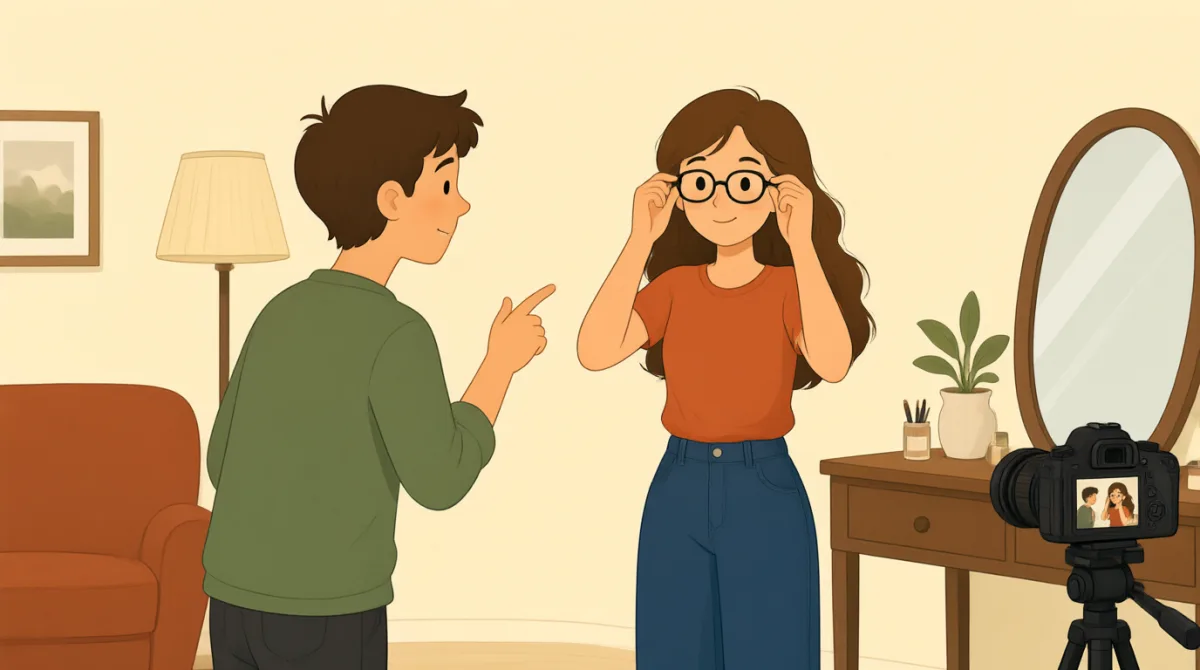

All right, Emma. Please take off your glasses before we take the photo.
خب، اما. لطفاً قبل از اینکه عکس بگیریم عینکت رو دربیار.

Oh, sure. Should I put them on the table?
اوه، حتماً. بذارمش روی میز؟
Yes, please. Then stand on the mark in front of the camera.
بله، لطفاً. بعد روی علامت جلوی دوربین بایست.
Like this? I hope I’m standing in the right place.
اینطوری؟ امیدوارم جای درستی ایستاده باشم.
That’s right. Move a little closer to the camera, please.
درسته. لطفاً کمی به دوربین نزدیکتر شو.
Okay. Should I look straight at the camera now?
باشه. حالا مستقیم به دوربین نگاه کنم؟
Yes. Keep your head straight, and I’ll get you ready.
بله. سرت رو صاف نگه دار تا آمادهات کنم.
All right. Let me know when you’re ready to take it.
باشه. وقتی آماده شدی که عکس بگیری، بهم بگو.
واژگان8
- take off your glassesعینکت را درآوردن
This means to remove your glasses. Use “take off” when you remove something you are wearing.
یعنی عینکت را از چشمت برداری. وقتی چیزی را که پوشیدهای درمیآوری، از “take off” استفاده میکنیم.
- put them on the tableآنها را روی میز گذاشتن
This means to place the glasses on the table. You can use “put [something] on [a place]” to say where you leave an object.
یعنی عینک را روی میز گذاشتن. برای گفتن اینکه چیزی را کجا میگذاری، میتوانی از “put [something] on [a place]” استفاده کنی.
- stand on the markروی علامت ایستادن
This means to stand on the spot marked on the floor. It is useful when someone tells you where to stand.
یعنی روی نقطهای بایستی که روی زمین علامتگذاری شده است. وقتی کسی میخواهد به تو بگوید کجا بایستی، این عبارت به کار میآید.
- in front of the cameraجلوی دوربین
This means in the place facing the camera. You can use “in front of” to describe where someone or something is.
یعنی جایی که روبهروی دوربین قرار دارد. برای توصیف جای یک نفر یا یک چیز میتوانی از “in front of” استفاده کنی.
- a little closerکمی نزدیکتر
This means slightly nearer. Use it to ask someone to move nearer without going too far.
یعنی اندکی نزدیکتر. وقتی میخواهی از کسی بخواهی نزدیکتر بیاید، اما نه بیش از حد، از این عبارت استفاده کن.
- look straight at the cameraمستقیم به دوربین نگاه کردن
This means to face the camera and look directly at it. It is a useful instruction for taking photos.
یعنی رو به دوربین قرار بگیری و مستقیم به آن نگاه کنی. این عبارت برای راهنمایی هنگام عکسگرفتن کاربرد دارد.
- keep your head straightسرت را صاف نگه دار
This means to hold your head upright and not tilt it. It is a simple instruction for posing for a photo.
یعنی سرت را صاف و رو به بالا نگه داری و کجش نکنی. این راهنمایی سادهای برای ژستگرفتن در عکس است.
- Let me know when you’re ready to take it.وقتی آماده شدی که عکس بگیری، بهم بگو.
This means to tell me when you are ready to take the photo. You can use “Let me know when…” to ask someone to tell you when something happens.
یعنی وقتی آماده شدی که عکس بگیری، به من خبر بده. با “Let me know when…” میتوانی از کسی بخواهی وقتی اتفاقی افتاد به تو خبر بدهد.
جملات کلیدی8
- 1
Please take off your glasses before we take the photo.
لطفاً قبل از اینکه عکس بگیریم عینکت را دربیاور.
Use this polite sentence to ask someone to remove their glasses before a photo. You can replace “your glasses” with another item of clothing or accessory.
از این جملهٔ مؤدبانه برای درخواست از کسی استفاده کن تا قبل از عکس عینکش را دربیاورد. میتوانی بهجای “your glasses” لباس یا وسیلهٔ دیگری را بگذاری.
- 2
Should I put them on the table?
بذارمشان روی میز؟
Use “Should I…?” to ask what you ought to do. “Them” refers to the glasses, and you can replace it with another object.
با “Should I…?” میپرسی بهتر است چهکار کنی. “Them” به عینک اشاره میکند و میتوانی آن را با وسیلهٔ دیگری جایگزین کنی.
- 3
Then stand on the mark in front of the camera.
بعد روی علامت جلوی دوربین بایست.
This gives someone a clear direction about where to stand. You can change the place or object to give other simple instructions.
این جمله به کسی میگوید کجا بایستد. برای دادن دستورهای سادهٔ دیگری هم میتوانی مکان یا وسیله را تغییر بدهی.
- 4
I hope I’m standing in the right place.
امیدوارم جای درستی ایستاده باشم.
Use this sentence when you are unsure whether you are in the correct spot. You can replace “standing” with another action, such as “waiting” or “sitting.”
وقتی مطمئن نیستی در جای درستی هستی یا نه، از این جمله استفاده کن. میتوانی “standing” را با کار دیگری مثل “waiting” یا “sitting” عوض کنی.
- 5
Move a little closer to the camera, please.
لطفاً کمی به دوربین نزدیکتر شو.
This is a polite way to ask someone to come nearer. Replace “the camera” with the person or place they should move closer to.
این راهی مؤدبانه برای درخواست از کسی است تا نزدیکتر بیاید. بهجای “the camera” میتوانی شخص یا مکانی را بگذاری که باید به آن نزدیکتر شود.
- 6
Should I look straight at the camera now?
حالا مستقیم به دوربین نگاه کنم؟
Use this question to check what you should do next. You can replace “look straight at the camera” with another action.
از این پرسش استفاده کن تا مطمئن شوی قدم بعدی را چهکار باید بکنی. میتوانی “look straight at the camera” را با کار دیگری جایگزین کنی.
- 7
Keep your head straight, and I’ll get you ready.
سرت را صاف نگه دار تا آمادهات کنم.
This combines an instruction with an offer to help. You can use “Keep your…” to give someone a simple direction.
این جمله هم یک دستور میدهد و هم پیشنهاد کمک میکند. با “Keep your…” میتوانی راهنمایی سادهای به کسی بدهی.
- 8
Let me know when you’re ready to take it.
وقتی آماده شدی که عکس بگیری، بهم بگو.
Use this to ask someone to tell you when they are ready. Here, “it” means the photo; in other situations, it can refer to another activity or item.
از این جمله بخواه تا وقتی آماده شد به تو خبر بدهد. اینجا “it” به عکس اشاره دارد؛ در موقعیتهای دیگر میتواند به فعالیت یا چیز دیگری اشاره کند.