Taking Off Glasses
चश्मा उतारना
Jack explains that Emma needs to take off her glasses for the photo. He helps her get ready in front of the camera.
जैक समझाता है कि तस्वीर खिंचवाने से पहले एमा को अपना चश्मा उतारना होगा। वह कैमरे के सामने उसे तैयार होने में मदद करता है।
संवाद8
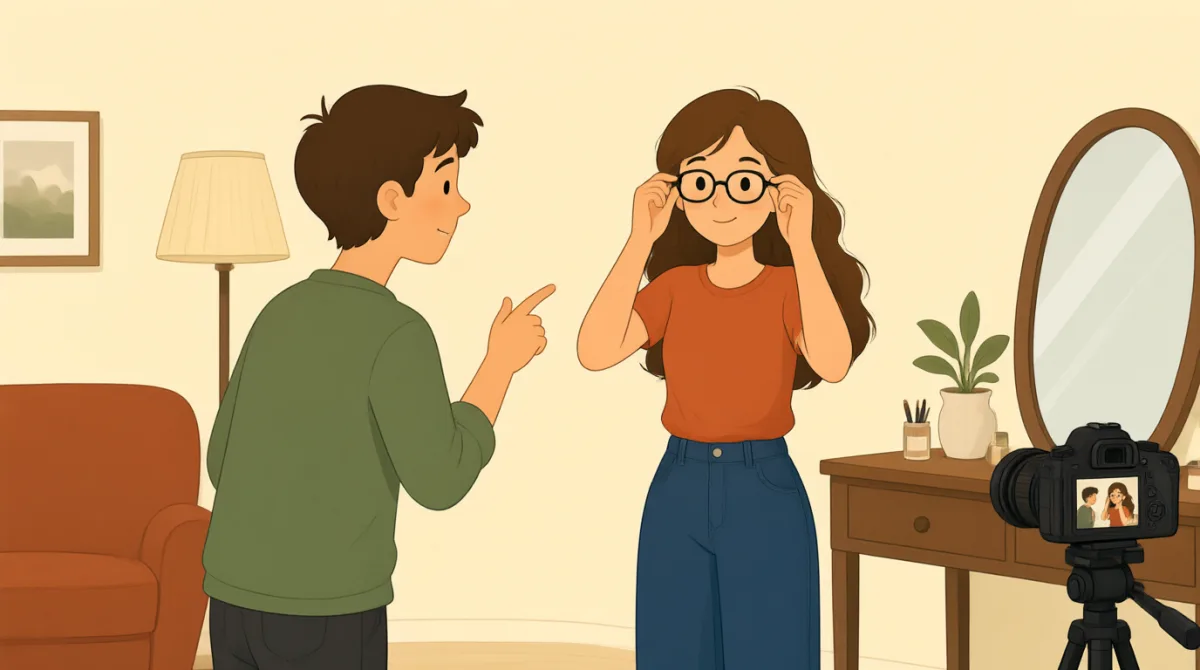

All right, Emma. Please take off your glasses before we take the photo.
ठीक है, एमा। तस्वीर खींचने से पहले कृपया अपना चश्मा उतार दीजिए।

Oh, sure. Should I put them on the table?
ओह, ठीक है। क्या मैं इसे मेज़ पर रख दूँ?
Yes, please. Then stand on the mark in front of the camera.
हाँ, ज़रूर। फिर कैमरे के सामने निशान पर खड़ी हो जाइए।
Like this? I hope I’m standing in the right place.
ऐसे? उम्मीद है कि मैं सही जगह पर खड़ी हूँ।
That’s right. Move a little closer to the camera, please.
बिल्कुल सही। कृपया कैमरे के थोड़ा और पास आ जाइए।
Okay. Should I look straight at the camera now?
ठीक है। क्या अब मुझे सीधे कैमरे की ओर देखना चाहिए?
Yes. Keep your head straight, and I’ll get you ready.
हाँ। अपना सिर सीधा रखिए, मैं आपको तैयार कर देता हूँ।
All right. Let me know when you’re ready to take it.
ठीक है। तस्वीर खींचने के लिए तैयार हो जाऊँ, तो मुझे बता दीजिएगा।
शब्दावली8
- take off your glassesअपना चश्मा उतारना
This means to remove your glasses. Use “take off” when you remove something you are wearing.
इसका मतलब है अपना चश्मा निकालना। पहनी हुई कोई चीज़ उतारने के लिए “take off” कहते हैं।
- put them on the tableचश्मा मेज़ पर रखना
This means to place the glasses on the table. You can use “put [something] on [a place]” to say where you leave an object.
इसका मतलब है चश्मे को मेज़ पर रखना। किसी वस्तु को कहाँ रख रहे हैं, यह बताने के लिए “put [something] on [a place]” का इस्तेमाल कर सकते हैं।
- stand on the markनिशान पर खड़ा होना
This means to stand on the spot marked on the floor. It is useful when someone tells you where to stand.
इसका मतलब है फ़र्श पर बने निशान वाली जगह पर खड़ा होना। जब कोई आपको बताता है कि कहाँ खड़ा होना है, तब यह वाक्यांश काम आता है।
- in front of the cameraकैमरे के सामने
This means in the place facing the camera. You can use “in front of” to describe where someone or something is.
इसका मतलब है कैमरे की ओर मुँह करके उसके सामने वाली जगह पर होना। किसी व्यक्ति या चीज़ की जगह बताने के लिए “in front of” का इस्तेमाल कर सकते हैं।
- a little closerथोड़ा और पास
This means slightly nearer. Use it to ask someone to move nearer without going too far.
इसका मतलब है थोड़ा नज़दीक। किसी से ज़्यादा दूर आए बिना पास आने के लिए कहने में इसका इस्तेमाल करें।
- look straight at the cameraसीधे कैमरे की ओर देखना
This means to face the camera and look directly at it. It is a useful instruction for taking photos.
इसका मतलब है कैमरे की ओर मुँह करके सीधे उसकी तरफ़ देखना। तस्वीर खींचते समय यह एक उपयोगी निर्देश है।
- keep your head straightअपना सिर सीधा रखना
This means to hold your head upright and not tilt it. It is a simple instruction for posing for a photo.
इसका मतलब है सिर को सीधा रखना और उसे एक ओर न झुकाना। तस्वीर के लिए पोज़ देते समय यह एक आसान निर्देश है।
- Let me know when you’re ready to take it.तस्वीर खींचने के लिए तैयार हो जाओ, तो मुझे बता देना।
This means to tell me when you are ready to take the photo. You can use “Let me know when…” to ask someone to tell you when something happens.
इसका मतलब है तस्वीर खींचने के लिए तैयार होने पर मुझे बताना। किसी से यह कहने के लिए कि किसी बात के होने पर वह आपको बताए, “Let me know when…” का इस्तेमाल कर सकते हैं।
मुख्य वाक्य8
- 1
Please take off your glasses before we take the photo.
तस्वीर खींचने से पहले कृपया अपना चश्मा उतार दीजिए।
Use this polite sentence to ask someone to remove their glasses before a photo. You can replace “your glasses” with another item of clothing or accessory.
तस्वीर खींचने से पहले किसी से उसका चश्मा उतारने के लिए विनम्रता से कहने हेतु इस वाक्य का इस्तेमाल करें। “your glasses” की जगह कपड़ों या किसी दूसरी पहनी जाने वाली चीज़ का नाम रख सकते हैं।
- 2
Should I put them on the table?
क्या मैं इसे मेज़ पर रख दूँ?
Use “Should I…?” to ask what you ought to do. “Them” refers to the glasses, and you can replace it with another object.
क्या करना चाहिए, यह पूछने के लिए “Should I…?” का इस्तेमाल करें। “Them” यहाँ चश्मे के लिए है; इसकी जगह किसी दूसरी वस्तु का ज़िक्र कर सकते हैं।
- 3
Then stand on the mark in front of the camera.
फिर कैमरे के सामने निशान पर खड़ी हो जाइए।
This gives someone a clear direction about where to stand. You can change the place or object to give other simple instructions.
इस वाक्य में किसी को साफ़-साफ़ बताया जाता है कि कहाँ खड़ा होना है। दूसरे आसान निर्देश देने के लिए जगह या वस्तु का नाम बदल सकते हैं।
- 4
I hope I’m standing in the right place.
उम्मीद है कि मैं सही जगह पर खड़ी हूँ।
Use this sentence when you are unsure whether you are in the correct spot. You can replace “standing” with another action, such as “waiting” or “sitting.”
जब आपको पक्का न हो कि आप सही जगह पर हैं या नहीं, तब यह वाक्य कहें। “Standing” की जगह “waiting” या “sitting” जैसी कोई दूसरी क्रिया रख सकते हैं।
- 5
Move a little closer to the camera, please.
कृपया कैमरे के थोड़ा और पास आ जाइए।
This is a polite way to ask someone to come nearer. Replace “the camera” with the person or place they should move closer to.
किसी से पास आने के लिए कहने का यह एक विनम्र तरीका है। “the camera” की जगह उस व्यक्ति या जगह का नाम रख सकते हैं जिसके पास जाने को कहना है।
- 6
Should I look straight at the camera now?
क्या अब मुझे सीधे कैमरे की ओर देखना चाहिए?
Use this question to check what you should do next. You can replace “look straight at the camera” with another action.
आगे क्या करना चाहिए, यह पूछने के लिए इस सवाल का इस्तेमाल करें। “look straight at the camera” की जगह कोई दूसरी क्रिया रख सकते हैं।
- 7
Keep your head straight, and I’ll get you ready.
अपना सिर सीधा रखिए, मैं आपको तैयार कर देता हूँ।
This combines an instruction with an offer to help. You can use “Keep your…” to give someone a simple direction.
इस वाक्य में एक निर्देश के साथ मदद करने की पेशकश भी है। किसी को आसान निर्देश देने के लिए “Keep your…” का इस्तेमाल कर सकते हैं।
- 8
Let me know when you’re ready to take it.
तस्वीर खींचने के लिए तैयार हो जाऊँ, तो मुझे बता दीजिएगा।
Use this to ask someone to tell you when they are ready. Here, “it” means the photo; in other situations, it can refer to another activity or item.
किसी से तैयार होने पर आपको बताने के लिए कहने हेतु इस वाक्य का इस्तेमाल करें। यहाँ “it” का मतलब तस्वीर है; दूसरी स्थितियों में इसका मतलब कोई और गतिविधि या चीज़ हो सकता है।