Talking With Guests Afterwards
Hablando con los invitados después
After the toast, guests tell Leo they enjoyed his story, and he chats with Jack and Mia about how the speech went. He admits he was nervous at first but is glad he spoke from the heart.
Después del brindis, los invitados le dicen a Leo que les gustó su historia, y él charla con Jack y Mia sobre cómo salió el discurso. Admite que al principio estaba nervioso, pero se alegra de haber hablado con el corazón.
Diálogo9
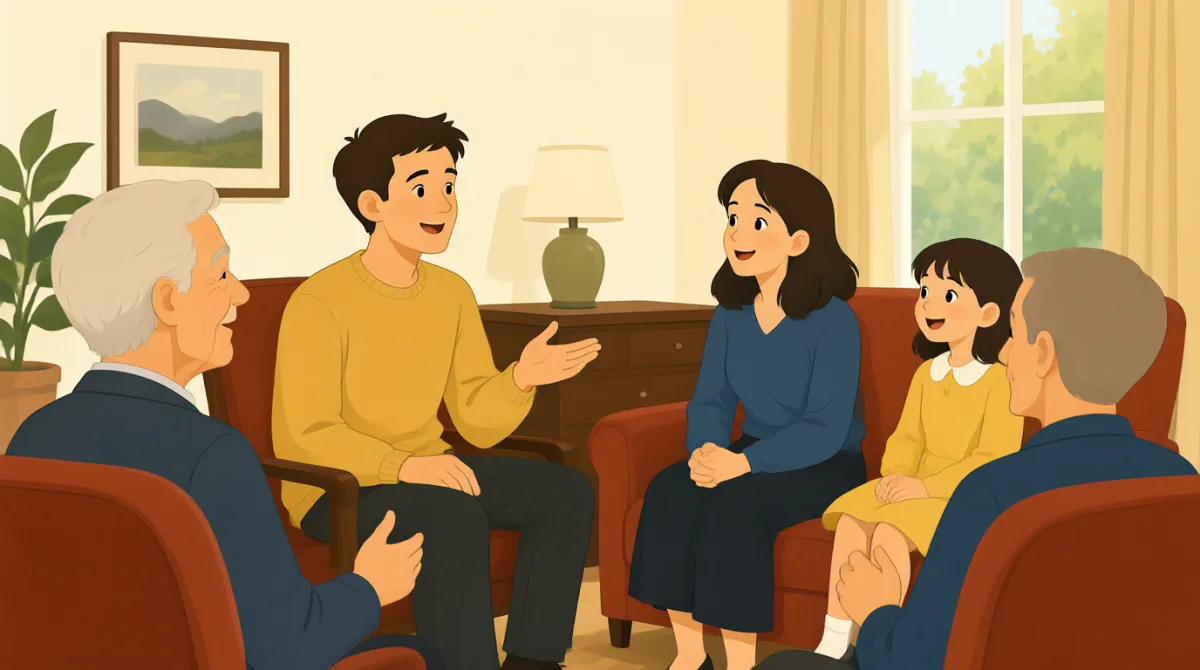

Leo, that was a great toast. You made everyone laugh, and then you said exactly what Mia and I needed to hear.
Leo, el brindis estuvo genial. Hiciste reír a todos y luego dijiste justo lo que Mia y yo necesitábamos oír.

Thanks. I was pretty nervous at first, but once I started telling the story, it felt more natural.
Gracias. Al principio estaba bastante nervioso, pero, en cuanto empecé a contar la historia, me sentí más cómodo.

You could tell it came from the heart. I loved how you showed that Jack always thinks of other people.
Se notaba que te salía del corazón. Me encantó cómo mostraste que Jack siempre piensa en los demás.
That’s one of the things I admire about him. And you bring out his thoughtful side even more, Mia.
Eso es algo que admiro de él. Y tú haces que muestre aún más su lado considerado, Mia.
I’m glad you went with that story. It was funny without embarrassing either of us, which is harder than it sounds.
Me alegra que eligieras esa historia. Fue divertida sin avergonzarnos a ninguno de los dos, y eso es más difícil de lo que parece.
I almost rushed through the ending, but I remembered to slow down. Seeing everyone smile helped me relax.
Casi digo el final demasiado rápido, pero me acordé de ir más despacio. Ver a todos sonreír me ayudó a relajarme.
You did a lovely job. Thank you for making this moment feel even more special for us.
Lo hiciste muy bien. Gracias por hacer que este momento fuera aún más especial para nosotros.
I’m really glad I said yes. I was worried I’d freeze up, but speaking honestly made all the difference.
Me alegra mucho haber dicho que sí. Me preocupaba quedarme en blanco, pero hablar con sinceridad marcó la diferencia.
Well, you’ve earned yourself a piece of wedding cake—and don’t worry, there’s plenty to go around.
Bueno, te has ganado un trozo de pastel de boda; y no te preocupes, hay de sobra para todos.
Vocabulario8
- pretty nervousbastante nervioso
Quite anxious or worried. Use “pretty” before an adjective to make it sound conversational, as in “I was pretty nervous before the interview.”
Significa estar bastante ansioso o preocupado. Usa “pretty” antes de un adjetivo para darle un tono conversacional, como en “I was pretty nervous before the interview.” (Estaba bastante nervioso antes de la entrevista).
- came from the heartsalió del corazón
Was sincere and expressed genuine feelings. You can say this about a speech, message, or gift that feels honest and personal.
Significa que algo fue sincero y expresó sentimientos genuinos. Puedes decirlo de un discurso, un mensaje o un regalo que se siente honesto y personal.
- bring out his thoughtful sidehacer que muestre su lado considerado
Help him show more of his caring and considerate nature. “Bring out someone’s [quality]” is useful for describing how a person or situation encourages a quality.
Ayudarlo a mostrar más su naturaleza afectuosa y atenta. “Bring out someone’s [quality]” sirve para describir cómo una persona o situación anima a alguien a mostrar una cualidad.
- went with that storyelegiste esa historia
Chose to use that story. “Go with” is a natural conversational way to talk about choosing an option.
Significa que decidiste usar esa historia. “Go with” es una forma natural y conversacional de hablar de elegir una opción.
- rushed through the endingdije el final demasiado rápido
Said or did the ending too quickly. “Rush through” can describe doing any part of a task without taking enough time.
Significa que dijiste o hiciste el final con demasiada rapidez. “Rush through” puede describir hacer cualquier parte de una tarea sin dedicarle suficiente tiempo.
- freeze upquedarse en blanco
Become unable to speak or act because you feel nervous. You can use it when talking about presentations, interviews, or other stressful moments.
Quedarse sin poder hablar o actuar por los nervios. Puedes usar esta expresión al hablar de presentaciones, entrevistas u otros momentos estresantes.
- made all the differencemarcó la diferencia
Had a very important and positive effect. Use this phrase to explain what helped a situation turn out better.
Tuvo un efecto muy importante y positivo. Usa esta expresión para explicar qué ayudó a que una situación saliera mejor.
- plenty to go aroundhay de sobra para todos
More than enough for everyone to have some. This friendly phrase is useful when offering food, drinks, or other shared things.
Hay más que suficiente para que todos puedan tener un poco. Esta expresión amable sirve al ofrecer comida, bebidas u otras cosas para compartir.
Frases clave8
- 1
I was pretty nervous at first, but once I started telling the story, it felt more natural.
Al principio estaba bastante nervioso, pero, en cuanto empecé a contar la historia, me sentí más cómodo.
This sentence describes how an activity became easier after you began. Reuse “I was nervous at first, but once I started…” to talk about presentations, conversations, or new experiences.
Esta frase describe cómo una actividad se volvió más fácil después de empezar. Puedes reutilizar “I was nervous at first, but once I started…” (Al principio estaba nervioso, pero en cuanto empecé…) para hablar de presentaciones, conversaciones o experiencias nuevas.
- 2
You could tell it came from the heart.
Se notaba que te salía del corazón.
This is a warm way to say that someone’s words felt sincere. You can use “You could tell…” to share an impression based on what someone said or did.
Es una forma cálida de decir que las palabras de alguien sonaron sinceras. Puedes usar “You could tell…” para compartir una impresión basada en lo que alguien dijo o hizo.
- 3
I loved how you showed that Jack always thinks of other people.
Me encantó cómo mostraste que Jack siempre piensa en los demás.
This sentence gives a specific reason for liking something. Reuse “I loved how you showed that…” to compliment someone’s writing, speech, or actions.
Esta frase da una razón concreta para que algo te guste. Puedes reutilizar “I loved how you showed that…” para elogiar lo que alguien escribió, dijo o hizo.
- 4
I’m glad you went with that story.
Me alegra que eligieras esa historia.
This is a natural way to say you think someone made a good choice. Replace “that story” with another option, such as “that restaurant” or “the earlier train.”
Es una forma natural de decir que crees que alguien tomó una buena decisión. Sustituye “that story” por otra opción, como “that restaurant” o “the earlier train”.
- 5
Seeing everyone smile helped me relax.
Ver a todos sonreír me ayudó a relajarme.
This explains what made the speaker feel calmer. Use “Seeing [someone] [do something] helped me…” to describe what made a situation easier.
Esta frase explica qué hizo que quien habla se sintiera más tranquilo. Usa “Seeing [someone] [do something] helped me…” para describir qué hizo que una situación resultara más fácil.
- 6
I was worried I’d freeze up, but speaking honestly made all the difference.
Me preocupaba quedarme en blanco, pero hablar con sinceridad marcó la diferencia.
This sentence contrasts a fear with what ultimately helped. Reuse “I was worried I’d…, but…” to describe overcoming a concern, and “made all the difference” to emphasize what helped.
Esta frase contrapone un temor con lo que al final ayudó. Reutiliza “I was worried I’d…, but…” para describir cómo superaste una preocupación, y “made all the difference” para destacar qué fue lo que ayudó.
- 7
Thank you for making this moment feel even more special for us.
Gracias por hacer que este momento fuera aún más especial para nosotros.
This is a warm, thoughtful way to thank someone for adding to an important occasion. You can adapt it for celebrations by changing “this moment” to “the day” or “the evening.”
Es una forma cálida y considerada de agradecer a alguien por contribuir a una ocasión importante. Puedes adaptarla para celebraciones cambiando “this moment” por “the day” o “the evening”.
- 8
Well, you’ve earned yourself a piece of wedding cake—and don’t worry, there’s plenty to go around.
Bueno, te has ganado un trozo de pastel de boda; y no te preocupes, hay de sobra para todos.
This playful sentence rewards someone and reassures them that there is enough to share. Reuse “You’ve earned yourself…” as a lighthearted offer after someone has done something well.
Esta frase juguetona recompensa a alguien y le asegura que hay suficiente para compartir. Reutiliza “You’ve earned yourself…” como una oferta desenfadada después de que alguien haya hecho algo bien.