Talking With Guests Afterwards
बाद में मेहमानों से बातचीत
After the toast, guests tell Leo they enjoyed his story, and he chats with Jack and Mia about how the speech went. He admits he was nervous at first but is glad he spoke from the heart.
टोस्ट के बाद, मेहमान लियो से कहते हैं कि उन्हें उसकी कहानी पसंद आई। फिर वह जैक और मिया से भाषण के बारे में बातचीत करता है। वह मानता है कि शुरुआत में वह घबराया हुआ था, लेकिन उसे खुशी है कि उसने दिल से अपनी बात कही।
संवाद9
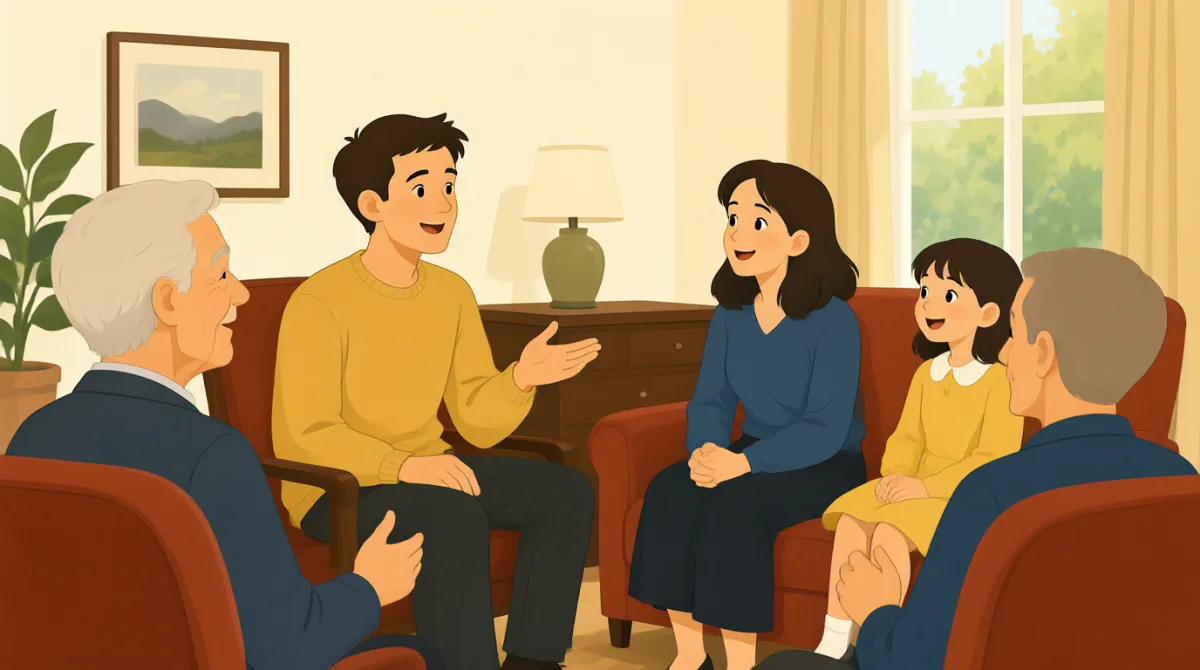

Leo, that was a great toast. You made everyone laugh, and then you said exactly what Mia and I needed to hear.
लियो, तुम्हारा टोस्ट बहुत बढ़िया था। तुमने सबको हँसा दिया, और फिर तुमने वही कहा जो मिया और मुझे सुनने की ज़रूरत थी।

Thanks. I was pretty nervous at first, but once I started telling the story, it felt more natural.
शुक्रिया। शुरुआत में मैं काफ़ी घबराया हुआ था, लेकिन जैसे ही मैंने कहानी सुनानी शुरू की, सब ज़्यादा सहज लगने लगा।

You could tell it came from the heart. I loved how you showed that Jack always thinks of other people.
साफ़ पता चल रहा था कि तुमने दिल से कहा। मुझे बहुत अच्छा लगा कि तुमने दिखाया कि जैक हमेशा दूसरों के बारे में सोचता है।
That’s one of the things I admire about him. And you bring out his thoughtful side even more, Mia.
यह उन बातों में से एक है जिसकी मैं उसमें क़दर करता हूँ। और मिया, तुम उसका संवेदनशील पक्ष और भी उभार देती हो।
I’m glad you went with that story. It was funny without embarrassing either of us, which is harder than it sounds.
मुझे खुशी है कि तुमने वही कहानी चुनी। वह मज़ेदार थी, लेकिन हम दोनों में से किसी को भी शर्मिंदा नहीं किया—यह करना सुनने में जितना आसान लगता है, उससे मुश्किल है।
I almost rushed through the ending, but I remembered to slow down. Seeing everyone smile helped me relax.
मैं लगभग आख़िरी हिस्सा जल्दी-जल्दी बोलने लगा था, लेकिन मुझे याद आया कि धीरे बोलना है। सबको मुस्कुराते देखकर मुझे सुकून मिला।
You did a lovely job. Thank you for making this moment feel even more special for us.
तुमने बहुत सुंदर काम किया। हमारे लिए इस पल को और भी ख़ास बनाने के लिए शुक्रिया।
I’m really glad I said yes. I was worried I’d freeze up, but speaking honestly made all the difference.
मुझे सच में खुशी है कि मैंने हाँ कहा। मुझे डर था कि मैं घबरा कर बोल ही नहीं पाऊँगा, लेकिन ईमानदारी से बोलने से सब कुछ बदल गया।
Well, you’ve earned yourself a piece of wedding cake—and don’t worry, there’s plenty to go around.
ख़ैर, अब तुम्हारा इनाम है शादी का केक—और चिंता मत करो, सबके लिए काफ़ी है।
शब्दावली8
- pretty nervousकाफ़ी घबराया हुआ
Quite anxious or worried. Use “pretty” before an adjective to make it sound conversational, as in “I was pretty nervous before the interview.”
काफ़ी चिंतित या बेचैन। बातचीत में किसी विशेषण को थोड़ा हल्का और सहज बनाने के लिए “pretty” उससे पहले आता है, जैसे “I was pretty nervous before the interview.” (मैं इंटरव्यू से पहले काफ़ी घबराया हुआ था।)
- came from the heartदिल से कहा
Was sincere and expressed genuine feelings. You can say this about a speech, message, or gift that feels honest and personal.
बात सच्ची भावना और ईमानदारी से कही गई। यह किसी भाषण, संदेश या तोहफ़े के लिए कह सकते हैं, जो सच्चा और निजी लगे।
- bring out his thoughtful sideउसका संवेदनशील पक्ष उभारना
Help him show more of his caring and considerate nature. “Bring out someone’s [quality]” is useful for describing how a person or situation encourages a quality.
उसे अपना ख़याल रखने वाला और दूसरों का लिहाज़ करने वाला स्वभाव ज़्यादा दिखाने में मदद करना। किसी व्यक्ति या परिस्थिति के किसी गुण को बढ़ावा देने की बात के लिए “Bring out someone’s [quality]” काम का वाक्यांश है।
- went with that storyवह कहानी चुनना
Chose to use that story. “Go with” is a natural conversational way to talk about choosing an option.
उस कहानी का इस्तेमाल करने का चुनाव करना। किसी विकल्प को चुनने की बात बातचीत में सहज ढंग से कहने के लिए “Go with” इस्तेमाल होता है।
- rushed through the endingआख़िरी हिस्सा जल्दी-जल्दी बोलना
Said or did the ending too quickly. “Rush through” can describe doing any part of a task without taking enough time.
अंत का हिस्सा बहुत जल्दी कहना या करना। “Rush through” का इस्तेमाल किसी भी काम के हिस्से को पर्याप्त समय दिए बिना जल्दी-जल्दी करने के लिए किया जा सकता है।
- freeze upघबरा कर बोल न पाना
Become unable to speak or act because you feel nervous. You can use it when talking about presentations, interviews, or other stressful moments.
घबराहट के कारण बोल या काम न कर पाना। प्रस्तुतियों, इंटरव्यू या तनावपूर्ण पलों के बारे में बात करते समय इसका इस्तेमाल कर सकते हैं।
- made all the differenceसब कुछ बदल देना
Had a very important and positive effect. Use this phrase to explain what helped a situation turn out better.
बहुत अहम और सकारात्मक असर डालना। यह बताने के लिए इस वाक्यांश का इस्तेमाल करें कि किस चीज़ ने किसी स्थिति को बेहतर बनाने में मदद की।
- plenty to go aroundसबके लिए काफ़ी होना
More than enough for everyone to have some. This friendly phrase is useful when offering food, drinks, or other shared things.
इतना होना कि हर किसी को कुछ मिल सके और फिर भी पर्याप्त बचे। खाना, पेय या बाँटकर इस्तेमाल की जाने वाली दूसरी चीज़ें पेश करते समय यह दोस्ताना वाक्यांश काम आता है।
मुख्य वाक्य8
- 1
I was pretty nervous at first, but once I started telling the story, it felt more natural.
शुरुआत में मैं काफ़ी घबराया हुआ था, लेकिन जैसे ही मैंने कहानी सुनानी शुरू की, सब ज़्यादा सहज लगने लगा।
This sentence describes how an activity became easier after you began. Reuse “I was nervous at first, but once I started…” to talk about presentations, conversations, or new experiences.
यह वाक्य बताता है कि कोई काम शुरू करने के बाद कैसे आसान लगने लगा। प्रस्तुतियों, बातचीत या नए अनुभवों के बारे में बात करने के लिए “I was nervous at first, but once I started…” का फिर से इस्तेमाल करें।
- 2
You could tell it came from the heart.
साफ़ पता चल रहा था कि तुमने दिल से कहा।
This is a warm way to say that someone’s words felt sincere. You can use “You could tell…” to share an impression based on what someone said or did.
किसी की बात सच्ची लगी, यह कहने का यह एक आत्मीय तरीका है। किसी की कही या की गई बात के आधार पर अपना एहसास बताने के लिए “You could tell…” इस्तेमाल कर सकते हैं।
- 3
I loved how you showed that Jack always thinks of other people.
मुझे बहुत अच्छा लगा कि तुमने दिखाया कि जैक हमेशा दूसरों के बारे में सोचता है।
This sentence gives a specific reason for liking something. Reuse “I loved how you showed that…” to compliment someone’s writing, speech, or actions.
यह वाक्य किसी चीज़ को पसंद करने का एक खास कारण बताता है। किसी की लिखी बात, भाषण या काम की तारीफ़ करने के लिए “I loved how you showed that…” का फिर से इस्तेमाल करें।
- 4
I’m glad you went with that story.
मुझे खुशी है कि तुमने वही कहानी चुनी।
This is a natural way to say you think someone made a good choice. Replace “that story” with another option, such as “that restaurant” or “the earlier train.”
किसी को यह बताने का सहज तरीका है कि तुम्हें लगता है उसने अच्छा चुनाव किया। “that story” की जगह कोई दूसरा विकल्प रख सकते हैं, जैसे “that restaurant” या “the earlier train.”
- 5
Seeing everyone smile helped me relax.
सबको मुस्कुराते देखकर मुझे सुकून मिला।
This explains what made the speaker feel calmer. Use “Seeing [someone] [do something] helped me…” to describe what made a situation easier.
यह बताता है कि किस चीज़ ने बोलने वाले को शांत महसूस कराया। यह बताने के लिए कि किस चीज़ ने स्थिति को आसान बनाया, “Seeing [someone] [do something] helped me…” इस्तेमाल करें।
- 6
I was worried I’d freeze up, but speaking honestly made all the difference.
मुझे डर था कि मैं घबरा कर बोल ही नहीं पाऊँगा, लेकिन ईमानदारी से बोलने से सब कुछ बदल गया।
This sentence contrasts a fear with what ultimately helped. Reuse “I was worried I’d…, but…” to describe overcoming a concern, and “made all the difference” to emphasize what helped.
यह वाक्य एक डर और आख़िरकार मददगार साबित हुई चीज़ के बीच अंतर दिखाता है। किसी चिंता से उबरने की बात के लिए “I was worried I’d…, but…” का फिर से इस्तेमाल करें। किस चीज़ ने मदद की, इस पर ज़ोर देने के लिए “made all the difference” कहें।
- 7
Thank you for making this moment feel even more special for us.
हमारे लिए इस पल को और भी ख़ास बनाने के लिए शुक्रिया।
This is a warm, thoughtful way to thank someone for adding to an important occasion. You can adapt it for celebrations by changing “this moment” to “the day” or “the evening.”
किसी अहम अवसर को और ख़ास बनाने के लिए धन्यवाद देने का यह आत्मीय और सोच-समझकर कहा गया तरीका है। जश्न के मौक़ों पर इसे ढालने के लिए “this moment” की जगह “the day” या “the evening” कहें।
- 8
Well, you’ve earned yourself a piece of wedding cake—and don’t worry, there’s plenty to go around.
ख़ैर, अब तुम्हारा इनाम है शादी का केक—और चिंता मत करो, सबके लिए काफ़ी है।
This playful sentence rewards someone and reassures them that there is enough to share. Reuse “You’ve earned yourself…” as a lighthearted offer after someone has done something well.
यह मज़ाकिया वाक्य किसी को उसके अच्छे काम का इनाम देता है और भरोसा दिलाता है कि बाँटने के लिए पर्याप्त है। किसी के कुछ अच्छा करने के बाद हल्के-फुल्के अंदाज़ में कुछ देने के लिए “You’ve earned yourself…” का फिर से इस्तेमाल करें।