Making a List of Questions
प्रश्नों की सूची बनाना
Emma and Jack prepare questions before visiting nearby daycares. They decide to ask about staff experience, safety, daily routines, and fees.
एमा और जैक पास के डेकेयर केंद्रों में जाने से पहले सवाल तैयार करते हैं। वे कर्मचारियों के अनुभव, सुरक्षा, रोज़मर्रा की दिनचर्या और शुल्क के बारे में पूछने का फैसला करते हैं।
संवाद8
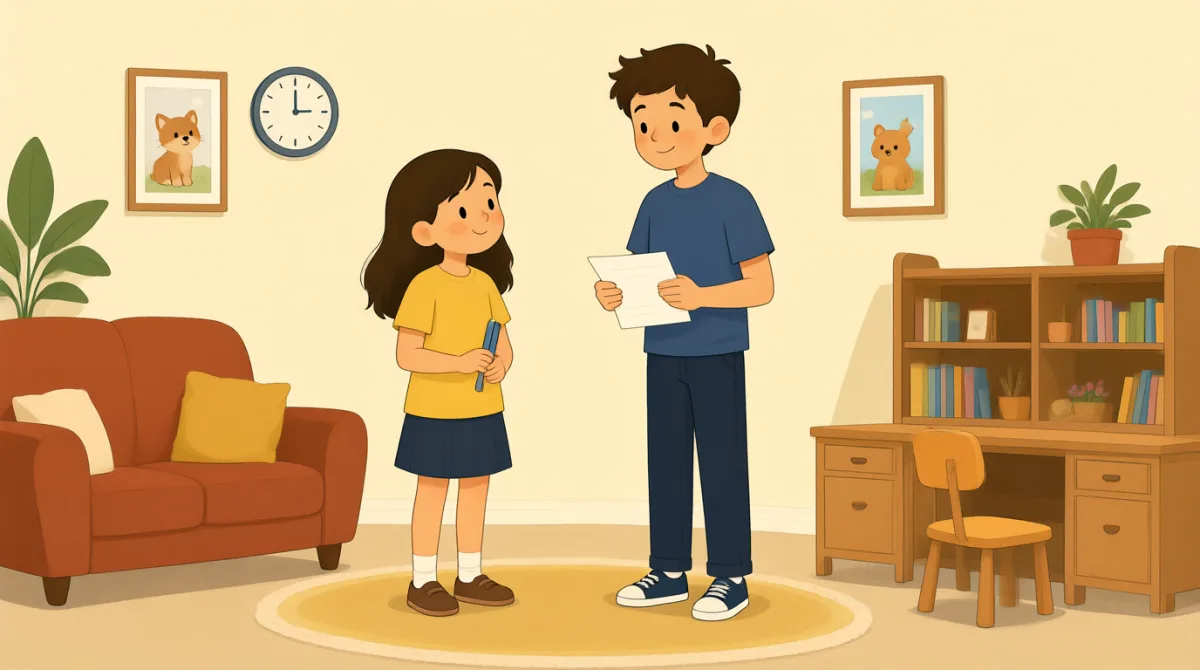

I found three daycares near us. Before we visit, let’s make a list of questions so we don’t forget anything.
मुझे हमारे पास तीन डेकेयर केंद्र मिले हैं। वहाँ जाने से पहले, चलो सवालों की एक सूची बना लें, ताकि हम कुछ भूल न जाएँ।

Good idea. We should ask how much experience the staff have and whether they’re trained in first aid.
अच्छा विचार है। हमें पूछना चाहिए कि कर्मचारियों को कितना अनुभव है और क्या उन्हें प्राथमिक उपचार का प्रशिक्षण मिला है।
Definitely. And we should ask how many children each staff member looks after. I want to know they’ll get enough attention.
बिल्कुल। हमें यह भी पूछना चाहिए कि हर कर्मचारी कितने बच्चों की देखभाल करता है। मैं जानना चाहती हूँ कि बच्चों को पर्याप्त ध्यान मिलेगा।
Let’s ask about safety, too—how they handle pick-ups, emergencies, and visitors. Those details really matter.
सुरक्षा के बारे में भी पूछते हैं—बच्चों को लेने आने वालों, आपात स्थितियों और आगंतुकों को वे कैसे संभालते हैं। ये बातें सचमुच मायने रखती हैं।
Right. I’d also like to know what a typical day looks like, including meals, naps, and outdoor play.
सही कहा। मैं यह भी जानना चाहूँगी कि आम तौर पर एक दिन कैसा होता है—खाने, झपकी और बाहर खेलने समेत।
We should check the fees and ask what’s included. Some places charge extra for meals or early drop-off.
हमें शुल्क भी देखना चाहिए और पूछना चाहिए कि उसमें क्या-क्या शामिल है। कुछ जगहों पर खाने या बच्चे को जल्दी छोड़ने के लिए अलग से पैसे लेते हैं।
Good point. Let’s ask about their hours and whether they offer flexible drop-off. Our schedules can change.
अच्छी बात है। चलो उनके समय के बारे में पूछते हैं और यह भी कि क्या वे बच्चे को छोड़ने के समय में लचीलापन देते हैं। हमारे समय बदल सकते हैं।
I’ll write everything down on my phone. Then we can compare the answers after we visit each place.
मैं सब कुछ अपने फ़ोन पर लिख लूँगा। फिर हर जगह जाने के बाद हम जवाबों की तुलना कर सकते हैं।
शब्दावली8
- make a list of questionsसवालों की सूची बनाना
To write down questions you want to ask. Here, Emma and Jack do this so they remember what to check at each daycare.
वे सवाल लिख लेना जो आप पूछना चाहते हैं। यहाँ एमा और जैक ऐसा इसलिए करते हैं, ताकि उन्हें याद रहे कि हर डेकेयर केंद्र में किन बातों की जाँच करनी है।
- trained in first aidप्राथमिक उपचार का प्रशिक्षित
Having learned how to give basic medical help in an emergency. You can ask whether staff members are trained in first aid.
आपात स्थिति में बुनियादी चिकित्सा सहायता देना सीखा हुआ होना। आप पूछ सकते हैं कि क्या कर्मचारियों को प्राथमिक उपचार का प्रशिक्षण मिला है।
- looks afterदेखभाल करना
Takes care of someone. Here, it describes how many children each staff member is responsible for.
किसी की देखभाल करना। यहाँ इसका मतलब है कि हर कर्मचारी कितने बच्चों की ज़िम्मेदारी संभालता है।
- get enough attentionपर्याप्त ध्यान मिलना
Receive enough care and notice from other people. You can use this phrase when talking about whether a child will be well cared for.
दूसरों से पर्याप्त देखभाल और ध्यान मिलना। यह वाक्यांश तब इस्तेमाल कर सकते हैं जब आप जानना चाहें कि बच्चे की अच्छी तरह देखभाल होगी या नहीं।
- handle pick-upsबच्चों को लेने आने वालों को संभालना
Manage the process of children being collected. It is useful when asking about a daycare’s safety procedures.
बच्चों को लेने आने की प्रक्रिया का प्रबंध करना। डेकेयर केंद्र की सुरक्षा व्यवस्था के बारे में पूछते समय यह काम का वाक्यांश है।
- what a typical day looks likeआम तौर पर एक दिन कैसा होता है
What usually happens during a normal day. You can use this phrase to ask about someone’s routine or a service’s schedule.
एक सामान्य दिन में आम तौर पर क्या होता है। किसी की दिनचर्या या किसी सेवा के समय-सारिणी के बारे में पूछने के लिए आप यह वाक्यांश इस्तेमाल कर सकते हैं।
- what’s includedशुल्क में क्या शामिल है
What is covered as part of a price or service. You can ask this before paying for childcare or another service.
किसी कीमत या सेवा के हिस्से के रूप में क्या मिलता है। बच्चों की देखभाल या किसी दूसरी सेवा के लिए भुगतान करने से पहले आप यह पूछ सकते हैं।
- flexible drop-offबच्चे को छोड़ने के समय में लचीलापन
A drop-off arrangement that can adjust to different schedules. Here, it means being able to bring a child in at different times.
बच्चे को छोड़ने की ऐसी व्यवस्था जिसमें अलग-अलग समय के अनुसार बदलाव किया जा सके। यहाँ इसका मतलब है कि बच्चे को अलग-अलग समय पर वहाँ लाया जा सकता है।
मुख्य वाक्य8
- 1
Before we visit, let’s make a list of questions so we don’t forget anything.
वहाँ जाने से पहले, चलो सवालों की एक सूची बना लें, ताकि हम कुछ भूल न जाएँ।
This is a natural way to suggest preparing before a visit. Use “let’s make a list of questions” when planning an appointment, tour, or meeting.
किसी जगह जाने से पहले तैयारी करने का सुझाव देने का यह एक स्वाभाविक तरीका है। किसी मुलाक़ात, जगह के दौरे या बैठक की योजना बनाते समय “let’s make a list of questions” कहें।
- 2
We should ask how much experience the staff have and whether they’re trained in first aid.
हमें पूछना चाहिए कि कर्मचारियों को कितना अनुभव है और क्या उन्हें प्राथमिक उपचार का प्रशिक्षण मिला है।
This sentence combines two useful questions about staff qualifications. Reuse “We should ask…” to suggest information to check before making a decision.
इस वाक्य में कर्मचारियों की योग्यता से जुड़े दो उपयोगी सवाल हैं। कोई फ़ैसला करने से पहले जाँचने वाली जानकारी का सुझाव देने के लिए “We should ask…” का फिर से इस्तेमाल करें।
- 3
And we should ask how many children each staff member looks after.
हमें यह भी पूछना चाहिए कि हर कर्मचारी कितने बच्चों की देखभाल करता है।
This is a clear way to ask about the number of people one staff member cares for. Replace “children” with another group, such as customers or students, to fit a different situation.
एक कर्मचारी कितने लोगों की देखभाल करता है, यह पूछने का यह स्पष्ट तरीका है। दूसरी परिस्थिति के लिए “children” की जगह कोई और समूह, जैसे ग्राहक या विद्यार्थी, रख सकते हैं।
- 4
Those details really matter.
ये बातें सचमुच मायने रखती हैं।
This short sentence emphasizes that some information is important. Use it after mentioning details that could affect a decision.
यह छोटा-सा वाक्य ज़ोर देकर बताता है कि कुछ जानकारी अहम है। किसी फ़ैसले पर असर डाल सकने वाली बातें बताने के बाद इसका इस्तेमाल करें।
- 5
I’d also like to know what a typical day looks like, including meals, naps, and outdoor play.
मैं यह भी जानना चाहूँगी कि आम तौर पर एक दिन कैसा होता है—खाने, झपकी और बाहर खेलने समेत।
This politely asks for a description of a normal routine. You can reuse “I’d also like to know…” to add another question.
यह विनम्रता से सामान्य दिनचर्या का ब्योरा माँगता है। एक और सवाल जोड़ने के लिए “I’d also like to know…” का फिर से इस्तेमाल कर सकते हैं।
- 6
We should check the fees and ask what’s included.
हमें शुल्क देखना चाहिए और पूछना चाहिए कि उसमें क्या-क्या शामिल है।
This is a useful way to make sure you understand the price and what it covers. Replace “fees” with “cost” or “price” when talking about other services.
यह पक्का करने का उपयोगी तरीका है कि आपको कीमत और उसमें शामिल चीज़ों की जानकारी है। दूसरी सेवाओं के बारे में बात करते समय “fees” की जगह “cost” या “price” रख सकते हैं।
- 7
Let’s ask about their hours and whether they offer flexible drop-off.
चलो उनके समय के बारे में पूछते हैं और यह भी कि क्या वे बच्चे को छोड़ने के समय में लचीलापन देते हैं।
This sentence suggests checking opening times and whether arrival times can vary. Use “whether they offer…” to ask if a business provides a particular option.
यह वाक्य खुलने के समय और आने के समय में बदलाव की सुविधा के बारे में पता करने का सुझाव देता है। यह पूछने के लिए कि कोई व्यवसाय कोई खास विकल्प देता है या नहीं, “whether they offer…” का इस्तेमाल करें।
- 8
Then we can compare the answers after we visit each place.
फिर हर जगह जाने के बाद हम जवाबों की तुलना कर सकते हैं।
This explains how to make a decision after gathering information. Reuse “compare the answers” when evaluating several services or options.
यह बताता है कि जानकारी इकट्ठा करने के बाद फ़ैसला कैसे लिया जा सकता है। अलग-अलग सेवाओं या विकल्पों का मूल्यांकन करते समय “compare the answers” का फिर से इस्तेमाल करें।