Finishing Your Tasks
Kończenie zadań
Emma and Jack check what still needs to be done. Emma finishes her report and hands Jack the notes he needs.
Emma i Jack sprawdzają, co jeszcze trzeba zrobić. Emma kończy raport i przekazuje Jackowi potrzebne notatki.
Dialog8
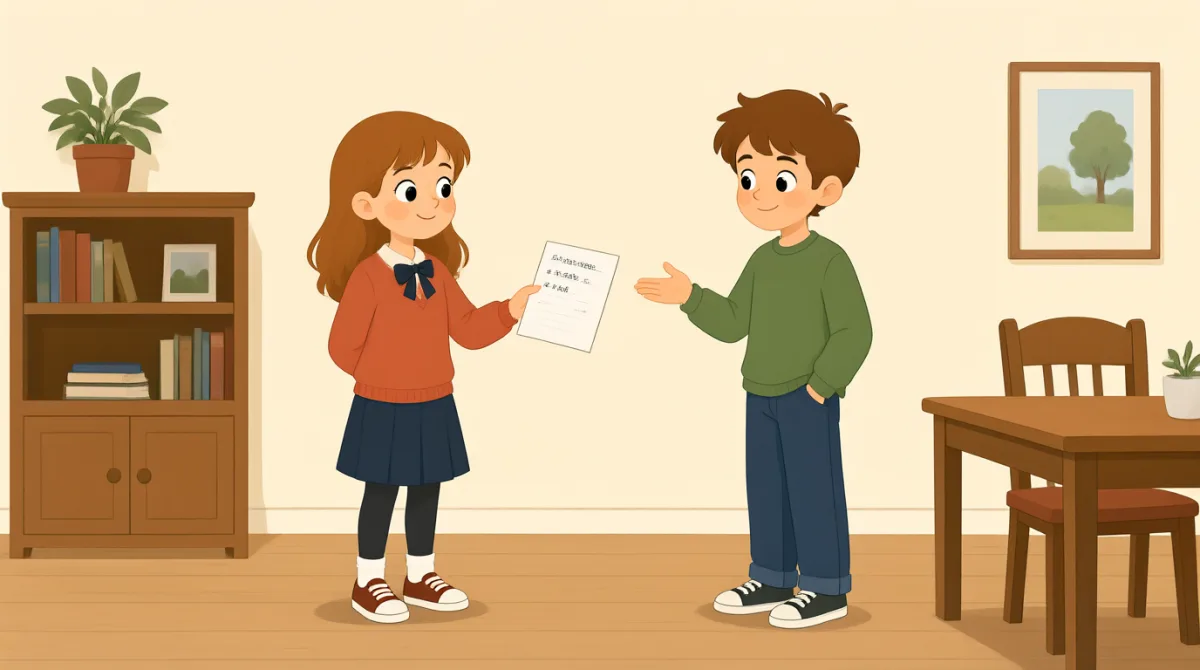

Jack, can you check what we still need to finish today?
Jack, możesz sprawdzić, co jeszcze musimy dziś skończyć?

Sure. The report is the main thing, and I still need your notes.
Jasne. Najważniejszy jest raport, a ja wciąż potrzebuję twoich notatek.
I’m finishing the report now. I’ll give you the notes in a minute.
Kończę teraz raport. Dam ci notatki za chwilę.
Thanks. Do you need help with any part of the report?
Dzięki. Potrzebujesz pomocy przy jakiejś części raportu?
No, I’m almost done. I just need to check these numbers.
Nie, prawie skończyłam. Muszę tylko sprawdzić te liczby.
Okay. I’ll look over the notes when you hand them to me.
Dobra. Przejrzę notatki, kiedy mi je przekażesz.
Here you go. These notes explain the last changes to the schedule.
Proszę. Te notatki wyjaśniają ostatnie zmiany w harmonogramie.
Got it. And the report looks finished. You’re all set to go.
Jasne. Raport też wygląda na skończony. Możesz już iść.
Słownictwo7
- check what we still need to finishsprawdzić, co jeszcze musimy skończyć
This means to review which tasks are not done yet. Use it when you want to find out what work remains.
To znaczy sprawdzić, które zadania nie są jeszcze wykonane. Użyj tego, gdy chcesz dowiedzieć się, jaka praca jeszcze pozostała.
- the main thingnajważniejsza sprawa
This means the most important task or issue. Use it to say what should get attention first.
To oznacza najważniejsze zadanie lub kwestię. Użyj tego, by powiedzieć, czym należy zająć się w pierwszej kolejności.
- in a minuteza chwilę
This means very soon, usually after a short wait. You can use it to say when you will do something.
To znaczy bardzo niedługo, zwykle po krótkim oczekiwaniu. Możesz tak powiedzieć, kiedy coś zrobisz.
- almost doneprawie skończony
This means nearly finished, but not completely finished yet. Use it to describe work that needs only a little more time.
To znaczy, że coś jest niemal gotowe, ale jeszcze nie całkiem. Użyj tego, mówiąc o pracy, która wymaga już tylko odrobiny czasu.
- look overprzejrzeć
This means to read or check something quickly and carefully. You can look over notes, a report, or a form.
To znaczy szybko, ale uważnie coś przeczytać lub sprawdzić. Możesz przejrzeć notatki, raport albo formularz.
- Here you go.Proszę.
This is a friendly way to give something to someone. Use it when handing over an item, such as notes or a document.
To przyjazny sposób, by podać komuś jakiś przedmiot. Użyj tego, przekazując na przykład notatki lub dokument.
- all set to gogotowy do wyjścia
This means ready to leave or do something. Use it to tell someone that everything is ready.
To znaczy gotowy do wyjścia albo do zrobienia czegoś. Użyj tego, by powiedzieć komuś, że wszystko jest już przygotowane.
Kluczowe zdania8
- 1
Jack, can you check what we still need to finish today?
Jack, możesz sprawdzić, co jeszcze musimy dziś skończyć?
Use this question to ask someone to review the tasks that remain. You can replace “today” with another time, such as “before the meeting.”
Użyj tego pytania, by poprosić kogoś o sprawdzenie, jakie zadania jeszcze zostały. Możesz zastąpić „today” innym określeniem czasu, na przykład „before the meeting”.
- 2
The report is the main thing, and I still need your notes.
Najważniejszy jest raport, a ja wciąż potrzebuję twoich notatek.
This sentence identifies the most important task and says what is still needed. Use “I still need your…” to ask for something that has not arrived yet.
To zdanie wskazuje najważniejsze zadanie i mówi, czego jeszcze brakuje. Użyj „I still need your…”, by poprosić o coś, co jeszcze nie dotarło.
- 3
I’ll give you the notes in a minute.
Dam ci notatki za chwilę.
Use this to promise to give someone something very soon. Replace “the notes” with another item, such as “the file.”
Użyj tego zdania, by obiecać, że dasz komuś coś już niedługo. Zastąp „the notes” innym przedmiotem, na przykład „the file”.
- 4
Do you need help with any part of the report?
Potrzebujesz pomocy przy jakiejś części raportu?
This is a useful way to offer help with a specific task. You can replace “the report” with another piece of work.
To przydatny sposób, by zaoferować pomoc przy konkretnym zadaniu. Możesz zastąpić „the report” inną pracą.
- 5
I just need to check these numbers.
Muszę tylko sprawdzić te liczby.
Use this sentence to explain the one small task you have left. Replace “check these numbers” with another action, such as “send this email.”
Użyj tego zdania, by wyjaśnić, jakie drobne zadanie zostało ci jeszcze do zrobienia. Zastąp „check these numbers” inną czynnością, na przykład „send this email”.
- 6
I’ll look over the notes when you hand them to me.
Przejrzę notatki, kiedy mi je przekażesz.
This explains what you will do after someone gives you something. Use “I’ll look over…” to say you will review a document or information.
To zdanie wyjaśnia, co zrobisz, gdy ktoś ci coś da. Użyj „I’ll look over…”, by powiedzieć, że przejrzysz dokument lub informacje.
- 7
Here you go.
Proszę.
Use this short, friendly phrase when handing something to another person. It works with objects such as notes, keys, or a cup of coffee.
Użyj tego krótkiego, przyjaznego zwrotu, gdy coś komuś podajesz. Pasuje do takich przedmiotów jak notatki, klucze czy filiżanka kawy.
- 8
You’re all set to go.
Możesz już iść.
Use this to tell someone they are ready to leave or begin. It is especially useful after checking that everything is finished.
Użyj tego, by powiedzieć komuś, że może już wyjść lub zaczynać. To szczególnie przydatne po sprawdzeniu, czy wszystko zostało zrobione.