Finishing Your Tasks
Aufgaben abschließen
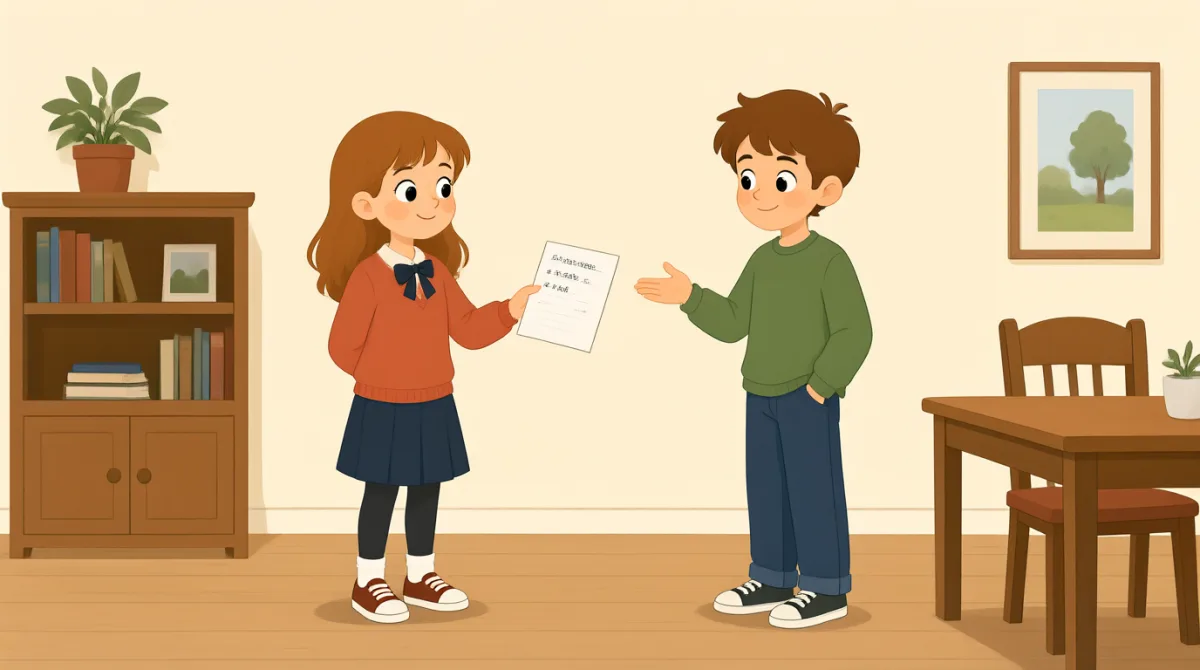
Emma and Jack check what still needs to be done. Emma finishes her report and hands Jack the notes he needs.
Emma und Jack prüfen, was noch zu erledigen ist. Emma beendet ihren Bericht und gibt Jack die Notizen, die er braucht.
Dialog8

Jack, can you check what we still need to finish today?
Jack, kannst du prüfen, was wir heute noch erledigen müssen?

Sure. The report is the main thing, and I still need your notes.
Klar. Der Bericht ist das Wichtigste, und ich brauche noch deine Notizen.
I’m finishing the report now. I’ll give you the notes in a minute.
Ich bin gerade dabei, den Bericht fertigzustellen. Ich gebe dir die Notizen gleich.
Thanks. Do you need help with any part of the report?
Danke. Brauchst du bei einem Teil des Berichts Hilfe?
No, I’m almost done. I just need to check these numbers.
Nein, ich bin fast fertig. Ich muss nur noch diese Zahlen überprüfen.
Okay. I’ll look over the notes when you hand them to me.
Okay. Ich schaue mir die Notizen an, wenn du sie mir gibst.
Here you go. These notes explain the last changes to the schedule.
Hier, bitte. In diesen Notizen stehen die letzten Änderungen am Zeitplan.
Got it. And the report looks finished. You’re all set to go.
Alles klar. Und der Bericht sieht fertig aus. Du kannst los.
Wortschatz7
- check what we still need to finishprüfen, was wir noch erledigen müssen
This means to review which tasks are not done yet. Use it when you want to find out what work remains.
Das bedeutet, sich anzusehen, welche Aufgaben noch nicht erledigt sind. Verwende die Wendung, wenn du herausfinden möchtest, welche Arbeit noch ansteht.
- the main thingdas Wichtigste
This means the most important task or issue. Use it to say what should get attention first.
Damit ist die wichtigste Aufgabe oder Angelegenheit gemeint. Verwende die Wendung, um zu sagen, worum man sich zuerst kümmern sollte.
- in a minutegleich
This means very soon, usually after a short wait. You can use it to say when you will do something.
Das bedeutet, dass etwas sehr bald passiert, normalerweise nach einer kurzen Wartezeit. Du kannst damit sagen, wann du etwas erledigen wirst.
- almost donefast fertig
This means nearly finished, but not completely finished yet. Use it to describe work that needs only a little more time.
Das bedeutet, dass etwas beinahe, aber noch nicht ganz abgeschlossen ist. Verwende die Wendung für eine Arbeit, für die du nur noch wenig Zeit brauchst.
- look oversich etwas ansehen
This means to read or check something quickly and carefully. You can look over notes, a report, or a form.
Das bedeutet, etwas zügig und sorgfältig zu lesen oder zu überprüfen. Du kannst dir Notizen, einen Bericht oder ein Formular ansehen.
- Here you go.Hier, bitte.
This is a friendly way to give something to someone. Use it when handing over an item, such as notes or a document.
Das ist eine freundliche Art, jemandem etwas zu geben. Verwende die Wendung, wenn du etwas überreichst, zum Beispiel Notizen oder ein Dokument.
- all set to gobereit zum Losgehen
This means ready to leave or do something. Use it to tell someone that everything is ready.
Das bedeutet, dass jemand bereit ist zu gehen oder etwas zu tun. Verwende die Wendung, um jemandem zu sagen, dass alles bereit ist.
Wichtige Sätze8
- 1
Jack, can you check what we still need to finish today?
Jack, kannst du prüfen, was wir heute noch erledigen müssen?
Use this question to ask someone to review the tasks that remain. You can replace “today” with another time, such as “before the meeting.”
Mit dieser Frage bittest du jemanden, die noch offenen Aufgaben durchzugehen. Du kannst „today“ durch einen anderen Zeitpunkt ersetzen, zum Beispiel „before the meeting“.
- 2
The report is the main thing, and I still need your notes.
Der Bericht ist das Wichtigste, und ich brauche noch deine Notizen.
This sentence identifies the most important task and says what is still needed. Use “I still need your…” to ask for something that has not arrived yet.
Dieser Satz nennt die wichtigste Aufgabe und sagt, was noch gebraucht wird. Verwende „I still need your…“, um nach etwas zu fragen, das noch nicht angekommen ist.
- 3
I’ll give you the notes in a minute.
Ich gebe dir die Notizen gleich.
Use this to promise to give someone something very soon. Replace “the notes” with another item, such as “the file.”
Verwende diesen Satz, um jemandem zu versprechen, dass du ihm sehr bald etwas gibst. Ersetze „the notes“ durch einen anderen Gegenstand, zum Beispiel „the file“.
- 4
Do you need help with any part of the report?
Brauchst du bei einem Teil des Berichts Hilfe?
This is a useful way to offer help with a specific task. You can replace “the report” with another piece of work.
So kannst du Hilfe bei einer bestimmten Aufgabe anbieten. Du kannst „the report“ durch eine andere Arbeit ersetzen.
- 5
I just need to check these numbers.
Ich muss nur noch diese Zahlen überprüfen.
Use this sentence to explain the one small task you have left. Replace “check these numbers” with another action, such as “send this email.”
Verwende diesen Satz, um zu erklären, welche kleine Aufgabe du noch erledigen musst. Ersetze „check these numbers“ durch eine andere Handlung, zum Beispiel „send this email“.
- 6
I’ll look over the notes when you hand them to me.
Ich schaue mir die Notizen an, wenn du sie mir gibst.
This explains what you will do after someone gives you something. Use “I’ll look over…” to say you will review a document or information.
Damit erklärst du, was du tun wirst, nachdem dir jemand etwas gegeben hat. Mit „I’ll look over…“ sagst du, dass du ein Dokument oder Informationen durchsehen wirst.
- 7
Here you go.
Hier, bitte.
Use this short, friendly phrase when handing something to another person. It works with objects such as notes, keys, or a cup of coffee.
Verwende diese kurze, freundliche Wendung, wenn du jemandem etwas gibst. Sie passt zu Gegenständen wie Notizen, Schlüsseln oder einer Tasse Kaffee.
- 8
You’re all set to go.
Du kannst los.
Use this to tell someone they are ready to leave or begin. It is especially useful after checking that everything is finished.
Damit sagst du jemandem, dass er bereit ist zu gehen oder anzufangen. Besonders nützlich ist die Wendung, nachdem du geprüft hast, ob alles erledigt ist.