Asking About Experience
경력에 대해 묻기
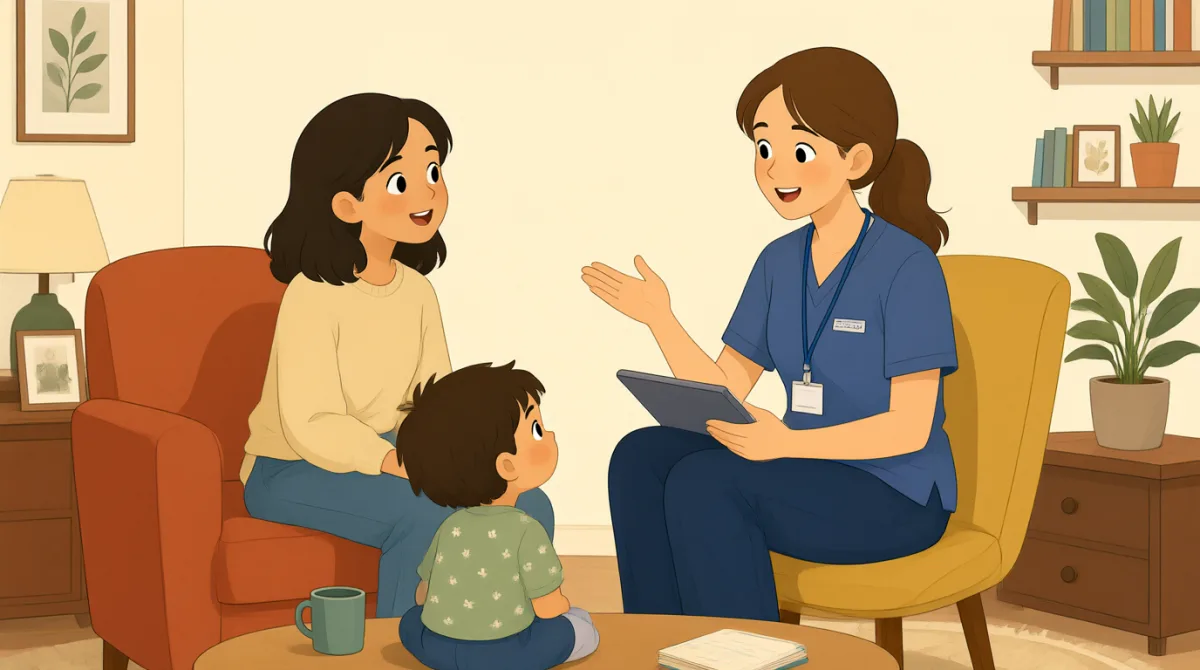
Emma talks with Grace, a babysitter, and asks about her experience with young children. Grace shares what she has done before.
에마가 베이비시터인 그레이스와 이야기를 나누며 어린아이를 돌본 경험이 있는지 물어봐요. 그레이스는 이전에 어떤 일을 했는지 들려줘요.
대화9

Hi, Grace. Have you looked after young children before?
안녕하세요, 그레이스. 전에 어린아이들을 돌봐 본 적 있으세요?

Yes, I have. I cared for two children, ages three and five.
네, 있어요. 세 살과 다섯 살 아이 둘을 돌봤어요.
How long did you work with that family?
그 가족과는 얼마나 오래 일하셨어요?
I worked with them for two years, mostly in the evenings.
그 가족과 2년 동안 일했어요. 주로 저녁 시간에요.
What did you do with the children?
아이들과는 뭘 하셨어요?
We read books, played games, and got ready for bed.
책을 읽고, 게임도 하고, 잠자리에 들 준비도 했어요.
Have you ever cared for two children at the same time?
두 아이를 동시에 돌봐 본 적 있으세요?
Yes. I stayed calm and made sure both children were safe.
네. 침착하게 대처하면서 두 아이 모두 안전한지 확인했어요.
That sounds good. I’m glad you have experience with young children.
좋네요. 어린아이들을 돌본 경험이 있으시다니 다행이에요.
어휘8
- looked after돌보다
To looked after children means to take care of them. You can also use this phrase for caring for a person or pet.
“looked after”는 아이들을 돌봤다는 뜻이에요. 사람이나 반려동물을 돌볼 때도 쓸 수 있는 표현이에요.
- cared for돌보다
This means took care of someone. Grace uses it to describe her past work with children.
“cared for”는 누군가를 돌봤다는 뜻이에요. 그레이스는 아이들을 돌본 과거의 일을 설명할 때 이 표현을 써요.
- How long얼마나 오래
Use this phrase to ask about the length of time something lasted. For example, “How long did you live there?”
어떤 일이 얼마나 오래 지속됐는지 물을 때 이 표현을 써요. 예를 들어 “How long did you live there?”라고 물을 수 있어요.
- mostly주로
This means usually or for the most part. Grace worked in the evenings most of the time.
“mostly”는 대개 또는 대부분이라는 뜻이에요. 그레이스는 대부분 저녁 시간에 일했어요.
- got ready for bed잠자리에 들 준비를 하다
This means did the things needed before going to sleep, such as putting on pajamas. You can use it to talk about a child's bedtime routine.
잠옷을 입는 것처럼 잠들기 전에 필요한 일을 했다는 뜻이에요. 아이의 취침 준비 과정에 관해 말할 때 쓸 수 있어요.
- at the same time동시에
This means during the same period or together. You can use it to ask if someone can care for two children together.
“at the same time”은 같은 시간에 또는 함께라는 뜻이에요. 두 아이를 한꺼번에 돌볼 수 있는지 물을 때 쓸 수 있어요.
- stayed calm침착하게 대처하다
This means remained relaxed and did not become upset. It is useful to describe how someone handles a difficult situation.
“stayed calm”은 차분한 상태를 유지하고 당황하지 않았다는 뜻이에요. 어려운 상황에 누군가가 어떻게 대처하는지 설명할 때 유용해요.
- made sure확실히 하다
This means checked or took action to ensure something happened. For example, you can make sure children are safe.
“made sure”는 어떤 일이 이루어지도록 확인하거나 조치를 취했다는 뜻이에요. 예를 들어 아이들이 안전한지 확인할 때 쓸 수 있어요.
핵심 문장8
- 1
Have you looked after young children before?
전에 어린아이들을 돌봐 본 적 있으세요?
Use this question to ask about someone's past experience caring for children. You can replace “young children” with another kind of work or responsibility.
누군가 아이를 돌본 경험이 있는지 물을 때 쓰는 질문이에요. “young children” 대신 다른 종류의 일이나 책임을 넣어 말할 수도 있어요.
- 2
I cared for two children, ages three and five.
세 살과 다섯 살 아이 둘을 돌봤어요.
This sentence gives a simple example of past childcare experience. You can use the pattern “I cared for [number] children, ages [ages].”
과거에 아이를 돌본 경험을 간단히 말하는 문장이에요. “I cared for [number] children, ages [ages].”라는 틀을 활용할 수 있어요.
- 3
How long did you work with that family?
그 가족과는 얼마나 오래 일하셨어요?
Use this question to ask how much time someone spent working with a person or group. Replace “that family” with a job, company, or person.
누군가가 사람이나 단체와 함께 일한 기간을 물을 때 쓰는 질문이에요. “that family” 대신 직장, 회사 또는 사람을 넣어 말할 수 있어요.
- 4
I worked with them for two years, mostly in the evenings.
그 가족과 2년 동안 일했어요. 주로 저녁 시간에요.
This explains how long Grace worked and when she usually worked. You can reuse “I worked with them for [length of time], mostly [when].”
그레이스가 얼마나 오래 일했고 주로 언제 일했는지 설명하는 문장이에요. “I worked with them for [length of time], mostly [when].”이라는 표현을 응용해 보세요.
- 5
What did you do with the children?
아이들과는 뭘 하셨어요?
Use this question to ask about someone's past activities or duties. You can replace “the children” with another group or person.
누군가가 과거에 했던 활동이나 업무를 물을 때 쓰는 질문이에요. “the children” 대신 다른 사람이나 집단을 넣어 말할 수 있어요.
- 6
Have you ever cared for two children at the same time?
두 아이를 동시에 돌봐 본 적 있으세요?
This question asks if someone has had a particular experience at any point in their life. You can change the number or activity to ask about other experiences.
살면서 특정한 경험을 해 본 적이 있는지 묻는 질문이에요. 다른 경험에 관해 물을 때는 숫자나 활동을 바꿔 말하면 돼요.
- 7
I stayed calm and made sure both children were safe.
침착하게 대처하면서 두 아이 모두 안전한지 확인했어요.
This sentence describes how Grace handled her responsibility. You can use “I stayed calm and made sure…” to explain how you dealt with a situation.
그레이스가 맡은 책임을 어떻게 수행했는지 설명하는 문장이에요. 상황에 어떻게 대처했는지 말할 때 “I stayed calm and made sure…”를 활용할 수 있어요.
- 8
I’m glad you have experience with young children.
어린아이들을 돌본 경험이 있으시다니 다행이에요.
Use this sentence to show that you are pleased someone has relevant experience. Replace “young children” with another skill or kind of experience.
누군가에게 관련 경험이 있어 기쁘다고 말할 때 쓰는 문장이에요. “young children” 대신 다른 기술이나 경험을 넣을 수 있어요.