A Big City or a Small Town?
Uma cidade grande ou uma cidade pequena?
Emma asks Mia whether her hometown is a big city or a small town. Mia describes its size and what daily life is like there.
Emma pergunta a Mia se sua cidade natal é grande ou pequena. Mia descreve o tamanho dela e como é o dia a dia por lá.
Diálogo8
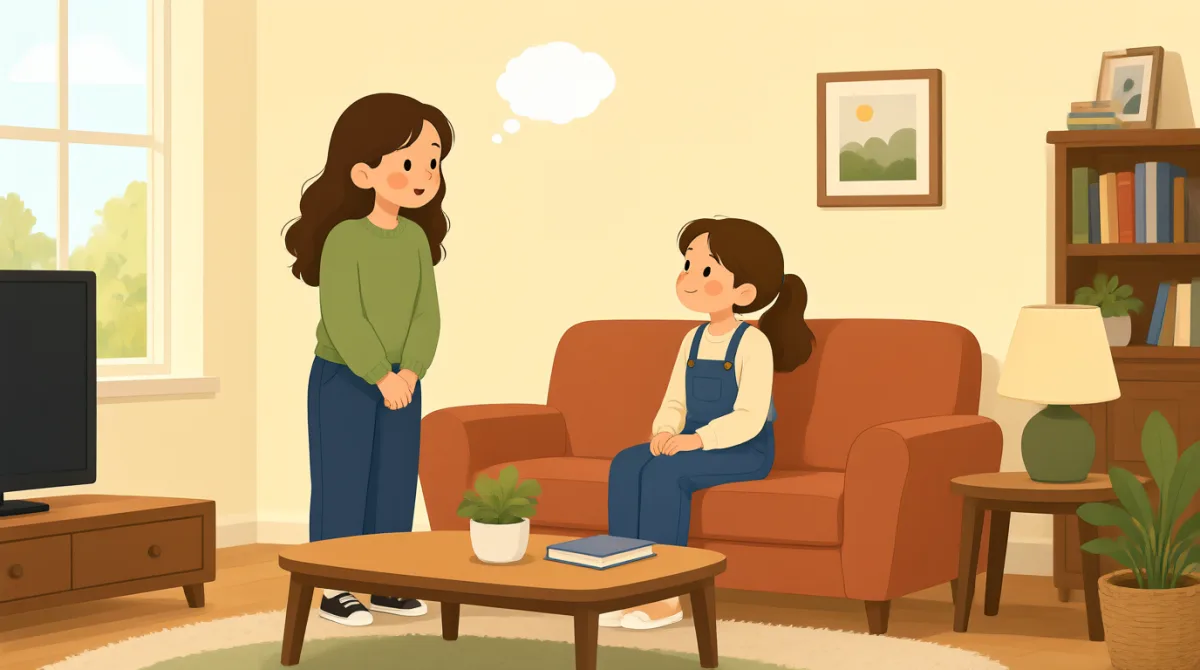

Is your hometown a big city or a small town, Mia?
Sua cidade natal é uma cidade grande ou uma cidade pequena, Mia?

It’s a small city, but it’s bigger than a town.
É uma cidade pequena, mas é maior do que um município pequeno.
How many people live there?
Quantas pessoas moram lá?
About two hundred thousand. It’s not too crowded, and most places are easy to reach.
Cerca de duzentas mil. Não é muito cheia, e é fácil chegar à maioria dos lugares.
That sounds nice. What’s daily life like there?
Parece ótimo. Como é o dia a dia por lá?
It’s quiet and friendly. People often walk to the shops or take the bus.
É tranquilo e acolhedor. As pessoas costumam ir a pé às lojas ou pegar o ônibus.
Do you have busy areas, too?
Também tem áreas movimentadas?
Yes, the town center gets busy on weekends, but it’s calm on weekdays.
Sim, o centro fica movimentado nos fins de semana, mas é tranquilo durante a semana.
Vocabulário8
- hometowncidade natal
The town or city where you grew up or where your family is from. Use it when talking about where you are from.
A cidade ou o lugar onde você cresceu ou de onde sua família vem. Use essa expressão para falar de onde você é.
- small citycidade pequena
A city that is not very large. You can use this phrase to describe the size of a place.
Uma cidade que não é muito grande. Você pode usar essa expressão para descrever o tamanho de um lugar.
- crowdedcheio
Full of many people, so there is little space. Use it to describe a busy place.
Com muitas pessoas e pouco espaço. Use essa palavra para descrever um lugar movimentado.
- easy to reachfácil de chegar
Not difficult to get to. You can use this phrase when places are close or transport is convenient.
Que não é difícil de alcançar. Você pode usar essa expressão quando os lugares ficam perto ou o transporte é conveniente.
- daily lifedia a dia
The usual things people do every day. Ask “What’s daily life like?” to learn about someone’s everyday experience.
As coisas que as pessoas costumam fazer todos os dias. Pergunte “What’s daily life like?” (Como é o dia a dia?) para saber como é a rotina de alguém.
- take the buspegar o ônibus
To travel somewhere by bus. Use “take the” with other forms of transport, such as “take the train.”
Ir a algum lugar de ônibus. Em inglês, use “take the” com outros meios de transporte também, como em “take the train” (pegar o trem).
- town centercentro da cidade
The main area in a town, often with shops and other places to visit. You can use it when describing where people go.
A área principal de uma cidade, muitas vezes com lojas e outros lugares para visitar. Você pode usar essa expressão para descrever aonde as pessoas vão.
- on weekdaysdurante a semana
During the days from Monday to Friday. Use it to say when something usually happens.
De segunda a sexta-feira. Use essa expressão para dizer quando algo costuma acontecer.
Frases-chave7
- 1
Is your hometown a big city or a small town, Mia?
Sua cidade natal é uma cidade grande ou uma cidade pequena, Mia?
This is a useful way to ask someone what kind of place their hometown is. You can replace “a big city” and “a small town” with other choices.
Esta é uma forma útil de perguntar que tipo de lugar é a cidade natal de alguém. Você pode trocar “a big city” e “a small town” por outras opções.
- 2
It’s a small city, but it’s bigger than a town.
É uma cidade pequena, mas é maior do que um município pequeno.
This sentence describes a place by comparing its size. Use “bigger than” to compare two places or things.
Esta frase descreve um lugar comparando seu tamanho com o de outro. Use “bigger than” para comparar dois lugares ou objetos.
- 3
About two hundred thousand.
Cerca de duzentas mil.
This is a short, natural answer to a question about how many people live somewhere. Use “about” when you are giving an approximate number.
Esta é uma resposta curta e natural a uma pergunta sobre quantas pessoas moram em algum lugar. Use “about” quando estiver dando um número aproximado.
- 4
It’s not too crowded, and most places are easy to reach.
Não é muito cheia, e é fácil chegar à maioria dos lugares.
This sentence describes how busy a place is and how convenient it is to get around. You can change “not too crowded” and “easy to reach” to describe another location.
Esta frase descreve o quanto um lugar é movimentado e como é fácil se locomover por lá. Você pode mudar “not too crowded” e “easy to reach” para descrever outro lugar.
- 5
What’s daily life like there?
Como é o dia a dia por lá?
This is a natural way to ask what everyday life is like in a place. You can replace “there” with the name of a town or city.
Esta é uma forma natural de perguntar como é a vida cotidiana em um lugar. Você pode substituir “there” pelo nome de uma cidade.
- 6
People often walk to the shops or take the bus.
As pessoas costumam ir a pé às lojas ou pegar o ônibus.
This sentence describes common ways people travel locally. Use “often” to talk about something people do regularly.
Esta frase descreve formas comuns de as pessoas se locomoverem pela região. Use “often” para falar de algo que as pessoas fazem regularmente.
- 7
The town center gets busy on weekends, but it’s calm on weekdays.
O centro fica movimentado nos fins de semana, mas é tranquilo durante a semana.
This sentence compares how a place feels at different times. You can use “gets busy” and “is calm” to describe other places and days.
Esta frase compara como um lugar fica em momentos diferentes. Você pode usar “gets busy” e “is calm” para descrever outros lugares e dias.