A Big City or a Small Town?
Großstadt oder Kleinstadt?
Emma asks Mia whether her hometown is a big city or a small town. Mia describes its size and what daily life is like there.
Emma fragt Mia, ob ihre Heimatstadt eine Großstadt oder eine Kleinstadt ist. Mia beschreibt, wie groß sie ist und wie der Alltag dort aussieht.
Dialog8
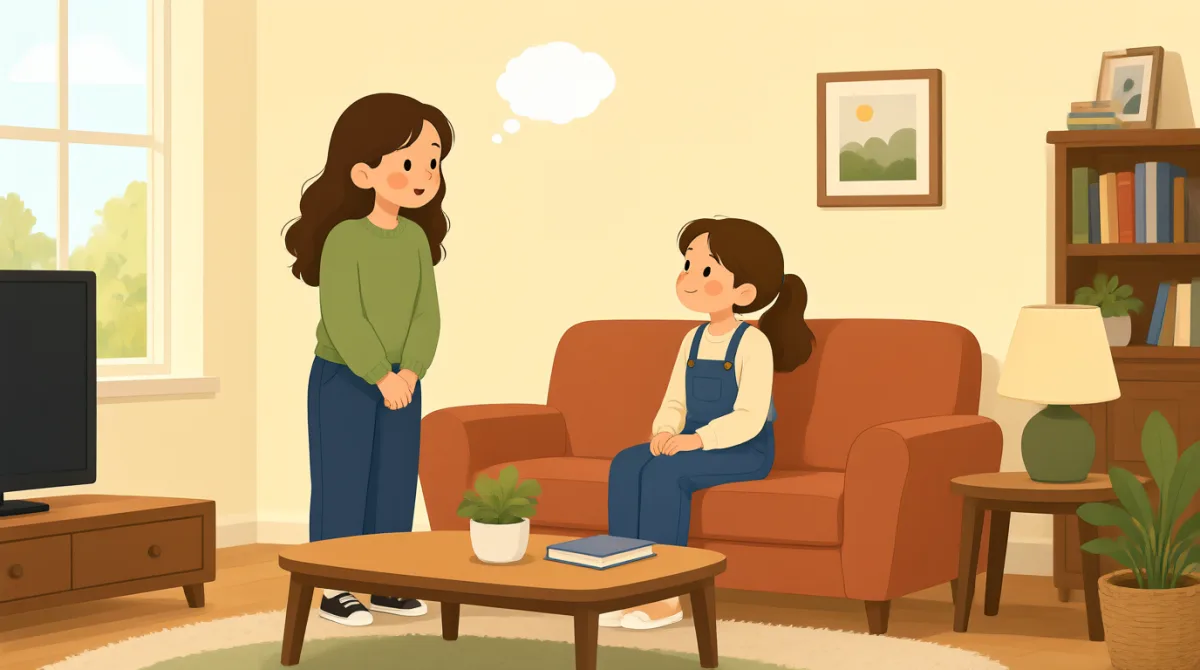

Is your hometown a big city or a small town, Mia?
Ist deine Heimatstadt eine Großstadt oder eine Kleinstadt, Mia?

It’s a small city, but it’s bigger than a town.
Sie ist eine kleine Stadt, aber größer als ein Dorf.
How many people live there?
Wie viele Menschen leben dort?
About two hundred thousand. It’s not too crowded, and most places are easy to reach.
Ungefähr zweihunderttausend. Es ist nicht zu voll, und die meisten Orte sind gut zu erreichen.
That sounds nice. What’s daily life like there?
Das klingt schön. Wie ist der Alltag dort?
It’s quiet and friendly. People often walk to the shops or take the bus.
Es ist ruhig und die Leute sind freundlich. Viele gehen zu Fuß zu den Geschäften oder fahren mit dem Bus.
Do you have busy areas, too?
Gibt es dort auch belebte Gegenden?
Yes, the town center gets busy on weekends, but it’s calm on weekdays.
Ja, am Wochenende ist im Stadtzentrum viel los, aber unter der Woche ist es ruhig.
Wortschatz8
- hometownHeimatstadt
The town or city where you grew up or where your family is from. Use it when talking about where you are from.
Die Stadt oder der Ort, in dem du aufgewachsen bist oder aus dem deine Familie stammt. Das Wort verwendest du, wenn du erzählst, woher du kommst.
- small citykleine Stadt
A city that is not very large. You can use this phrase to describe the size of a place.
Eine Stadt, die nicht besonders groß ist. Mit diesem Ausdruck kannst du beschreiben, wie groß ein Ort ist.
- crowdedvoll, überfüllt
Full of many people, so there is little space. Use it to describe a busy place.
Es sind so viele Menschen an einem Ort, dass nur wenig Platz bleibt. Damit beschreibst du einen belebten oder überfüllten Ort.
- easy to reachgut zu erreichen
Not difficult to get to. You can use this phrase when places are close or transport is convenient.
Man kommt ohne Schwierigkeiten dorthin. Diesen Ausdruck kannst du verwenden, wenn Orte in der Nähe liegen oder die Verkehrsanbindung gut ist.
- daily lifeAlltag
The usual things people do every day. Ask “What’s daily life like?” to learn about someone’s everyday experience.
Die Dinge, die Menschen normalerweise jeden Tag tun. Mit „What’s daily life like?“ fragst du danach, wie der Alltag einer Person aussieht.
- take the busmit dem Bus fahren
To travel somewhere by bus. Use “take the” with other forms of transport, such as “take the train.”
Mit dem Bus irgendwohin fahren. Im Englischen verwendet man „take the“ auch bei anderen Verkehrsmitteln, zum Beispiel in „take the train“.
- town centerStadtzentrum
The main area in a town, often with shops and other places to visit. You can use it when describing where people go.
Der zentrale Bereich einer Stadt oder eines Ortes, oft mit Geschäften und anderen Ausflugszielen. Du kannst den Ausdruck verwenden, wenn du beschreibst, wohin die Leute gehen.
- on weekdaysunter der Woche
During the days from Monday to Friday. Use it to say when something usually happens.
An den Tagen von Montag bis Freitag. Mit diesem Ausdruck sagst du, wann etwas normalerweise passiert.
Wichtige Sätze7
- 1
Is your hometown a big city or a small town, Mia?
Ist deine Heimatstadt eine Großstadt oder eine Kleinstadt, Mia?
This is a useful way to ask someone what kind of place their hometown is. You can replace “a big city” and “a small town” with other choices.
So kannst du jemanden auf natürliche Weise fragen, was für ein Ort die Heimatstadt der Person ist. Du kannst „a big city“ und „a small town“ durch andere Möglichkeiten ersetzen.
- 2
It’s a small city, but it’s bigger than a town.
Sie ist eine kleine Stadt, aber größer als ein Dorf.
This sentence describes a place by comparing its size. Use “bigger than” to compare two places or things.
Mit diesem Satz beschreibst du einen Ort, indem du seine Größe vergleichst. Mit „bigger than“ vergleichst du zwei Orte oder Dinge miteinander.
- 3
About two hundred thousand.
Ungefähr zweihunderttausend.
This is a short, natural answer to a question about how many people live somewhere. Use “about” when you are giving an approximate number.
Das ist eine kurze, natürliche Antwort auf die Frage, wie viele Menschen an einem Ort leben. Wenn du eine ungefähre Zahl nennst, verwendest du „about“.
- 4
It’s not too crowded, and most places are easy to reach.
Es ist nicht zu voll, und die meisten Orte sind gut zu erreichen.
This sentence describes how busy a place is and how convenient it is to get around. You can change “not too crowded” and “easy to reach” to describe another location.
Mit diesem Satz beschreibst du, wie belebt ein Ort ist und wie leicht man sich dort fortbewegen kann. Du kannst „not too crowded“ und „easy to reach“ austauschen, um einen anderen Ort zu beschreiben.
- 5
What’s daily life like there?
Wie ist der Alltag dort?
This is a natural way to ask what everyday life is like in a place. You can replace “there” with the name of a town or city.
So fragst du auf natürliche Weise, wie das tägliche Leben an einem Ort ist. Du kannst „there“ durch den Namen einer Stadt oder eines Ortes ersetzen.
- 6
People often walk to the shops or take the bus.
Viele gehen zu Fuß zu den Geschäften oder fahren mit dem Bus.
This sentence describes common ways people travel locally. Use “often” to talk about something people do regularly.
Mit diesem Satz beschreibst du übliche Möglichkeiten, sich vor Ort fortzubewegen. Mit „often“ sprichst du davon, was Menschen regelmäßig tun.
- 7
The town center gets busy on weekends, but it’s calm on weekdays.
Am Wochenende ist im Stadtzentrum viel los, aber unter der Woche ist es ruhig.
This sentence compares how a place feels at different times. You can use “gets busy” and “is calm” to describe other places and days.
Mit diesem Satz vergleichst du, wie ein Ort zu unterschiedlichen Zeiten wirkt. Mit „gets busy“ und „is calm“ kannst du auch andere Orte und Tage beschreiben.