The Teacher Has a Message
La maestra tiene un mensaje
Grace, the teacher, gives Emma a short message about Leo's school day. Emma listens and asks a simple question.
Grace, la maestra, le da a Emma un breve mensaje sobre el día de Leo en la escuela. Emma escucha y hace una pregunta sencilla.
Diálogo6
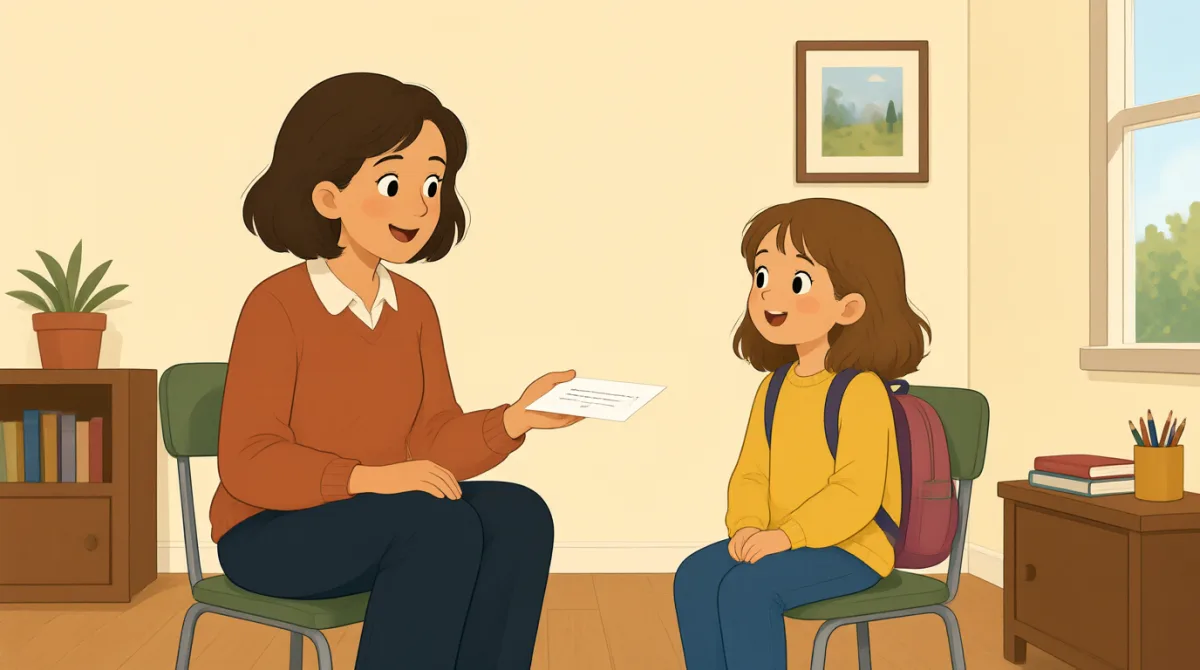

Hi, Emma. Leo had a good day today.
Hola, Emma. Leo tuvo un buen día hoy.

That’s good. What did he do?
Qué bien. ¿Qué hizo?
He read a short book in class.
Leyó un libro corto en clase.
Did he enjoy it?
¿Le gustó?
Yes, he did. He read it aloud.
Sí. Lo leyó en voz alta.
Great! Thank you for telling me.
¡Genial! Gracias por contármelo.
Vocabulario7
- had a good daytuvo un buen día
This means Leo's day at school went well. You can use it to describe a positive day.
Esto significa que a Leo le fue bien en la escuela ese día. Puedes usarlo para describir un día positivo.
- What did he do?¿Qué hizo?
This is a simple way to ask what someone did. You can change “he” to “you,” “she,” or a person's name.
Esta es una forma sencilla de preguntar qué hizo alguien. Puedes cambiar “he” por “you”, “she” o el nombre de una persona.
- in classen clase
This means in the classroom or during a lesson. For example, you can say, “We read a book in class.”
Esto significa en el aula o durante una clase. Por ejemplo, puedes decir: “We read a book in class” (Leímos un libro en clase).
- Did he enjoy it?¿Le gustó?
This asks if Leo liked the activity. You can use “Did you enjoy it?” to ask someone about an experience.
Esta pregunta sirve para saber si a Leo le gustó la actividad. Puedes usar “Did you enjoy it?” para preguntarle a alguien si disfrutó de una experiencia.
- Yes, he did.Sí.
This is a short answer to a question that starts with “Did he.” You can change “he” to “she” or “you.”
Esta es una respuesta breve a una pregunta que empieza con “Did he”. Puedes cambiar “he” por “she” o “you”.
- read it aloudleerlo en voz alta
This means to read the words so other people can hear them. You can say, “She read the story aloud.”
Significa leer las palabras para que otras personas puedan oírlas. Puedes decir: “She read the story aloud” (Ella leyó el cuento en voz alta).
- Thank you for telling me.Gracias por contármelo.
This is a polite way to thank someone for sharing information. You can use it when a teacher gives you an update.
Esta es una forma amable de agradecerle a alguien que te haya dado información. Puedes usarla cuando una maestra te cuenta cómo le fue a tu hijo.
Frases clave8
- 1
Leo had a good day today.
Leo tuvo un buen día hoy.
Use this sentence to tell someone that Leo's day went well. You can replace “Leo” with another person's name.
Usa esta frase para decirle a alguien que a Leo le fue bien ese día. Puedes reemplazar “Leo” por el nombre de otra persona.
- 2
What did he do?
¿Qué hizo?
Use this question to ask about someone's past actions. Change “he” to “you” or another person to fit the situation.
Usa esta pregunta para preguntar por las acciones pasadas de alguien. Cambia “he” por “you” o por otra persona, según la situación.
- 3
He read a short book in class.
Leyó un libro corto en clase.
This sentence describes what Leo did at school. You can change the activity, such as “He drew a picture in class.”
Esta frase describe lo que hizo Leo en la escuela. Puedes cambiar la actividad, por ejemplo: “He drew a picture in class” (Dibujó algo en clase).
- 4
Did he enjoy it?
¿Le gustó?
Use this question to ask if someone liked an activity. Replace “he” with “you” to ask directly.
Usa esta pregunta para saber si a alguien le gustó una actividad. Cambia “he” por “you” para preguntárselo directamente a alguien.
- 5
Yes, he did.
Sí.
This is a brief, natural answer to “Did he enjoy it?” Use “Yes, I did” when answering about yourself.
Esta es una respuesta breve y natural a “Did he enjoy it?”. Usa “Yes, I did” cuando respondas sobre ti.
- 6
He read it aloud.
Lo leyó en voz alta.
This tells someone that Leo read so others could hear. You can replace “read” with another action, such as “said it aloud.”
Esta frase le dice a alguien que Leo leyó para que los demás pudieran oírlo. Puedes reemplazar “read” por otra acción, como “said it aloud”.
- 7
Great!
¡Genial!
This is a simple way to show that you are pleased or interested. You can use it in many everyday conversations.
Esta es una forma sencilla de mostrar que algo te alegra o te interesa. Puedes usarla en muchas conversaciones cotidianas.
- 8
Thank you for telling me.
Gracias por contármelo.
Use this polite sentence when someone shares useful information with you. You can also say it to thank a teacher for an update.
Usa esta frase amable cuando alguien comparte información útil contigo. También puedes decírsela a una maestra para agradecerle que te cuente cómo le fue a tu hijo.